Can a Guilty Plea Override Double Jeopardy?
Synopsis
In a landmark ruling, the Delhi High Court emphasizes that a guilty plea cannot circumvent legal protections against double jeopardy. This decision reaffirms that individuals cannot be prosecuted multiple times for the same offense, ensuring justice prevails in the face of legal complexities.
Key Takeaways
Guilty pleas cannot bypass legal prohibitions.
The principle of double jeopardy safeguards against multiple prosecutions.
Jurisdictional objections must be addressed before accepting a guilty plea.
The Delhi High Court reaffirmed constitutional protections in criminal law.
Authorities must avoid treating single incidents as multiple offenses.
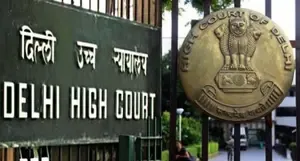
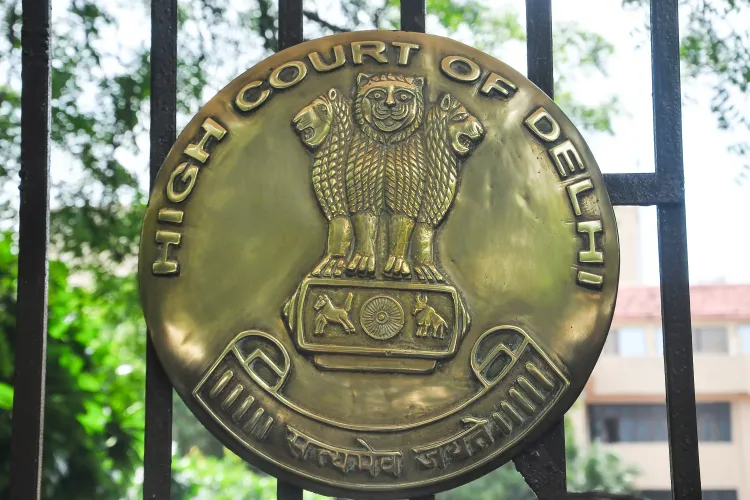
New Delhi, Oct 30 (NationPress) The Delhi High Court has determined that a guilty plea cannot legitimize a prosecution that is legally prohibited. The ruling states that once an individual has been convicted of a crime, they cannot face trial or punishment again for the same act under a different case number.
In a decision to annul the second conviction of a life convict, a single-judge Bench presided by Justice Sanjeev Narula articulated: "A plea of guilt cannot confer jurisdiction. When the bar established by Section 300 CrPC or the double jeopardy rule outlined in Article 20(2) comes into play, the conviction is null, regardless of the voluntariness of the plea or the adequacy of evidence."
The court noted that the petitioner, Subhash Pahwa @ Subhash Chander, had previously been convicted in 2014 under Section 411 of the Indian Penal Code (IPC) for possessing a stolen Ertiga car seized from Dwarka, and subsequently faced a second conviction in 2015 for the same recovery under a different FIR. Although the second conviction was based on a guilty plea, it was determined to be jurisdictionally void.
Justice Narula remarked, "The subsequent conviction... is based on the same Dwarka recovery from February 11, 2013 that was the foundation of his conviction on November 26, 2014." He added that the later prosecution was prohibited by Article 20(2) of the Constitution and Section 300 CrPC. "By applying the sameness and consequence tests, the subsequent prosecution and conviction were without jurisdiction. Hence, the later conviction is vitiated by Article 20(2) and Section 300 CrPC," the Delhi High Court concluded.
The court further clarified that the principle of double jeopardy safeguards against multiple prosecutions for the same offense or facts, stating: "The State cannot repeatedly prosecute or reinvestigate an individual for the same act merely by changing the statutory labels or filing a new FIR."
Justice Narula characterized the Magistrate’s act of documenting a guilty plea without resolving the accused’s objection under Section 300 CrPC as a serious irregularity.
He noted, "Recording a guilty plea without first addressing a jurisdictional objection is a significant irregularity... Since the prosecution was barred, the conviction was void ab initio." The Delhi High Court therefore annulled the 2015 conviction under Sections 411 and 482 of IPC, ordering all relevant authorities, including police and prison records, to implement necessary corrections within four weeks.
Justice Narula also instructed the Sentence Review Board (SRB) to reassess the petitioner’s case for early release, emphasizing that when multiple proceedings arise from the same factual scenario, authorities must avoid treating that single event as multiple adverse antecedents. The law penalizes distinct offenses, not overlapping narratives.
In conclusion, Justice Narula stated, "This jurisdiction corrects what the law prohibits; it does not retry what the law allows," reaffirming that constitutional protections against double jeopardy cannot be bypassed by procedural shortcuts or the accused’s admission of guilt.
“The SRB shall reevaluate the petitioner’s case for early release within eight weeks... In doing so, the SRB shall (i) consider overlapping elements from the single Dwarka recovery dated February 11, 2013 as one antecedent rather than multiple, and (ii) provide a reasoned decision,” directed the Delhi High Court.
Point of View
This ruling by the Delhi High Court reinforces the fundamental tenets of justice and the rule of law. Upholding the principle of double jeopardy is crucial in maintaining public trust in the legal system. It ensures that individuals are not subjected to repeated trials for the same offense, which can lead to severe injustices. The court's emphasis on jurisdictional integrity is commendable and reflects a robust commitment to constitutional protections.
NationPress
27 Sept 2026
Frequently Asked Questions
What is double jeopardy?
Double jeopardy is a legal principle that prevents an individual from being tried twice for the same crime.
Can a guilty plea be used to bypass double jeopardy?
No, a guilty plea cannot override the protections against double jeopardy as per the recent ruling by the Delhi High Court.
What did the Delhi High Court rule regarding guilty pleas?
The Delhi High Court ruled that a guilty plea cannot validate a prosecution that is barred by law, particularly under double jeopardy.
What actions were taken regarding Subhash Pahwa's convictions?
The Delhi High Court annulled Subhash Pahwa's second conviction, emphasizing that he cannot be tried again for the same offense.
What is Section 300 of the CrPC?
Section 300 of the CrPC pertains to the prohibition of double jeopardy in Indian law.