Delhi Speaker Vijender Gupta urges green firecrackers, eco-friendly Diwali 2026
Synopsis
Delhi Assembly Speaker Vijender Gupta marked Diwali 2026 with a twin message: a civic appeal for eco-friendly celebrations using green firecrackers in moderation, and a release of a new edition of freedom fighter Bhai Parmanand's jail memoir — days after PM Modi spotlighted the book on 'Mann Ki Baat'.
Key Takeaways
Delhi Assembly Speaker Vijender Gupta on 7 November urged Delhi residents to use only green firecrackers in moderation to reduce air and noise pollution during Diwali.
Gupta stressed that building a pollution-free Delhi is a collective civic responsibility, not solely a government duty.
A new edition of 'Meri Aapbeeti: Kalapani Ki Karavas Kahani' — the autobiography of Ghadar Party leader Bhai Parmanand (1876–1947) — was released to mark his 150th birth anniversary .
PM Narendra Modi had already highlighted the book on 25 October in the 139th episode of 'Mann Ki Baat' .
Bhai Parmanand, sentenced to death in the Lahore Conspiracy Case of 1915 , later taught Bhagat Singh and Sukhdev at National College, Lahore.
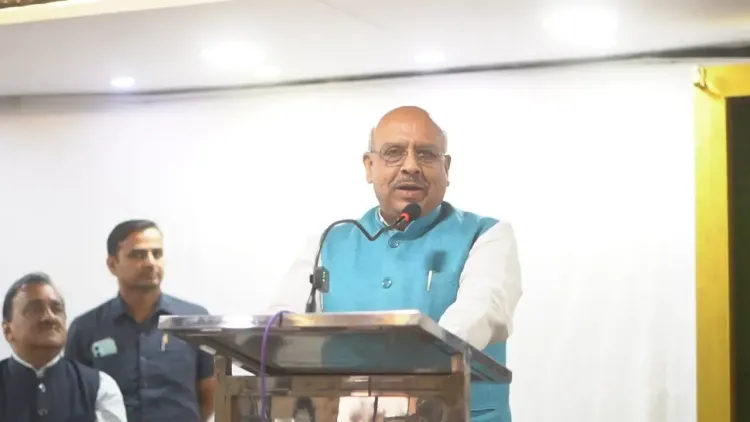
Delhi Assembly Speaker Vijender Gupta on Saturday, 7 November appealed to residents of the national capital to celebrate Diwali responsibly, urging them to use only green firecrackers in moderation and take personal steps to reduce air and noise pollution during the festival.
The Diwali Appeal
Extending greetings to all Delhi residents, Gupta said, 'Diwali is the festival of light, joy, harmony and positivity. It inspires people to move from darkness towards light and strengthens the values of love, brotherhood and mutual harmony in society.'
Keeping in view the persistent challenge of air pollution in New Delhi, the Speaker called on citizens to exercise restraint in their use of firecrackers and make a conscious effort to minimise both air and noise pollution during the festivities.
Gupta emphasised that building a clean and healthy Delhi is not merely a government obligation but a shared civic duty. 'Even a small individual effort towards environmental protection can bring about a significant positive change,' he said, adding: 'Let us celebrate this Diwali by lighting lamps of happiness, protecting our environment and working together to build a clean, healthy and pollution-free Delhi.'
Book Release: Bhai Parmanand's Autobiography
Separately, Speaker Gupta released a new edition of 'Meri Aapbeeti: Kalapani Ki Karavas Kahani', the autobiography of revolutionary freedom fighter and Ghadar Party leader Bhai Parmanand (1876–1947), marking his 150th birth anniversary. The event was attended by historians, Arya Samaj representatives and other distinguished guests.
Gupta described the work as 'not merely an account of the suffering endured in the Cellular Jail, but a powerful reminder of the patriotism, sacrifice and indomitable courage that shaped India's freedom struggle.' He stressed that bringing such historical accounts to younger generations was essential to preserving the country's collective memory of independence.
Why This Release Matters Now
The timing of the release is significant. Prime Minister Narendra Modi had highlighted the same book in the 139th episode of 'Mann Ki Baat' on 25 October, urging young people to read it and understand the sacrifices of India's freedom fighters. The new edition follows that national spotlight.
Born in 1876 in Jhelum district — now in Pakistan — Bhai Parmanand was a founding member of the Ghadar Party, a prominent Arya Samaj leader and a vocal opponent of British colonial rule. He was sentenced to death in the first Lahore Conspiracy Case of 1915, a sentence later commuted to life imprisonment. He was subsequently transported to the Cellular Jail in the Andaman Islands, where he endured nearly five years of incarceration and undertook a prolonged hunger strike to protest the inhuman treatment of political prisoners.
Mahatma Gandhi's Intervention and Parmanand's Legacy
Mahatma Gandhi, writing in Young India on 19 November 1919, condemned Parmanand's treatment and demanded his release. Following his release on 20 April 1920, Parmanand taught history at National College, Lahore, where revolutionaries Bhagat Singh and Sukhdev were among his students — a connection that underlines his formative influence on the next generation of freedom fighters.
Speaker Gupta noted that the experiences of revolutionaries such as Parmanand offered an important perspective on the personal suffering and sacrifice behind India's independence — a reminder he said deserved a wider audience among today's youth.
Point of View
And without credible monitoring, the advisory risks being symbolic. The book release, however, adds genuine news value — linking a 150-year-old revolutionary's memoir to a sitting PM's broadcast appeal is an unusual convergence of institutional memory and political messaging that deserves more attention than the routine festival advisory.
NationPress
7 Nov 2026
Frequently Asked Questions
What did Delhi Assembly Speaker Vijender Gupta say about Diwali firecrackers?
Speaker Vijender Gupta urged Delhi residents on 7 November to use only green firecrackers in moderation during Diwali and make conscious efforts to minimise air and noise pollution. He said protecting the environment was a collective civic responsibility, not just a government duty.
What is the book 'Meri Aapbeeti: Kalapani Ki Karavas Kahani'?
It is the autobiography of freedom fighter and Ghadar Party leader Bhai Parmanand (1876–1947), recounting his imprisonment in the Cellular Jail in the Andaman Islands. A new edition was released by Delhi Assembly Speaker Vijender Gupta on 7 November 2026 to mark Parmanand's 150th birth anniversary.
Why did PM Modi mention Bhai Parmanand's autobiography on 'Mann Ki Baat'?
PM Narendra Modi highlighted the book in the 139th episode of 'Mann Ki Baat' on 25 October, urging young people to read it to understand the sacrifices made during India's freedom struggle. The Delhi Speaker's new-edition release followed weeks after that national broadcast.
Who was Bhai Parmanand and what was his connection to Bhagat Singh?
Bhai Parmanand (1876–1947) was a founding member of the Ghadar Party, a prominent Arya Samaj leader, and a vocal opponent of British rule who was imprisoned in the Cellular Jail. After his release on 20 April 1920, he taught history at National College in Lahore, where revolutionaries Bhagat Singh and Sukhdev were among his students.
Why is air pollution a concern during Diwali in Delhi?
Delhi consistently records hazardous air quality levels in October and November due to a combination of stubble burning in neighbouring states, vehicular emissions, and the spike in firecracker use during Diwali. Authorities have repeatedly urged citizens to switch to green firecrackers or avoid firecrackers altogether to prevent the annual post-Diwali pollution surge.