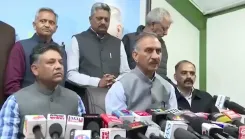
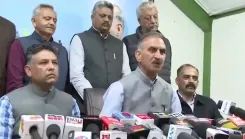
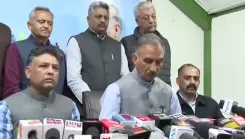
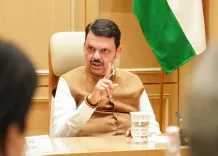
CM Samrat Choudhary: Centre releases ₹10,845 cr to Bihar
Synopsis
Bihar Chief Minister Samrat Choudhary announced on 7 November 2026 that the Centre has released ₹10,845 crore as an advance tax devolution instalment ahead of Diwali and Chhath, thanking PM Modi and Finance Minister Sitharaman for the timely fiscal support to accelerate state development.
Key Takeaways
₹10,845 crore released by the Union government to Bihar as an advance instalment of central tax devolution ahead of Diwali and Chhath Puja 2026.
Bihar CM Samrat Choudhary thanked PM Narendra Modi and Finance Minister Nirmala Sitharaman for the timely transfer.
The 15th Finance Commission fixed Bihar's share of central taxes at 10.06 percent for the 2021–2026 period.
Funds are intended to support infrastructure expansion, public-welfare schemes, and ongoing development projects across Bihar.
Advance devolution releases are a standard fiscal-federalism mechanism used to ease state cash-flow pressure during high-expenditure periods.
CM Choudhary framed the transfer as part of the broader 'Viksit Bihar' (Developed Bihar) development agenda.
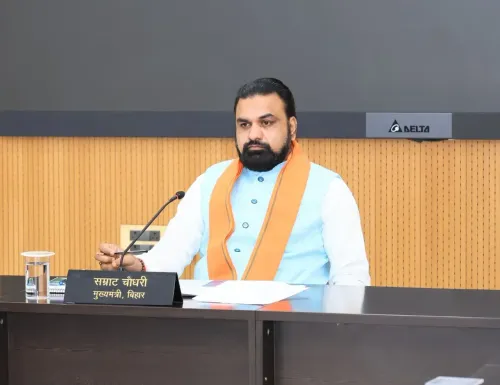
Just ahead of Diwali and the grand folk festival of Chhath, Bihar is getting a significant financial boost — ₹10,845 crore in an advance instalment of central tax devolution, released by the Union government to support the state's development and welfare spending. Bihar Chief Minister Samrat Choudhary announced the transfer on Saturday, 7 November 2026, thanking Prime Minister Narendra Modi and Union Finance Minister Nirmala Sitharaman for the timely support.
₹10,845 crore before the festivals: what the transfer means
In his post, CM Choudhary wrote — 'Bihar ko badi saugaat!' ('A big gift for Bihar!') — framing the release as a festival-eve fillip for the state's finances. He noted that the funds would help meet 'essential financial needs' while also accelerating development schemes, expanding basic infrastructure, running public-welfare programmes, and giving fresh momentum to ongoing projects across the state.
The timing is deliberate. Chhath Puja, one of the most widely observed festivals in Bihar and among the Bihari diaspora nationwide, demands significant state-level expenditure on public infrastructure — ghats, lighting, crowd management, and civic services. An advance devolution release ahead of this period eases the state's cash-flow pressure precisely when it is highest.
Fiscal federalism in action: how advance devolution works
India's Constitution mandates that a share of central taxes be transferred to states, with the formula set by successive Finance Commissions. The 15th Finance Commission, covering the period 2021–2026, fixed Bihar's share of central taxes at 10.06 percent — one of the higher allocations among states, reflecting Bihar's development needs and population weight.
The Union government periodically releases advance instalments — front-loading a future monthly tranche — to help states manage expenditure spikes around festivals or infrastructure push periods. This mechanism has been used across administrations and is a standard instrument of cooperative fiscal federalism, not an extraordinary grant.
For Bihar, which has historically relied heavily on central transfers to fund its capital and revenue expenditure, the timing of each instalment carries real consequence. Development projects — roads, schools, health centres — move faster when state treasuries are liquid.
Centre-state partnership framing and what comes next
CM Choudhary closed his message with a pointed political framing: that 'joint efforts of the Centre and state are steadily moving Bihar on the path of development,' and that this support is 'an important step towards realising the resolve of a developed and prosperous Bihar.' The language echoes the broader 'Viksit Bihar' (Developed Bihar) narrative that the state's ruling alliance has built around its governance pitch.
The remaining monthly devolution instalments for the current financial year will be watched closely — any mid-term revision to the 15th Finance Commission formula, or an early rollout of the 16th Finance Commission recommendations, could reshape Bihar's transfer arithmetic for the years ahead.
For now, with festival season in full swing, Bihar's treasury has room to breathe — and its Chief Minister has made sure the credit is squarely on the record.
Point of View
But its political choreography is equally deliberate — timing a large transfer announcement to coincide with Bihar's most emotionally resonant festival period maximises goodwill for both the Centre and the state government. For Bihar, which depends on central transfers for a substantial share of its budget, the 10.06 percent share locked in by the 15th Finance Commission is a structural lifeline, not a discretionary favour. The 'Viksit Bihar' framing by CM Choudhary signals that the state's ruling alliance is building a governance narrative around visible financial milestones ahead of the next electoral cycle. The real test will be whether these funds translate into measurable acceleration of on-ground infrastructure and welfare delivery.
NationPress
7 Nov 2026
Frequently Asked Questions
Why did the Centre release ₹10,845 crore to Bihar in November 2026?
The Union government released ₹10,845 crore to Bihar as an advance instalment of central tax devolution, timed ahead of Diwali and Chhath Puja to ease the state's cash-flow needs during a high-expenditure festival period.
What is tax devolution and how does Bihar benefit from it?
Tax devolution is the constitutionally mandated transfer of a share of central tax revenues to states. The 15th Finance Commission fixed Bihar's share at 10.06 percent for 2021–2026, making it one of the larger recipients among Indian states.
Who authorised the advance tax devolution to Bihar?
The Union government, under Prime Minister Narendra Modi and Finance Minister Nirmala Sitharaman, authorised the advance release. Bihar CM Samrat Choudhary publicly thanked both for the timely transfer.
What will Bihar use the ₹10,845 crore for?
According to CM Samrat Choudhary, the funds will be used to meet essential state financial needs, expand basic infrastructure, run public-welfare schemes, and accelerate ongoing development projects across Bihar.
Is releasing advance tax devolution before festivals a new practice?
No. The Union government has periodically front-loaded devolution instalments ahead of festivals or high-expenditure periods under multiple administrations as a routine fiscal-federalism tool to support state liquidity.