CM Sukhu: BBMB win shows Congress govt's political will
Synopsis
CM Sukhvinder Singh Sukhu says a Supreme Court ruling in Himachal Pradesh's favour on the BBMB dispute went unimplemented for 15 years due to weak political will, and credits his Congress government with finally securing the state's rights.
Key Takeaways
A Supreme Court verdict favouring Himachal Pradesh in the BBMB dispute remained unimplemented for 15 years , according to CM Sukhu.
The previous government allegedly failed to file state replies for up to 18 months at a stretch in related proceedings.
The Bhakra Beas Management Board was constituted under the Punjab Reorganisation Act, 1966 , to manage shared river projects among Punjab, Haryana, Himachal Pradesh and Rajasthan.
CM Sukhu's Congress government , in office since December 2022 , claims it pursued the case with resolve and secured a final victory.
Sukhu made the remarks from Oak Over, Shimla on 7 November 2026 , framing the outcome as proof of the difference between strong and weak governance.
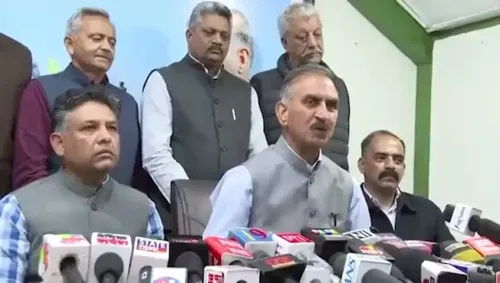
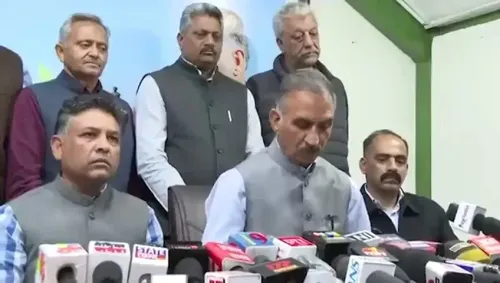
A Supreme Court verdict in Himachal Pradesh's favour sat unimplemented for fifteen years — not because the law was unclear, but because no government bothered to push. That is the charge Himachal Pradesh Chief Minister Sukhvinder Singh Sukhu levelled on Saturday, 7 November 2026, from Oak Over, Shimla, as he claimed credit for finally closing the long-pending Bhakra Beas Management Board (BBMB) dispute in the state's favour.
Fifteen years of 'taarikh pe taarikh' on a won case
In his post, CM Sukhu described a pattern of institutional inertia that would frustrate any litigant: dates kept getting pushed, and in several matters the state government failed to file its reply for dhed-dhed saal — a year and a half at a stretch — even after the apex court had already ruled in Himachal's favour. 'The reason was a lack of government will,' he wrote pointedly. The implication is direct: the previous Bharatiya Janata Party administration in the state allowed a winning legal position to gather dust.
The BBMB, constituted under the Punjab Reorganisation Act of 1966, manages multipurpose river valley projects on the Sutlej, Beas and Ravi rivers, distributing power and water benefits among Punjab, Haryana, Himachal Pradesh and Rajasthan. For a state whose rivers generate enormous hydroelectric wealth, Himachal's share of BBMB revenues and assets has been a perennial flashpoint — one that successive governments have litigated but, according to Sukhu, never pursued with enough urgency.
Congress government's push after December 2022
Sukhu's Congress government took office in December 2022. He says the shift was immediate and deliberate: 'As soon as the Congress government was formed, we fought for the state's rights with firm resolve and achieved victory.' The contrast he draws is between a government that files responses on time, follows up relentlessly, and one that lets hearing after hearing lapse. In inter-state river disputes — where the Supreme Court's docket is crowded and procedural delays compound — that difference in follow-through can stretch a resolved legal question into a decade-and-a-half-long administrative failure.
Why the BBMB dispute matters beyond Shimla
Inter-state water and power disputes in India are among the most politically charged and legally complex cases the Supreme Court handles. The BBMB framework, now six decades old, was designed for a different demographic and energy reality. States like Himachal Pradesh — which contribute the rivers but historically received a smaller share of benefits — have long argued the formula needs rebalancing. A decisive legal win, properly implemented, could mean meaningful additional revenue for a state that is simultaneously managing a significant fiscal deficit and ambitious welfare commitments.
Sukhu's framing — 'this is the difference between strong and weak political will' — is also a campaign argument ahead of future electoral cycles. By anchoring the BBMB outcome to Congress governance, he is building a record of delivery on a technical, long-standing grievance that resonates strongly in the state's political and bureaucratic circles.
Fifteen years is a long time to wait for what a court has already given you. Himachal Pradesh, Sukhu is saying, is done waiting.
Point of View
He converts a technical legal outcome into a sharp contrast narrative ahead of future elections. The BBMB dispute sits within a broader pattern of Himalayan states asserting stronger claims over shared river infrastructure built in the post-Partition reorganisation era, and a successful implementation here could embolden similar pushes in other inter-state hydro disputes. For Congress in Himachal, turning a dry water-board case into a story of political will versus neglect is precisely the kind of record-building that sustains incumbency in a state that has historically alternated between parties. The real test, however, will be whether the Supreme Court order translates into tangible revenue flows to Shimla's treasury.
NationPress
7 Nov 2026
Frequently Asked Questions
What is the BBMB and why does it matter to Himachal Pradesh?
The Bhakra Beas Management Board (BBMB) is a statutory body set up under the Punjab Reorganisation Act of 1966 to manage multipurpose river projects on the Sutlej, Beas and Ravi rivers. Himachal Pradesh has long sought a greater share of power and revenue from these projects, as the rivers originate in the state.
What did the Supreme Court rule in Himachal Pradesh's favour regarding BBMB?
CM Sukhu has stated that the Supreme Court ruled in Himachal Pradesh's favour on BBMB-related matters, but the state's claim went unimplemented for 15 years due to a lack of follow-through by successive governments. Specific details of the judgment are part of ongoing legal proceedings.
Why did the BBMB case remain unresolved for 15 years despite a court verdict?
According to CM Sukhu, the delay was caused by weak political will — the state government repeatedly missed deadlines to file replies, sometimes going 18 months without submitting responses, allowing hearings to be repeatedly adjourned.
What has the Sukhu government done differently on the BBMB issue?
Sukhu says his Congress government, which took office in December 2022, pursued the case actively, filed responses on time, and fought for Himachal Pradesh's rights with firm resolve, ultimately securing a favourable outcome.
What is Oak Over in Shimla?
Oak Over is the official residence of the Chief Minister of Himachal Pradesh, located in Shimla. CM Sukhu made his remarks about the BBMB case from this official address.