HP CM Office: Pay Himachal's dues or lose BBMB water
Synopsis
The Chief Minister's Office of Himachal Pradesh has warned that BBMB must clear approximately 15 years of unpaid water-use arrears — as directed by the Supreme Court — before the state will continue supplying water to the downstream project, escalating a long-running inter-state resource dispute.
Key Takeaways
The Chief Minister's Office of Himachal Pradesh issued the warning on 16 July 2026 via its official X account.
BBMB has allegedly been using Himachal's water for approximately 15 years without releasing due arrears to the state.
The Supreme Court of India has previously issued directions for payment of these arrears, which remain unimplemented according to the CMO.
Himachal Pradesh's government has made water access conditional: arrears must be paid before water supply continues.
The dispute has implications for irrigation and power supply in Punjab and Haryana , which are major BBMB beneficiaries.
The standoff could trigger further Supreme Court hearings or a Northern Zonal Council intervention.
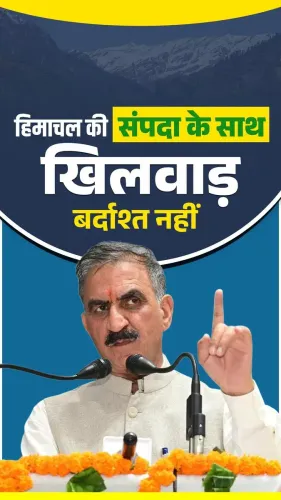
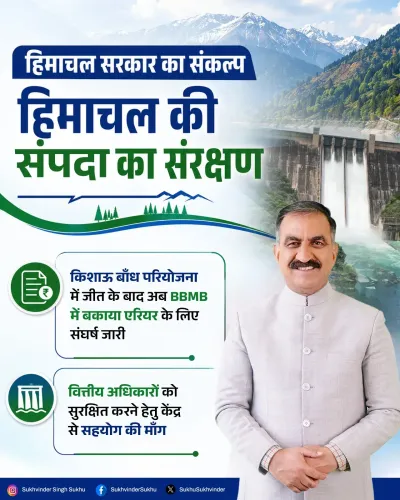
The Chief Minister's Office of Himachal Pradesh issued a sharp warning on Thursday, 16 July 2026, declaring that the Bhakra Beas Management Board (BBMB) must clear long-pending water-use arrears owed to the state before it can continue drawing from Himachal's rivers. The statement, posted on the official CMO account, invoked directions from the Supreme Court of India that have gone unimplemented, and drew a firm line: no payment, no water.
Context
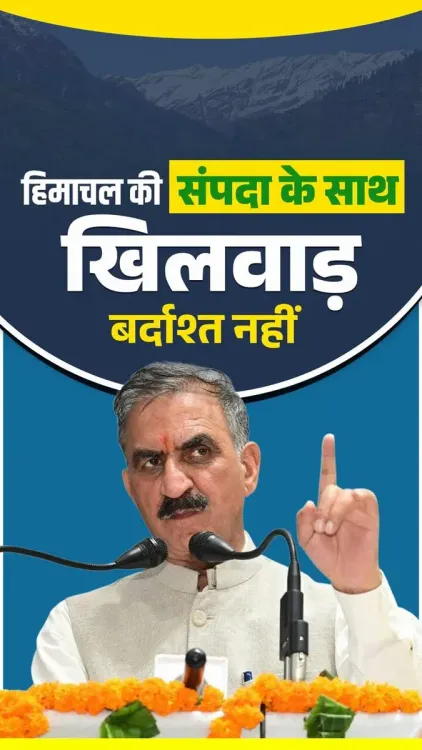
The post states in Hindi: 'BBMB pichle lagbhag 15 varshon se hamare bahumulya paani ka upayog kar rahi hai' — 'BBMB has been using our precious water for approximately 15 years without releasing our due arrears.' The CMO added that despite directions from the Supreme Court of India, the outstanding dues have not been paid to date. The government's position was stated unambiguously: 'If they want water, they must first give Himachal its rightful share.'
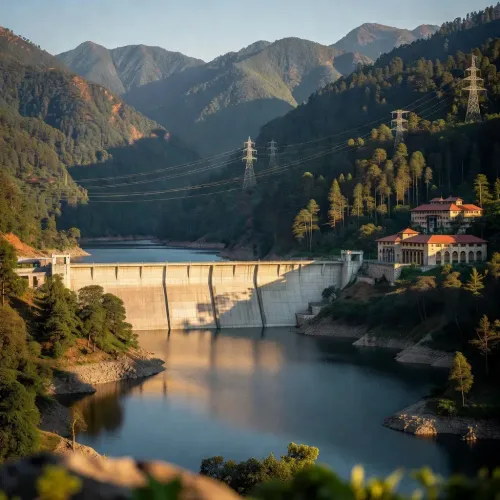
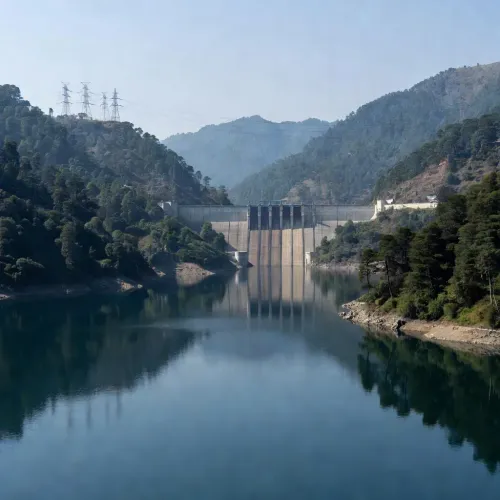
Himachal Pradesh is the upper riparian state whose catchment areas — primarily the Sutlej and Beas river basins — feed the reservoirs that power the BBMB system. The state has historically argued that it receives inadequate compensation relative to the value of the water it contributes.
Policy Backdrop
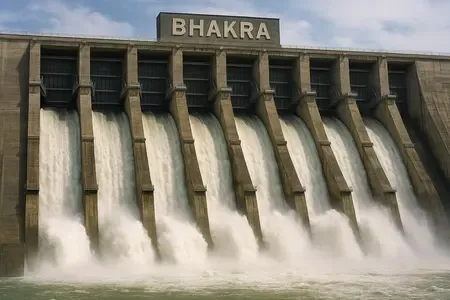
BBMB was constituted under the Punjab Reorganisation Act, 1966 to manage the Bhakra-Nangal and Beas projects, distributing irrigation water and hydroelectric power among Punjab, Haryana, and Himachal Pradesh. The original sharing ratios were set in an era when Himachal Pradesh's claims as a source state were less formally articulated.
Subsequent agreements, including the 1981 Ravi-Beas waters agreement and the Eradi Tribunal award, primarily addressed allocations among Punjab, Haryana, and Rajasthan. Himachal Pradesh has long pursued a separate royalty claim, arguing that its rivers and catchment land underwrite the entire BBMB infrastructure. The Supreme Court has issued directions in related inter-state water matters, though enforcement of arrear payments has remained a point of contention.
Stakeholders and Impact
The BBMB system is a lifeline for Punjab and Haryana farmers, who depend on its canals for irrigation across millions of acres of agricultural land. Any disruption to water allocation would have immediate consequences for the kharif crop cycle and power supply in both states.
For Himachal Pradesh, the arrears dispute is both a fiscal and a political issue — the state government frames unpaid dues as a denial of constitutional rights to equitable resource rent. The broader pattern mirrors disputes in the Cauvery and Krishna basins, where upper riparian states have clashed with downstream beneficiaries over compensation and royalty sharing.
What's Next
The immediate pressure point is whether the BBMB Board or the Northern Zonal Council convenes to address the royalty revision demanded by Himachal Pradesh. Further hearings before the Supreme Court of India on enforcement of its earlier arrears directions will be closely watched.
If the standoff escalates, it could test the constitutional machinery for inter-state water dispute resolution and set a precedent for how source states across India assert claims against statutory river management bodies.
Point of View
The CMO is simultaneously pressuring BBMB and signalling to the judiciary that executive compliance is stalled, potentially inviting contempt proceedings. This move fits a broader pattern of hill and source states — from Himachal to Sikkim — reasserting resource sovereignty against arrangements designed in the 1960s that did not adequately price catchment-area contributions. The political calculus is clear: the Himachal government can afford to be assertive on water rights without alienating its core constituency, while Punjab and Haryana face electoral costs if canal supplies are disrupted.
NationPress
15 Oct 2026
Frequently Asked Questions
What is the BBMB water dispute with Himachal Pradesh about?
The dispute centres on arrears that the Bhakra Beas Management Board allegedly owes Himachal Pradesh for using the state's river water for approximately 15 years without releasing due payments, despite Supreme Court directions to do so.
Has the Supreme Court ordered BBMB to pay Himachal Pradesh?
According to the Chief Minister's Office of Himachal Pradesh, the Supreme Court of India has issued directions regarding the arrears, but these have not been complied with to date.
Which states benefit from BBMB water and could be affected?
Punjab and Haryana are the primary downstream beneficiaries of BBMB irrigation water and hydroelectric power. Any disruption to water supply from Himachal Pradesh would directly impact farmers and power consumers in both states.
What is BBMB and why was it created?
The Bhakra Beas Management Board is a statutory body set up under the Punjab Reorganisation Act, 1966 to manage the Bhakra-Nangal and Beas projects for power generation and irrigation across partner states including Punjab, Haryana, and Himachal Pradesh.
What could happen next in the Himachal Pradesh BBMB standoff?
The dispute could lead to further Supreme Court hearings on enforcement of arrears payments, or a convening of the Northern Zonal Council to mediate between Himachal Pradesh and the downstream states.