HP CM Office flags Rs 32,500 cr dues from Centre, BBMB
Synopsis
The Chief Minister's Office of Himachal Pradesh has publicly stated that the state faces over Rs 32,500 crore in pending dues — Rs 7,000 crore from BBMB, Rs 1,500 crore in disaster relief, and Rs 25,000 crore in GST-related revenue losses over eight years — sharpening the state's fiscal federalism demands ahead of Finance Commission consultations.
Key Takeaways
The HP CMO publicly stated approximately Rs 7,000 crore in dues remain pending from the Bhakra Beas Management Board (BBMB) .
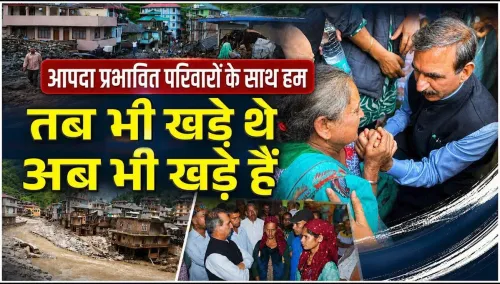
Rs 1,500 crore in disaster relief funds have not yet been received by Himachal Pradesh from the Centre.
The state claims a cumulative revenue loss of approximately Rs 25,000 crore over the past eight years due to the GST regime.
GST was introduced in July 2017 with a five-year state compensation guarantee that expired in June 2022 , leaving a structural gap for hill states.
Himachal Pradesh is a special-category state heavily reliant on central transfers, hydropower royalties, and disaster grants.
The 16th Finance Commission and upcoming Union Budgets are the key near-term forums for addressing these pending dues.
The Chief Minister's Office of Himachal Pradesh on Friday, June 12, 2026, raised a sharp fiscal alarm, publicly stating that the state faces a combined pending dues burden of over Rs 32,500 crore from the Centre and inter-state bodies — spanning disaster relief, hydropower royalties, and GST-related revenue losses accumulated over eight years.
Context
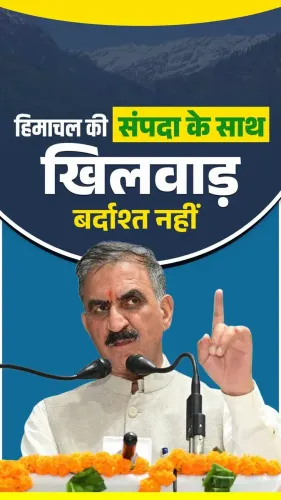
The CMO's post, a reply on X, listed three distinct financial grievances in pointed terms. It stated that approximately Rs 7,000 crore in dues remain pending from the Bhakra Beas Management Board (BBMB). Additionally, Rs 1,500 crore in disaster relief funds have not yet been received by the state. The post also claimed that Himachal Pradesh has suffered a cumulative revenue loss of approximately Rs 25,000 crore over the past eight years on account of the Goods and Services Tax (GST) regime.
In its original Hindi, the post read: 'BBMB se lagbhag 7,000 crore rupaye ki denadari laambit hai' [approximately Rs 7,000 crore in dues from BBMB remain pending], underscoring the directness with which the state government chose to frame its fiscal position publicly.
Policy Backdrop
The BBMB is a statutory body overseeing shared hydropower and irrigation infrastructure on the Sutlej-Beas river system, with stakeholder states including Himachal Pradesh, Punjab, Haryana, and Rajasthan. Himachal Pradesh has historically raised disputes over royalty and power dues from the board in forums including the Northern Zonal Council, a pattern that stretches back to the 1990s.
On the GST front, the nationwide tax was rolled out in July 2017, replacing a web of state and central levies. A five-year compensation guarantee offered to states to offset revenue shortfalls expired in June 2022. The CMO's reference to 'eight years of revenue loss' aligns with the period since GST's introduction, pointing to a structural gap that the compensation mechanism did not fully bridge for hill states.
Himachal Pradesh is classified as a special-category state and is heavily dependent on central transfers, hydropower royalties, and grants. The state is also perennially vulnerable to floods and landslides, making timely release of disaster funds a recurring fiscal pressure point. Disaster relief grants flow through the National Disaster Response Fund, constituted under the Disaster Management Act, 2005.
Stakeholders and Impact
The most immediate stakeholder is the state exchequer, whose capacity to fund public services, infrastructure repair, and disaster response is directly constrained by delayed receipts of this scale. Residents of the hill state — particularly those in flood-prone zones who depend on swift government relief — bear the downstream consequences of any lag in disaster fund disbursements.
The public articulation of these dues also signals that Himachal Pradesh is positioning these demands as a political and administrative priority, likely ahead of consultations with the 16th Finance Commission, whose report is expected by late 2025. Similar fiscal federalism grievances have been voiced by other Himalayan and special-category states in Finance Commission hearings, suggesting a broader coalition of hill states pressing for structural redress.
What's Next
The 16th Finance Commission deliberations present the most structured near-term avenue for states like Himachal Pradesh to press for an enhanced share in central taxes and revised disaster-fund norms. Any supplementary provisions in subsequent Union Budgets for pending disaster relief could partially address the Rs 1,500 crore shortfall flagged by the CMO. Resolution of the BBMB dues, however, will likely require direct inter-state negotiation and possible intervention by the Ministry of Jal Shakti or the Northern Zonal Council. The public framing of these numbers by the CMO's official account raises the political stakes and makes a quiet administrative resolution harder to achieve.
Point of View
Likely timed to influence the 16th Finance Commission's deliberations and keep hill-state grievances in the national conversation. The bundling of three distinct claims (BBMB royalties, disaster relief, and GST losses) into a single post reflects a broader strategy by special-category states to frame their fiscal stress as systemic rather than incidental. The GST compensation expiry in June 2022 has become a fault line in Centre-state fiscal relations, and Himachal Pradesh's invocation of eight years of cumulative loss is a direct challenge to the Union's narrative that GST has been revenue-neutral for states. How the Finance Commission responds to such demands from multiple hill states could set a precedent for the next devolution cycle.
NationPress
29 Jul 2026
Frequently Asked Questions
What are the pending dues Himachal Pradesh has claimed from the Centre and BBMB?
The HP CMO has stated that approximately Rs 7,000 crore is pending from the Bhakra Beas Management Board, Rs 1,500 crore in disaster relief funds has not been received, and the state has faced roughly Rs 25,000 crore in GST-related revenue losses over eight years — a combined figure of over Rs 32,500 crore.
What is BBMB and why does Himachal Pradesh have dues from it?
The Bhakra Beas Management Board is a statutory inter-state body managing hydropower and irrigation projects on the Sutlej-Beas river system. Himachal Pradesh has historically claimed royalty and power dues from the board, a dispute that has been raised in the Northern Zonal Council since the 1990s.
Why does Himachal Pradesh blame GST for revenue losses?
GST, introduced in July 2017, replaced state taxes with a centralised system and offered states a five-year compensation guarantee that ended in June 2022. Himachal Pradesh argues that the regime has caused a cumulative revenue shortfall of approximately Rs 25,000 crore over eight years, as the compensation did not fully cover the gap for hill states.
What is the National Disaster Response Fund and why has HP not received its share?
The National Disaster Response Fund is a central pool under the Disaster Management Act 2005 that provides grants to states for post-calamity relief. Himachal Pradesh, which faces recurrent floods and landslides, has stated that Rs 1,500 crore in disaster relief dues remain unreleased by the Centre.
What is the 16th Finance Commission and how is it relevant to HP's demands?
The 16th Finance Commission is the constitutional body tasked with recommending the devolution of central taxes to states for the next fiscal cycle, with its report expected by late 2025. Himachal Pradesh's public articulation of these dues is widely seen as an effort to press its case before the Commission for a larger share of central resources and revised disaster-fund norms.