HP CM Office: Centre Cut Rs 10,000 Cr RDG, State Bounced Back
Synopsis
The Chief Minister's Office of Himachal Pradesh stated on June 7, 2026 that the Central Government cut approximately Rs 10,000 crore in Revenue Deficit Grant — a transfer in place since 1952 — yet the state has rapidly improved its fiscal position, sharpening centre-state fiscal tensions ahead of the 16th Finance Commission.
Key Takeaways
The CMO of Himachal Pradesh stated on June 7, 2026 that the Centre discontinued approximately Rs 10,000 crore in Revenue Deficit Grant (RDG) to the state.
The CMO claimed this grant had been received continuously since 1952 , rooted in early post-independence fiscal arrangements for hill states.
Despite the discontinuation, the state government asserted it has achieved rapid improvement in its financial position.
The 15th Finance Commission revised RDG eligibility criteria for 2021–26 , affecting several special-category and hill states.
The precise quantum and exact date of the RDG discontinuation have not been independently verified from public records.
The issue is expected to feature in discussions around the Union Budget 2026–27 and the upcoming 16th Finance Commission .
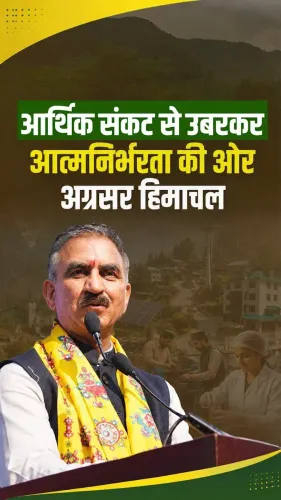
The Chief Minister's Office of Himachal Pradesh, in a post on X on Sunday, June 7, 2026, stated that the Central Government had discontinued approximately Rs 10,000 crore in Revenue Deficit Grant (RDG) to the state — a transfer that had reportedly been in place since 1952 — while asserting that the state government had nonetheless achieved rapid improvement in its fiscal position.
The post, in Hindi, stated: 'Kendra sarkar dwara pradesh sarkar ki RDG ki lagbhag 10 hazar crore rupaye ki rashi band kar di gayi, jabki yeh hamein varsh 1952 se mil rahi thi. Baavjood iske hamne vittiya sthiti mein teji se sudhar lane ka kary kiya hai.' (The Central Government discontinued approximately Rs 10,000 crore of RDG to the state government, even though we had been receiving it since 1952. Despite this, we have worked to rapidly improve the financial situation.)
Context
Revenue Deficit Grants are disbursed by the Union Government to states that face a gap between their assessed revenue expenditure and revenue receipts, as recommended by successive Finance Commissions. For Himachal Pradesh, a special-category hill state with constrained own-revenue generation due to its mountainous terrain, such grants have historically formed a significant share of state finances. The CMO's claim that this support dates to 1952 points to arrangements made in the early post-independence era for states with structural fiscal disadvantages.Policy Backdrop
The 15th Finance Commission (covering 2021–26) revised the methodology for computing Revenue Deficit Grants, consolidating several specific-purpose transfers and recalculating eligibility on updated criteria. This shift moved away from the older Gadgil-Mukherjee formula-based plan assistance that had long benefited special-category states. Himachal Pradesh, alongside states such as Uttarakhand and several northeastern states, has consistently cited geographic disadvantages — higher per-unit costs of infrastructure, low population density, and limited industrial base — in negotiations over central support. The CMO's assertion of a Rs 10,000 crore discontinuation, if confirmed through official records, would represent a substantial fiscal shock for a state whose total budget is in the range of tens of thousands of crore rupees annually. It is important to note that the precise identity and quantum of the referenced RDG tranche, and the exact date of its discontinuation, have not been independently verified from established public records. The CMO's post represents the state government's stated position.Stakeholders and Impact
The primary stakeholder is the Himachal Pradesh exchequer and, by extension, the residents who depend on state-funded services — roads, healthcare, education, and disaster management in a seismically active, flood-prone Himalayan geography. A reduction of this scale in central transfers would typically force a state to either compress capital expenditure, seek additional market borrowings, or both. The CMO's claim of 'rapid improvement' in the financial situation suggests the state has pursued internal fiscal correction measures, though the post does not specify what those measures entailed. Centre-state fiscal friction of this nature also has political dimensions, as Himachal Pradesh is currently governed by the Indian National Congress while the Bharatiya Janata Party leads the Central Government.What's Next
Attention will now turn to the Union Budget 2026–27 and any supplementary grants that may address hill-state concerns, as well as the terms of reference of the forthcoming 16th Finance Commission, which will set the fiscal transfer framework for the post-2026 period. How the Commission defines eligibility for Revenue Deficit Grants — and whether it restores, restructures, or further consolidates such transfers — will be decisive for states like Himachal Pradesh that have historically relied on this stream. The CMO's public framing of the issue signals that Shimla intends to keep fiscal federalism at the centre of its political and budgetary discourse ahead of those deliberations.Point of View
000 crore RDG cut is a calculated move in the ongoing fiscal federalism debate, framing the Congress-governed state as a victim of BJP-led Centre's grant rationalisation while simultaneously claiming administrative resilience. The reference to 1952 is rhetorically significant — it positions the discontinuation not as routine Finance Commission revision but as a rupture of a foundational post-independence compact. This narrative is likely to gain traction as the 16th Finance Commission begins its work, with hill and special-category states lobbying to restore formula-based protections. The broader pattern suggests that centre-state fiscal disputes will intensify in the run-up to the next Finance Commission cycle, with opposition-governed states amplifying grievances through public channels.
NationPress
22 Oct 2026
Frequently Asked Questions
What is the RDG grant that Himachal Pradesh says the Centre stopped?
RDG stands for Revenue Deficit Grant, a transfer recommended by the Finance Commission to states whose assessed revenue expenditure exceeds their revenue receipts. Himachal Pradesh's CMO states the Centre discontinued approximately Rs 10,000 crore of this grant, which the state had reportedly received since 1952.
Why did the Central Government stop Himachal Pradesh's RDG?
The CMO's post does not specify the Centre's stated reason. However, the 15th Finance Commission revised the methodology for computing Revenue Deficit Grants for 2021–26, which reduced or eliminated RDG eligibility for several states under updated criteria.
How has Himachal Pradesh managed after losing Rs 10,000 crore in central grants?
The CMO stated that despite the discontinuation, the state has worked to rapidly improve its financial situation, though the post did not detail the specific measures taken to achieve this.
What is the 15th Finance Commission and how does it affect state grants?
The 15th Finance Commission is a constitutional body that recommended the division of tax revenues and grants between the Union and states for 2021–26. It consolidated several specific-purpose transfers and recalculated RDG eligibility, affecting hill and special-category states like Himachal Pradesh.
What happens next for Himachal Pradesh's central grant dispute?
The key milestones to watch are the Union Budget 2026–27 for any supplementary grants to hill states, and the constitution of the 16th Finance Commission, which will set the fiscal transfer framework for the period after 2026.