Did Himachal Receive a Significant Increase in Revenue Deficit Grant?
Synopsis
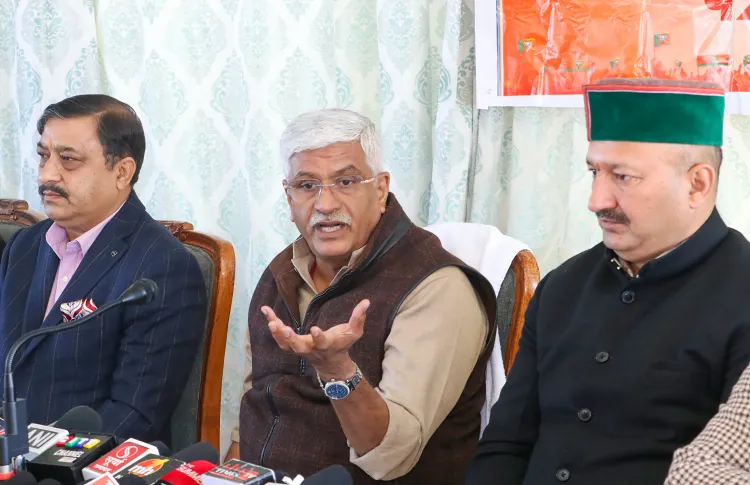
Union Minister Gajendra Singh Shekhawat highlights a significant increase in Himachal Pradesh's Revenue Deficit Grant. He stresses the importance of fiscal discipline for states and addresses concerns regarding the potential abolition of the RDG, framing it as a matter of citizens' rights and sound financial management.
Key Takeaways
Himachal Pradesh has seen a notable increase in Revenue Deficit Grant (RDG) .
The importance of fiscal discipline for sustainable financial health.
RDG is intended as a temporary support mechanism.
Tax devolution has increased under the new Finance Commission framework.
Investment in disaster resilience is essential given climate changes.
Shimla, Feb 8 (NationPress) The Union Minister for Culture and Tourism, Gajendra Singh Shekhawat, emphasized on Sunday that Himachal Pradesh has indeed seen a notable increase in its Revenue Deficit Grant (RDG) in recent years when compared to previous cycles. However, he stressed that states must enhance their own revenue systems and implement fiscal discipline.
He explained that a fiscal deficit represents the gap between revenue and expenditure, which cannot be resolved through political blame games but requires structural financial reforms.
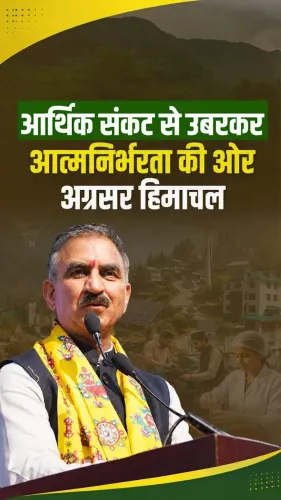
This statement came in response to comments made by Chief Minister Sukhvinder Singh Sukhu, who suggested that the findings of the 16th Finance Commission could have lasting implications for the state's economy, particularly regarding the upcoming budget for 2026-27.
“The abolition of the RDG is not merely a governmental concern; it pertains to the rights of the people of the state. We are prepared to approach Delhi and discuss this with the Prime Minister alongside BJP MPs and MLAs. Losing the RDG provision will make it challenging to reclaim the rights of our citizens,” the Chief Minister was reported as stating.
Nonetheless, Union Minister Shekhawat clarified that the RDG was originally intended as a temporary and transitional support system, recommended by prior Finance Commissions to assist fiscally stressed states in managing short-term financial gaps. “It was never intended as a permanent entitlement,” he communicated to the media.
He noted that successive Finance Commissions have extended the RDG with caution. During the 15th Finance Commission period, particularly amidst the pandemic, the RDG support was significantly increased to aid states in their recovery efforts.
Additionally, under the new Finance Commission framework, the tax devolution to states has seen a structural increase, leading to a rise in Himachal Pradesh’s allocation.
“With enhanced devolution and improved fiscal management, states can compensate for the gradual reduction of RDG without compromising on development expenditure,” he stated. He also cautioned that increasing debt-to-GDP ratios, particularly Himachal surpassing the 40 percent threshold, should serve as a wake-up call for necessary financial adjustments.
The Union Minister reiterated that the Centre has consistently backed Himachal in both tourism and infrastructure initiatives. He pointed out that under the Special Assistance for Capital Infrastructure scheme, the state has been granted a long-term, 50-year interest-free loan aimed at boosting tourism infrastructure, which effectively serves as grant-like support.
Moreover, under various schemes including Swadesh Darshan, PRASAD, and challenge-based destination development, Himachal has secured substantial funding and will continue to acquire support for feasible project proposals.
Regarding disaster management, he mentioned that the Union Government has significantly increased allocations for SDRF and NDRF over the last ten years, allowing states to utilize these funds for preventive and mitigation strategies, not just post-disaster relief. He urged the state to bolster investment in resilience measures, particularly in light of evolving climate patterns.
Point of View
I believe the dialogue surrounding the Revenue Deficit Grant is crucial. It highlights the need for states to take ownership of their financial health while ensuring that the rights of the populace are safeguarded. The balance of support from the Centre and self-reliance is essential for sustainable growth.
NationPress
15 Oct 2026
Frequently Asked Questions
What is the Revenue Deficit Grant?
The Revenue Deficit Grant (RDG) is a financial support mechanism provided to fiscally stressed states to help manage short-term revenue gaps.
Why is fiscal discipline important for states?
Fiscal discipline ensures that states manage their finances responsibly, avoiding excessive debt and promoting sustainable economic growth.
What impact does the Finance Commission have on states?
The Finance Commission recommends the distribution of financial resources between the Centre and states, influencing funding and support for various initiatives.
How has the RDG supported Himachal Pradesh?
Himachal Pradesh has received significant RDG support in recent years, which has helped the state manage its finances and invest in development.
What are the concerns regarding the abolition of the RDG?
The abolition of the RDG raises concerns about the potential loss of financial support for the state's citizens and the ability to reclaim financial rights.