HP CM Office: Centre halted RDG, state economy still strengthened
Synopsis
The Chief Minister's Office of Himachal Pradesh says the Centre has halted the state's Revenue Deficit Grant of approximately Rs 10,000 crore per year — a transfer dating to 1952 — but asserts the state has strengthened its economy through limited resources and financial discipline.
Key Takeaways
The CMO Himachal Pradesh announced that the Union government has stopped the state's Revenue Deficit Grant (RDG) .
Himachal Pradesh had been receiving approximately Rs 10,000 crore per year in RDG since 1952 .
The state government claims to have strengthened its economy despite this fiscal setback, citing financial discipline .
RDG is a constitutional transfer mechanism recommended by the Finance Commission to bridge states' revenue gaps after tax devolution.
The 16th Finance Commission , deliberating for the post-2026 period, will be critical in determining whether such grants are restored to hill states.
The development has broad implications for other special category and hill states reliant on similar central fiscal transfers.
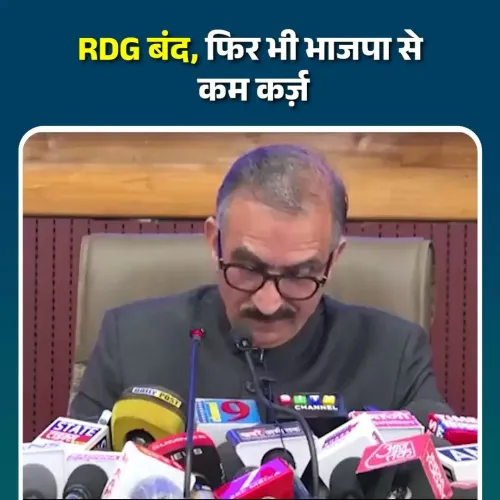
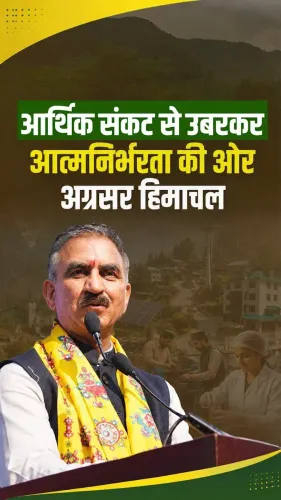
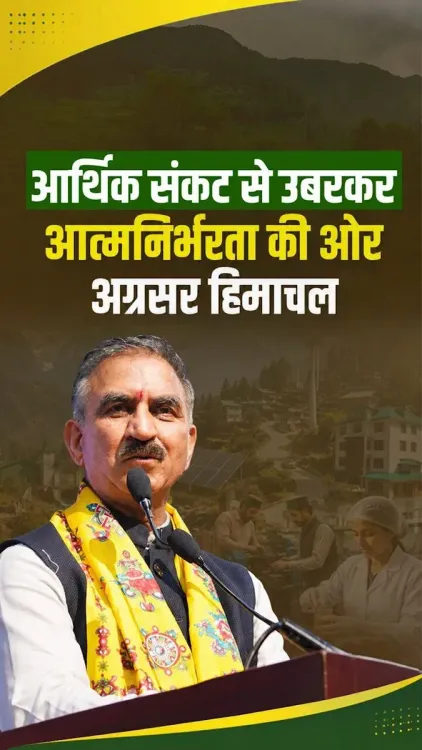
The Chief Minister's Office of Himachal Pradesh stated on Saturday, 13 June 2026, that the Union government has stopped the Revenue Deficit Grant (RDG) that the state had been receiving since 1952, amounting to approximately Rs 10,000 crore per year, and asserted that despite this fiscal setback, the state has strengthened its economy within a short period through limited resources and financial discipline.
The official post, shared from the CMO Himachal Pradesh handle, stated in Hindi: 'हिमाचल प्रदेश को वर्ष 1952 से लगभग 10 हजार करोड़ रुपये की RDG मिल रही थी, जिस पर केंद्र सरकार ने रोक लगा दी है।' ('Himachal Pradesh had been receiving approximately Rs 10,000 crore in RDG since 1952, which the central government has now stopped.') The statement further claimed that 'despite this, with limited resources and financial discipline, we have strengthened our economy in a very short time.'
Context
The Revenue Deficit Grant (RDG) is a fiscal transfer mechanism through which the Union government compensates states whose projected revenue expenditure exceeds their projected revenue receipts after devolution. For a hill state like Himachal Pradesh, which has historically carried a high per-capita expenditure burden due to its difficult terrain, sparse population, and limited own-tax base, this grant has been a cornerstone of state finances since the First Finance Commission of 1952. The CMO's assertion that this grant has now been stopped marks a significant fiscal development. If confirmed, it would represent the withdrawal of a transfer that the state has depended on for over seven decades. The post does not specify the exact year or Finance Commission cycle from which the discontinuation took effect.Policy Backdrop
India's fiscal federalism architecture has undergone considerable change since the 14th Finance Commission (2015–20), which sharply increased the states' share of the divisible tax pool from 32 per cent to 42 per cent while simultaneously reducing or eliminating several plan and non-plan grants. The underlying logic was that higher devolution would compensate for reduced grants, incentivising states to improve their own-tax effort. The 15th Finance Commission (2021–26) continued this rationalisation, recommending post-devolution RDG only for states that met specific revenue-gap criteria. Himachal Pradesh, classified as a special category state for much of its fiscal history, has been among the states most exposed to this shift. The 16th Finance Commission, currently deliberating for the period beyond 2026, will be watched closely by hill and north-eastern states for any reversal or revision of this approach.Stakeholders and Impact
The discontinuation of Rs 10,000 crore in annual RDG — if the figure holds — would place enormous pressure on Himachal Pradesh's state budget. The state's total own tax revenue has historically been a fraction of this amount, making central transfers critical for funding salaries, pensions, and social sector schemes. The CMO's framing — emphasising 'financial discipline' and economic strengthening 'in a very short time' — positions the current state government as having navigated this challenge effectively. However, the claim of economic strengthening will be scrutinised against the state's outstanding debt, fiscal deficit figures, and delivery of welfare commitments. Special category states broadly, and hill states in particular, are key stakeholders in any revision of the RDG framework.What's Next
All eyes will be on the 16th Finance Commission's final recommendations, which are expected to shape central transfers to states from 2026–27 onwards. Himachal Pradesh is likely to make a strong case before the Commission for restoration or enhancement of RDG, citing its structural fiscal constraints. The state government's ability to sustain public expenditure without this grant — and without accumulating unsustainable debt — will be the real test of the financial discipline it claims to have exercised. How the Centre responds to representations from similar hill and special-category states could set a precedent for fiscal federalism in India's mountainous regions for the next five years.Point of View
Framing the withdrawal of a seven-decade-old fiscal transfer as a challenge the state has overcome through its own governance. By invoking the year 1952, the messaging roots the RDG as a structural entitlement rather than a discretionary favour, building a case that the Centre's action was a withdrawal of a long-standing commitment. This fits a broader pattern seen across opposition-governed states that have used fiscal federalism grievances — reduced grants, GST compensation disputes — as political capital against the Centre. The assertion of economic resilience, if backed by verifiable fiscal data, could strengthen Himachal Pradesh's representation before the 16th Finance Commission; if not, it risks being scrutinised as premature optimism.
NationPress
27 Oct 2026
Frequently Asked Questions
What is the Revenue Deficit Grant that Himachal Pradesh was receiving?
The Revenue Deficit Grant (RDG) is a transfer from the Union government to states whose revenue expenditure exceeds their revenue receipts after tax devolution, as recommended by the Finance Commission. Himachal Pradesh claims to have received approximately Rs 10,000 crore annually under this mechanism since 1952.
Why has the Centre stopped Himachal Pradesh's RDG?
The CMO's post does not specify the exact reason or the Finance Commission cycle from which the discontinuation applies. Broadly, successive Finance Commissions since 2015 have rationalised post-devolution RDG, arguing that higher tax devolution compensates states sufficiently.
How much money did Himachal Pradesh lose when RDG was stopped?
According to the CMO Himachal Pradesh's post, the state was receiving approximately Rs 10,000 crore per year in RDG. The exact quantum and date of discontinuation have not been independently confirmed.
What is the 16th Finance Commission and why does it matter for HP?
The 16th Finance Commission is the constitutional body currently deliberating on the formula for central transfers to states for the period from 2026–27 onwards. Its recommendations on RDG and devolution will directly determine whether Himachal Pradesh and similar hill states receive restored fiscal support.
Is Himachal Pradesh a special category state?
Himachal Pradesh has historically been treated as a special category state for purposes of central assistance, given its difficult terrain, low population density, and limited own-tax base, which structurally limit its revenue-generating capacity.