CM Sukhu Claims BBMB Arrears Win Over Haryana
Synopsis
Himachal Pradesh CM Sukhvinder Singh Sukhu claims his government secured a landmark commitment from Haryana — an affidavit on BBMB arrears payment — ending decades of deadlock and crediting the 2022 Congress government's political will for the breakthrough.
Key Takeaways
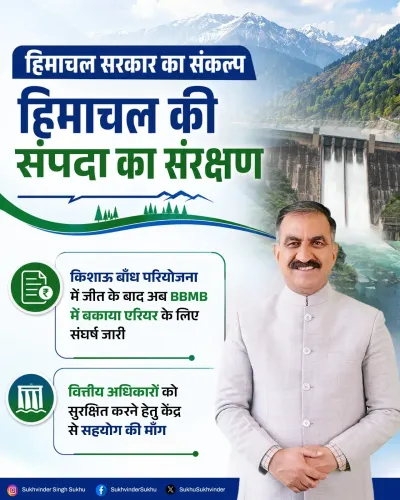
Haryana agreed to submit an affidavit committing to payment of BBMB arrears owed to Himachal Pradesh, breaking a long impasse.
The Kishau Dam negotiations on the Tons River served as the immediate pressure point that forced the inter-state dialogue.
CM Sukhvinder Singh Sukhu stated that without the Congress government, recovering BBMB dues would have taken another 20 years .
The Bhakra Beas Management Board , constituted in 1976 , manages water and power sharing among Himachal, Haryana, Punjab, Rajasthan and Delhi.
Himachal Pradesh has pursued BBMB arrears and enhanced water-power shares since the 1980s without resolution across successive administrations.
Actual transfer of arrears by Haryana and formal BBMB decisions on Kishau Dam water-sharing ratios remain pending.
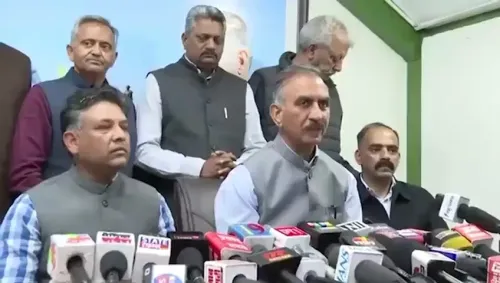
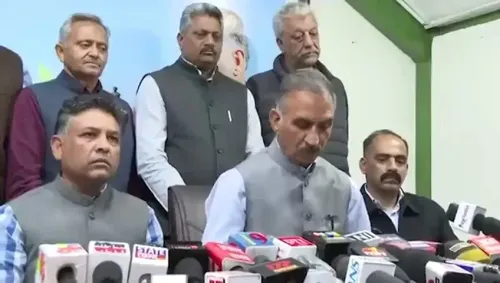
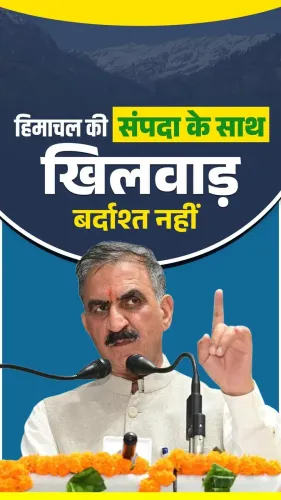
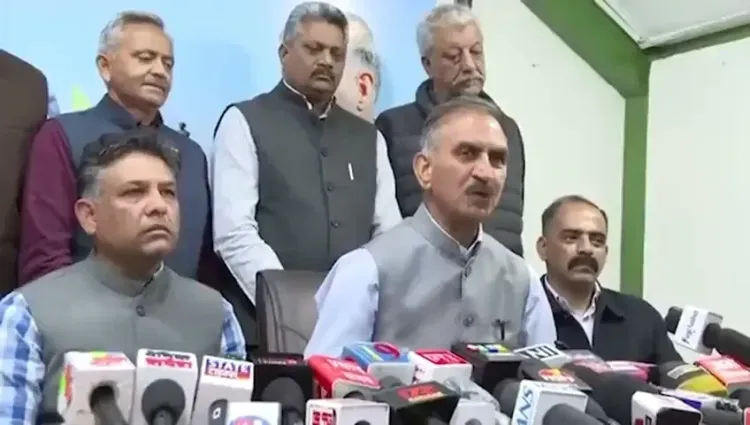
A dispute that had festered for decades across multiple state administrations — Himachal Pradesh's unpaid dues from the Bhakra Beas Management Board (BBMB) — finally moved toward resolution, and Himachal Pradesh Chief Minister Sukhvinder Singh Sukhu says it took political will, not patience, to get there. Speaking from Oak Over, Shimla, on Saturday, November 7, 2026, Sukhu credited his government's direct negotiating stance for extracting a key commitment from Haryana — a state that, along with Delhi and Rajasthan, had long drawn water from BBMB systems while arrears to Himachal piled up.
The Kishau Dam flashpoint that forced the issue
The immediate trigger, Sukhu explained, was the Kishau Dam dispute — a proposed multipurpose project on the Tons River whose water-sharing negotiations exposed just how urgently downstream states needed Himachal's cooperation. 'It became clear during the Kishau Dam case that Haryana, Delhi and Rajasthan need water,' Sukhu said. 'I decided we would not compromise on Himachal's interests.' The Kishau project, long discussed as a lifeline for irrigation, hydropower and water supply across northern India, had become a pressure point — and Sukhu chose to use it.
Rather than let the moment pass, the Chief Minister pressed for a concrete guarantee on the older BBMB arrears question. The breakthrough came when Haryana's government agreed to submit an affidavit committing to payment of BBMB arrears owed to Himachal Pradesh. That affidavit, Sukhu argued, is what unlocked the agreement — not goodwill, but a signed legal undertaking.
Decades of deadlock, one affidavit
The Bhakra Beas Management Board was constituted in 1976 under the Punjab Reorganisation Act to manage the Bhakra-Nangal and Beas projects and distribute water and power among partner states. Since the 1980s, Himachal Pradesh governments of every political colour have raised claims for enhanced shares and unpaid dues — and, just as consistently, those claims have dragged on without resolution. Sukhu's framing is blunt: without Congress in power in Shimla, 'it would have taken another 20 years to recover BBMB arrears.' He added that such cases routinely stay stuck for 15 years or more when political will is absent.
The claim lands in a well-documented pattern. Inter-state river water and power disputes in northern India have historically outlasted governments, commissions and court orders alike. Resolution, when it comes, almost always requires a direct political agreement between state administrations — not just judicial or central intervention.
Congress government's political framing
Sukhu was explicit about the credit line: 'This is a victory of the will of the Congress government elected by the people in 2022.' ('यह 2022 में जनता द्वारा चुनी गई कांग्रेस सरकार की इच्छाशक्ति की जीत है।') The statement, delivered at Oak Over — the official Chief Minister's residence in Shimla — is as much a political marker as a policy announcement. With inter-state water politics running hot across northern India, Sukhu is signalling to Himachal's electorate that their state's resources are no longer being quietly surrendered in the interest of keeping regional peace.
The actual transfer of BBMB arrears by Haryana, and any formal BBMB board decisions on Kishau Dam's final water-sharing ratios, remain the next milestones to watch. An affidavit is a commitment — its fulfilment is the real test.
Point of View
Delhi and Rajasthan need Himachal's cooperation — to the older BBMB arrears question, Sukhu demonstrated the kind of linkage politics that smaller states have historically struggled to execute against larger neighbours. The affidavit mechanism, if it holds, could set a precedent for how Himachal pursues future resource claims. Politically, the framing as a '2022 Congress mandate' victory is a direct pitch to voters ahead of the next electoral cycle, positioning the party as the only force capable of defending the hill state's resource interests.
NationPress
7 Nov 2026
Frequently Asked Questions
What are BBMB arrears and why does Himachal Pradesh claim them?
BBMB arrears refer to unpaid dues owed to Himachal Pradesh for water and power generated through Bhakra-Nangal and Beas projects managed by the Bhakra Beas Management Board. Himachal, as the upper-riparian state where these projects are located, has claimed enhanced shares and back-payments since the 1980s.
What is the Kishau Dam and why is it significant?
The Kishau Dam is a proposed multipurpose project on the Tons River intended to provide irrigation, hydropower and water supply to several northern Indian states. Its water-sharing negotiations became a pressure point that CM Sukhu used to push for resolution of Himachal's BBMB arrears from Haryana.
What did Haryana agree to in the BBMB arrears dispute?
According to CM Sukhu, Haryana's government agreed to submit an affidavit committing to payment of BBMB arrears owed to Himachal Pradesh. This legal undertaking is what Sukhu says unlocked the broader agreement.
What is the Bhakra Beas Management Board?
The Bhakra Beas Management Board is a statutory body constituted in 1976 under the Punjab Reorganisation Act. It manages the Bhakra-Nangal and Beas dam projects and oversees the allocation of water and power among partner states including Himachal Pradesh, Haryana, Punjab, Rajasthan and Delhi.
Has Himachal Pradesh received the BBMB arrears yet?
As of CM Sukhu's statement, Haryana has agreed to submit an affidavit on payment — but the actual transfer of arrears and formal BBMB board decisions on related water-sharing ratios are still pending and represent the next key milestones to watch.