CM Samrat Choudhary Thanks Modi, Sitharaman for Advance Tax Devolution to Bihar
Synopsis
Bihar Chief Minister Samrat Choudhary publicly thanked PM Narendra Modi and Finance Minister Nirmala Sitharaman on August 1, 2026 for releasing an advance tax devolution installment to Bihar, calling it a catalyst for the state's development agenda and its 'Samridh Bihar' vision.
Key Takeaways
Bihar CM Samrat Choudhary publicly thanked PM Narendra Modi and FM Nirmala Sitharaman on August 1, 2026 for an advance tax devolution release to Bihar.
Tax devolution is a constitutional mechanism under Article 280 , with the 15th Finance Commission fixing states' share at 41 percent of the divisible pool for 2021–26 .
Bihar benefits significantly from the income-distance weighting in the devolution formula, which favours lower per-capita-income states.
Advance installments are periodically released by the Centre to maintain state cash flow for ongoing infrastructure and welfare projects.
Choudhary linked the release to both the national Viksit Bharat vision and Bihar's own Samridh Bihar development goal.
The 16th Finance Commission deliberations will next shape Bihar's devolution share for the coming decade.
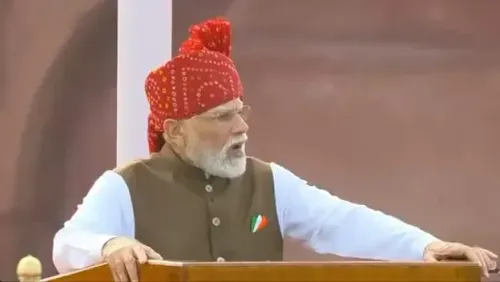
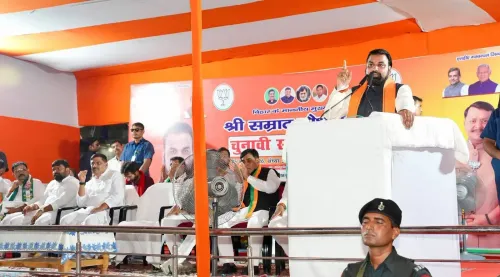
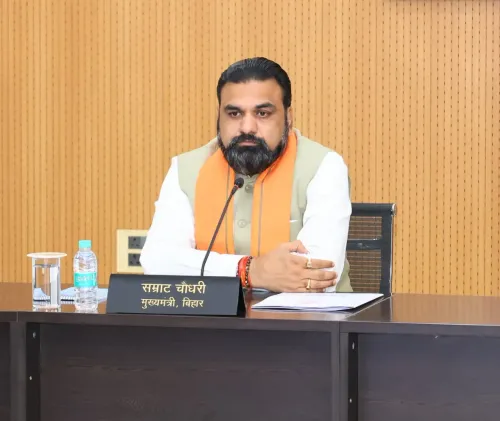
An advance installment of central tax devolution is heading to Bihar — and Bihar Chief Minister Samrat Choudhary wants the architects of that decision to know exactly how much it means. On Saturday, August 1, 2026, Choudhary took to X to publicly thank Prime Minister Narendra Modi and Union Finance Minister Nirmala Sitharaman for releasing the early tranche, calling it a shot of momentum for the state's development agenda.
In his post, Choudhary wrote: 'कर हस्तांतरण की अग्रिम किस्त जारी करने के लिए हार्दिक आभार' — 'heartfelt gratitude for releasing the advance installment of tax devolution' — adding that the decision would give 'new momentum to Bihar's development works' and strengthen the resolve of a 'समृद्ध बिहार' ('Prosperous Bihar').
What Tax Devolution Actually Means for Bihar
This is not a grant or a subsidy — it is Bihar's constitutional due. Under Article 280 of the Indian Constitution, central tax proceeds are shared with states based on formulas set by successive Finance Commissions. The 15th Finance Commission, covering 2021–26, fixed the states' aggregate share at 41 percent of the divisible pool, distributed using criteria that include population, area, forest cover, and income distance — a metric that rewards poorer states. Bihar, with its large population and significant developmental gap, benefits meaningfully from the income-distance weighting. What makes this release notable is the 'advance' nature of the installment. The Centre periodically front-loads devolution tranches — outside the regular monthly schedule — to ensure states maintain cash flow for ongoing infrastructure and welfare schemes. For a state like Bihar, where capital expenditure on roads, bridges, schools, and health infrastructure is a political and administrative priority, an early infusion can mean the difference between a project staying on schedule or stalling.Bihar's 'Samridh Bihar' Goal and the Viksit Bharat Frame
Choudhary's post tags two hashtags — #विकसित_भारत (Viksit Bharat, or Developed India) and #समृद्ध_बिहार (Samridh Bihar, or Prosperous Bihar) — deliberately stitching state ambition to the national vision. The alignment is not accidental. The BJP-led Centre has consistently framed cooperative federalism — timely fiscal transfers, special packages, and scheme co-financing — as the scaffolding on which states like Bihar build their development stories. Bihar has historically been among the higher recipients under devolution formulas precisely because income-distance criteria amplify allocations to states with lower per-capita income. That structural advantage, combined with an advance release, gives the state government more fiscal room heading into the second half of the financial year. The next markers to watch: subsequent quarterly devolution installments for 2025–26, and how the incoming 16th Finance Commission recalibrates the formula — a deliberation that will shape Bihar's fiscal arithmetic for the decade ahead.Point of View
Though constitutionally routine, carries political weight in a state where infrastructure delivery is a key electoral metric. For the BJP, which governs both Bihar (in alliance) and the Centre, such fiscal choreography reinforces the 'double-engine government' narrative ahead of future electoral cycles. The more consequential story, however, is the 16th Finance Commission's upcoming formula revision — that outcome will determine whether Bihar's structural devolution advantage is preserved or diluted.
NationPress
16 Sept 2026
Frequently Asked Questions
What is tax devolution and why does Bihar receive it?
Tax devolution is the constitutional mechanism by which the Centre shares a portion of its tax collections with states. Bihar receives a significant share because the 15th Finance Commission's formula weights income distance heavily, favouring states with lower per-capita income.
Why was this tax devolution installment described as 'advance'?
The Centre periodically releases installments ahead of the regular monthly schedule to ensure states have adequate cash flow for ongoing development projects and welfare schemes. Bihar CM Samrat Choudhary's post specifically thanked the Centre for this early release.
What is the 15th Finance Commission's devolution share for states?
The 15th Finance Commission recommended that states receive 41 percent of the central divisible pool of taxes for the period 2021 to 2026, distributed based on population, area, forest cover, and income distance criteria.
What is 'Samridh Bihar' that CM Samrat Choudhary mentioned?
'Samridh Bihar' translates to 'Prosperous Bihar' and is the development vision articulated by the Bihar government, focused on accelerating infrastructure, welfare, and economic growth in the state.
What is the significance of the 16th Finance Commission for Bihar?
The 16th Finance Commission will set the new devolution formula for the period after 2026. Its decisions on criteria weighting will determine Bihar's share of central taxes for the next several years, making its deliberations closely watched by the state government.