Is Dense Fog Affecting Delhi-NCR's Air Quality?
Synopsis
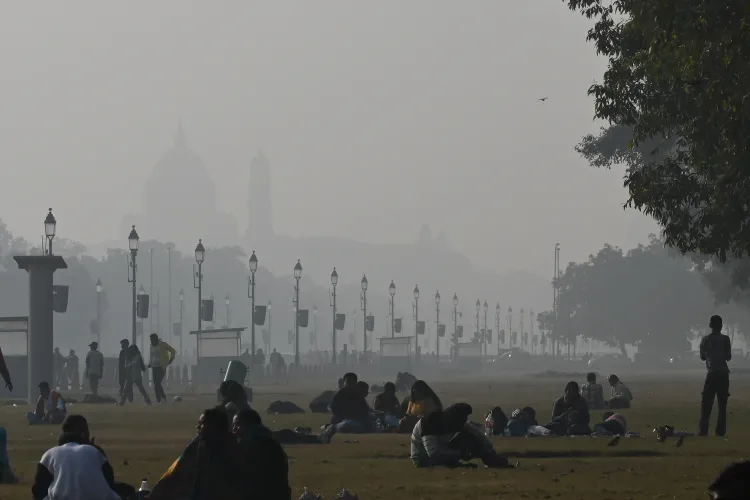
Delhi-NCR is shrouded in a thick blanket of fog this Saturday, leading to an orange alert from the India Meteorological Department. Coupled with poor air quality, the situation raises concerns about health and visibility. Stay informed about the latest updates on air quality and weather conditions.
Key Takeaways
Delhi-NCR is experiencing very dense fog conditions.
The AQI remains in the 'very poor' category.
Authorities have issued an orange alert for ongoing fog.
Significant pollution hotspots include Sarai Kale Khan and Anand Vihar .
Stage IV measures are in effect to combat pollution.
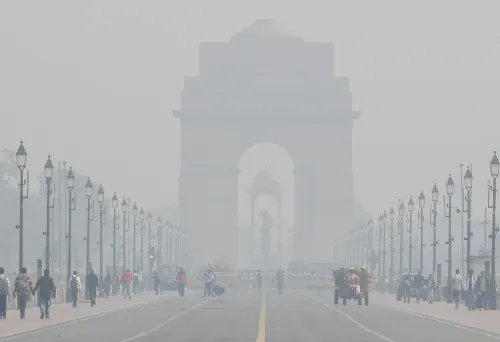
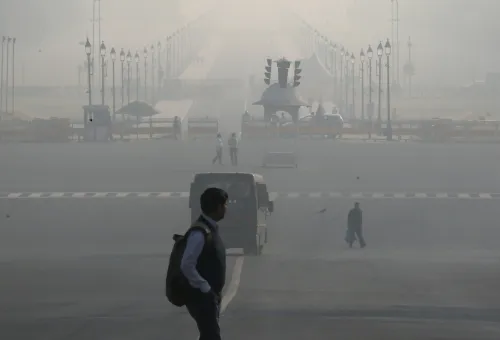
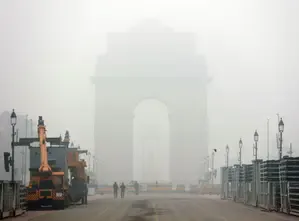
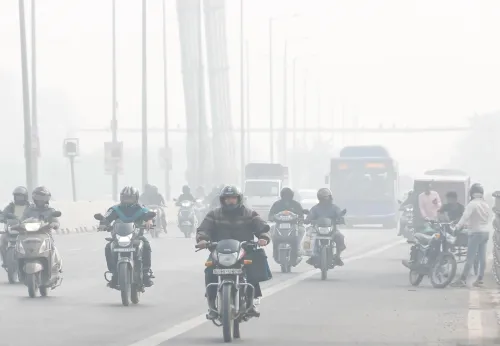
New Delhi, Dec 20 (NationPress) Residents of Delhi-NCR awoke to a thick layer of fog enveloping the region on Saturday, prompting the India Meteorological Department to issue an orange alert for ongoing dense fog conditions expected to last throughout the day.
The IMD's forecast indicated a partly cloudy sky with very dense fog during the morning hours, along with mist and shallow fog during the night and early morning.
According to the weather department, very dense fog occurs when visibility falls to between 0 and 50 metres, while visibility of 51 to 200 metres is classified as dense fog. Visibility ranging from 201 to 500 metres is considered moderate fog, and anything between 501 and 1,000 metres is referred to as shallow fog.
In addition to the low visibility, Delhi is still battling severe air pollution. The Air Quality Index (AQI) recorded a 'very poor' level of 376 as of 6:00 a.m., as per the Central Pollution Control Board's data.
The Air Quality Early Warning System has projected further deterioration of pollution levels, with the AQI potentially breaching the 400-plus 'severe' category over the weekend.
Several areas reported alarming pollution levels, with the AQI at Sarai Kale Khan reaching 428, and Akshardham at 420.
Other notable pollution hotspots included Rao Tularam Marg with an AQI of 403, and the Barapullah flyover area at 380. Anand Vihar recorded an AQI of 428, Ashok Vihar at 407, and the ITO area at 429, indicating that large parts of the national capital are firmly entrenched in the 'severe' air quality category.
In response to the deteriorating conditions, the Commission for Air Quality Management has activated all measures under Stage IV of the Graded Response Action Plan across Delhi-NCR.
GRAP Stage IV restrictions include a ban on non-essential construction activities, limitations on the entry of certain diesel vehicles, and enhanced enforcement aimed at reducing pollution sources.
As per AQI standards, air quality is classified as 'good' between 0 and 50, 'satisfactory' from 51 to 100, 'moderate' between 101 and 200, 'poor' from 201 to 300, 'very poor' between 301 and 400, and 'severe' when it exceeds 401 to 500.
Point of View
It’s essential to highlight the ongoing challenges that Delhi-NCR faces with air pollution and weather conditions. The situation calls for immediate attention and action from both the government and the community to safeguard public health.
NationPress
19 Sept 2026
Frequently Asked Questions
What causes dense fog?
Dense fog is caused by a combination of high humidity and low temperatures, leading to condensation of water vapor in the air.
Why is the AQI important?
The Air Quality Index (AQI) is crucial for understanding air pollution levels and their potential impact on health, helping individuals take necessary precautions.
What precautions should be taken during dense fog?
During dense fog, it's advised to drive slowly, use fog lights, and avoid unnecessary travel to ensure safety.
How does air pollution affect health?
Air pollution can cause various health issues, including respiratory problems, cardiovascular diseases, and can worsen pre-existing conditions.
What actions are taken to improve air quality?
Measures such as restricting vehicular emissions, promoting public transport, and enhancing green spaces are taken to improve air quality.