How Have Deodars in Himachal Shifted from Wet Springs to Dry Conditions?
Synopsis
Discover how the Deodar trees in Batseri, Himachal Pradesh, reveal a significant shift from wetter springs to drier conditions over centuries. This study provides crucial insights for local communities and policymakers, emphasizing the urgent need for effective forest management and disaster preparedness.
Key Takeaways
Deodar trees show a shift from wetter to drier conditions since 1757 CE.
Increased spring droughts are linked to climate-induced instability.
Tree rings provide critical insights into past climatic conditions.
Understanding these changes is vital for disaster preparedness.
Effective management strategies can mitigate impacts on local communities.
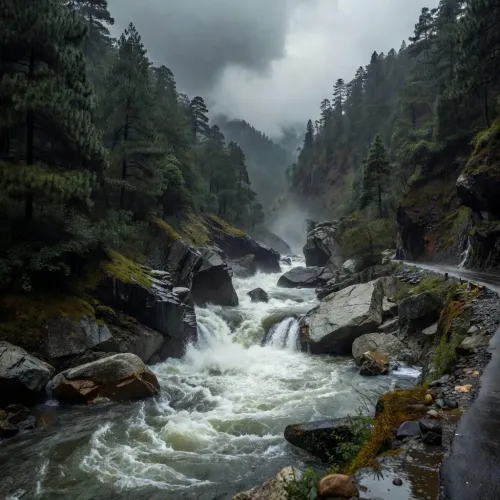
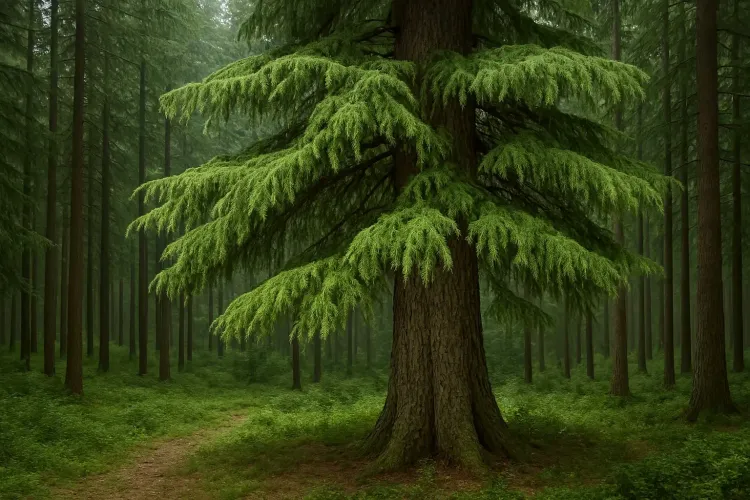
Shimla, Dec 10 (NationPress) The Deodar trees located in Batseri, a picturesque village nestled in the Sangla valley along the Baspa river in Himachal Pradesh, tell a tale of climatic transformation. Research indicates a transition from wetter spring seasons during the Little Ice Age to increasingly drier conditions since 1757 CE, with a notable rise in spring drought years in recent decades, as revealed by their tree rings.
This study examines the components driving geohazard activities, facilitating improved predictions of potential future hazard events, thereby bolstering early warning systems.
The escalating occurrence of extreme weather phenomena, such as droughts and floods, closely linked to geohazards like landslides, glacial lake outburst floods, rockfalls, and snow avalanches—particularly in the Himalayan region—emphasizes the necessity for comprehensive reconstructions of past hydroclimatic variability and associated geohazard episodes.
Tree rings, which are annual layers of wood that record the tree's age and historical environmental conditions, serve as natural archives for such climatic and geohazard events, filling a critical knowledge gap.
The initiative was further propelled by the lack of long-term, high-resolution records and the need to comprehend the interplay between moisture variability and geohazard dynamics in the Himalayas.
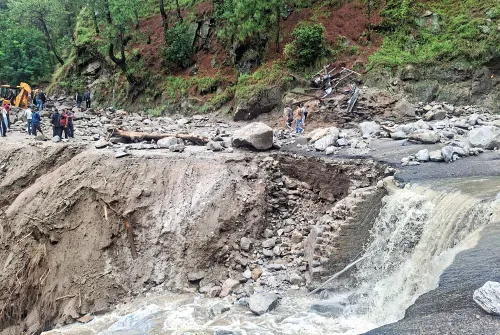
A rockfall incident in July 2021 near Batseri village in Kinnaur district prompted the Birbal Sahni Institute of Palaeosciences (BSIP), an autonomous body under the Department of Science and Technology (DST), to delve into historical climates through the analysis of annual growth layers in trees (dendroclimatology and dendrogeomorphology).
They combined dendroclimatology and dendrogeomorphology to enhance future risk assessments and mitigation strategies.
Analysis of the tree rings of deodar (Cedrus deodara) trees reconstructed a 378-year (1558-2021 CE) record of spring moisture and a 168-year (1853-2021 CE) rockfall activity history at Batseri in the western Himalayas.
The findings indicated that tree growth is highly influenced by spring moisture (February to April), primarily impacted by winter precipitation from western disturbances.
A total of 53 recorded rockfall events, including eight of significant intensity, were associated with dry spring conditions, particularly post-1960, highlighting climate-induced ground instability.
These spring drought conditions resulted in slopes with diminished vegetation cover, making them vulnerable when dry spells are succeeded by intense summer monsoon rainfall.
The results underscore the vital role of climate variability, driven by both regional and global factors, in triggering geohazards, stressing the need for effective forest management, monitoring, and early warning systems.
This study, published in the journal Catena, enhances our understanding by shedding light on how climate variability, especially spring and pre-monsoon summer droughts, instigate geohazards in the susceptible Himalayan regions.
Such insights are invaluable for local communities and policymakers in strategizing sustainable land use, improving forest and water resource management, and implementing measures for slope stability.
This proactive approach can mitigate damage to infrastructure, safeguard livelihoods, and bolster disaster preparedness.
Furthermore, such strategies empower communities to adapt to climate change and alleviate its impacts on their environment and economy.
Point of View
It is imperative to recognize the implications of this study on the ongoing climate discourse. The findings not only reflect regional climatic shifts but also serve as a warning for global climate patterns. The insights gained from the Deodar trees can guide policymakers and local communities in formulating strategies to mitigate the adverse effects of climate change, ensuring sustainability and resilience in the face of future challenges.
NationPress
17 Oct 2026
Frequently Asked Questions
What does the study of Deodar trees reveal?
The study indicates a significant shift from wetter spring conditions during the Little Ice Age to progressively drier conditions since 1757 CE, uncovering increased spring drought years in recent decades.
How do tree rings help in climate studies?
Tree rings serve as natural archives that record the tree's age and past environmental conditions, providing valuable data for understanding climatic and geohazard events.
What are the implications of this research?
The findings emphasize the need for effective forest management and disaster preparedness strategies to address the impacts of climate variability in vulnerable regions.