Dhar NH crash: Faulty median design, missing signage, overspeeding killed 16
Synopsis
A police probe into the Dhar highway crash that killed 16 has uncovered a damning infrastructure failure: no warning signs, unscientific median cuts, missing reflectors, and absent lane markings on a National Highway — all compounding overspeeding to deadly effect. NHAI now faces a formal accountability notice.
Key Takeaways
A road accident near Chikliya crossing on the Indore-Ahmedabad National Highway in Dhar district, Madhya Pradesh claimed 16 lives , with three more dying during treatment on Thursday, 1 May .
A pickup van carrying around 46 labourers overturned and collided with an SUV on Wednesday night .
Indore Rural DIG Manoj Kumar Singh found missing advance warning signs, no speed-calming measures, unscientific median cuts, absent reflectors, and no lane markings at the site.
Overspeeding combined with these infrastructure deficiencies has been identified as the compounding cause of the crash.
All findings will be formally communicated to the National Highways Authority of India (NHAI) ; an NHAI team has already inspected the site.
Police are also probing vehicle condition and possible overloading of the pickup van.
A police investigation into the fatal road accident in Madhya Pradesh's Dhar district has found serious violations of National Highway safety norms — including absent mandatory signage, improper median design, missing reflective road markings, and unsafe divider structures — alongside overspeeding, as the compounding causes behind a crash that claimed 16 lives near Chikliya crossing on the Indore-Ahmedabad National Highway. The death toll rose to 16 after three more injured persons succumbed during treatment on Thursday, 1 May.
What the On-Site Inspection Found
Indore Rural Deputy Inspector General (DIG) Manoj Kumar Singh, who led an on-site inspection at the accident location, said preliminary findings point to both excessive speed and systemic lapses in road safety infrastructure. "Prima facie, over-speeding appears to be the main cause. However, our inspection revealed that several essential safety measures, which are part of standard highway norms, are missing at the site," Singh told the press on Thursday.
According to the DIG, there were no advance warning signboards to alert drivers about the turn or crossing ahead, and no stop or caution signals to regulate vehicle speed. "On such highways, proper signage and speed-calming measures are mandatory, but they are absent here," he noted.
Flawed Median Design and Missing Reflectors
Singh also flagged that the median cuts at the location were not scientifically designed. "The divider openings are wide and unregulated, allowing vehicles to cross abruptly without proper visibility or control, which significantly increases the risk of head-on collisions," he said.
The DIG further highlighted the poor physical condition of road infrastructure at the site. "The dividers are not properly maintained and lack reflective indicators. There are no clear lane markings or cat-eye reflectors to guide drivers, especially at night. These are basic safety features expected on National Highways," Singh added. Notably, the accident occurred on Wednesday night, when the absence of reflective markers would have been most consequential.
How the Accident Unfolded
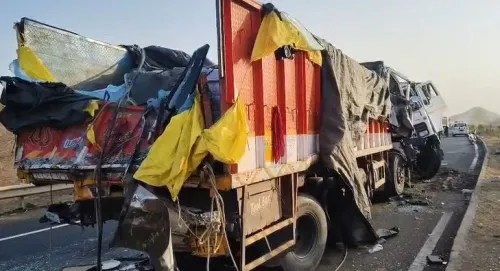
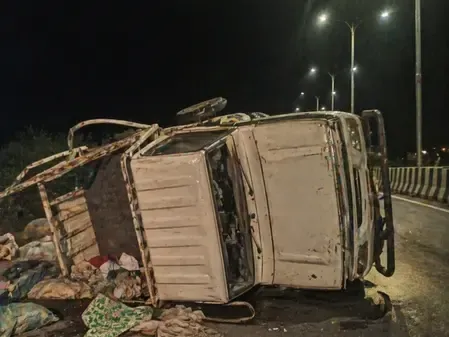
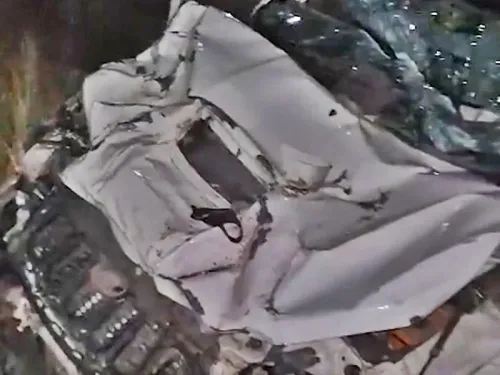
The crash took place on Wednesday night when a pickup van carrying around 46 labourers overturned and collided with a Sports Utility Vehicle (SUV) coming from the opposite direction. The violent impact resulted in multiple casualties and left several others hospitalised. The death toll climbed to 16 after three more injured persons died during treatment on Thursday.
Police said further investigation is underway to examine all aspects of the incident, including the condition of the vehicle and possible overloading of the pickup van.
Action Against NHAI and Next Steps
Singh confirmed that all identified shortcomings have been documented and will be formally communicated to the National Highways Authority of India (NHAI) for corrective action. "We will write to NHAI highlighting these issues so that corrective steps can be taken," he said. A team from NHAI has already carried out an inspection of the accident site and held discussions with local officials following the incident.
"The findings clearly indicate that apart from overspeeding, lack of proper road safety infrastructure and deviation from standard norms contributed to the accident. We are taking up the matter with the concerned authorities," Singh said. With the formal communication to NHAI pending, the focus now shifts to whether the authority will undertake structural remediation before another tragedy strikes on the same stretch.
Point of View
Not a safety auditor, is the one cataloguing missing cat-eye reflectors and unscientific median cuts on a National Highway, it signals a fundamental breakdown in NHAI's own compliance machinery. India's NH network has expanded aggressively over the past decade, but safety infrastructure has not kept pace — and the victims are invariably the most vulnerable road users: overloaded labour vans travelling at night. The question that mainstream coverage will skip is accountability: who signed off on this stretch as compliant, and when was it last audited? A letter to NHAI is not a consequence; it is a formality.
NationPress
15 Sept 2026
Frequently Asked Questions
What caused the Dhar road accident that killed 16 people?
The crash was caused by a combination of overspeeding and serious infrastructure deficiencies on the Indore-Ahmedabad National Highway, including missing warning signs, unscientific median cuts, absent reflective markers, and no lane markings. A police inspection led by Indore Rural DIG Manoj Kumar Singh identified these lapses at the Chikliya crossing site.
How did the Dhar highway accident happen?
A pickup van carrying around 46 labourers overturned and collided with an SUV coming from the opposite direction on Wednesday night near Chikliya crossing in Dhar district, Madhya Pradesh. The impact caused multiple casualties; the death toll rose to 16 after three more injured persons died during treatment on Thursday.
What action is being taken against NHAI after the Dhar crash?
Police have documented all infrastructure deficiencies found at the accident site and will formally write to the National Highways Authority of India (NHAI) seeking corrective action. An NHAI team has already inspected the site and held discussions with local officials.
What safety features were missing at the Dhar accident site?
The site lacked advance warning signboards, stop and caution signals, scientifically designed median cuts, reflective divider indicators, cat-eye reflectors, and clear lane markings — all of which are mandatory under standard National Highway safety norms, according to DIG Manoj Kumar Singh.
Is the investigation into the Dhar crash still ongoing?
Yes, police say further investigation is underway to examine all aspects, including the condition of the pickup van and possible overloading. The focus on infrastructure gaps runs parallel to the criminal investigation into the drivers and vehicle operators involved.