Did Gandhi, Not Hedgewar, Truly Fight for India’s Independence?
Synopsis
Karnataka CM Siddaramaiah asserts that M.K. Gandhi and Congress leaders were crucial in India's fight for independence, challenging the legacy of K.B. Hedgewar. He highlights the hypocrisy of current BJP leaders and pays tribute to Indira Gandhi's contributions to the nation, advocating for social equality and dignity for all.
Key Takeaways
Gandhi and Congress leaders were pivotal in India's independence.
Hedgewar and the RSS did not actively participate in the freedom movement.
Indira Gandhi played a crucial role in combating poverty and social inequality.
The caste system continues to create disparities in education and opportunities.
Basavanna's vision for an egalitarian society is recognized by the government.
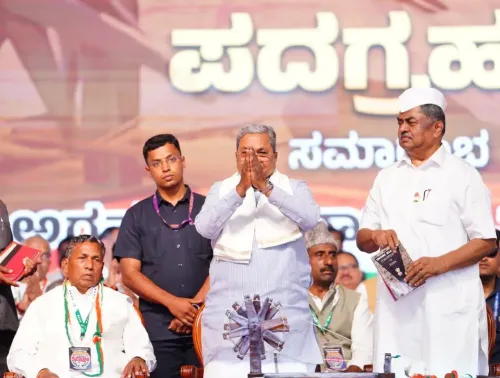
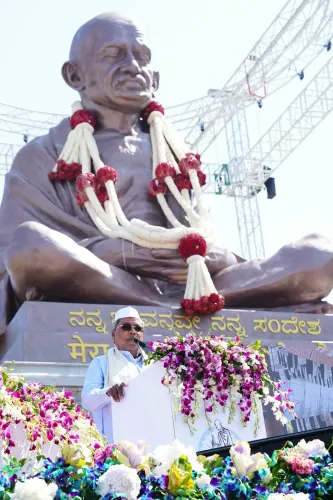
Bengaluru, Oct 31 (NationPress) The Chief Minister of Karnataka, Siddaramaiah, asserted on Friday that M.K. Gandhi, along with other Congress leaders, was the true champion of India’s struggle for independence from British rule, rather than K.B. Hedgewar.
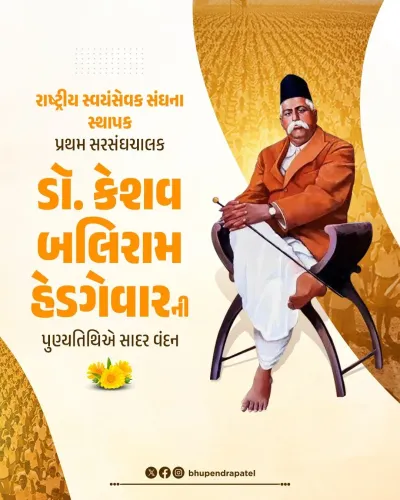
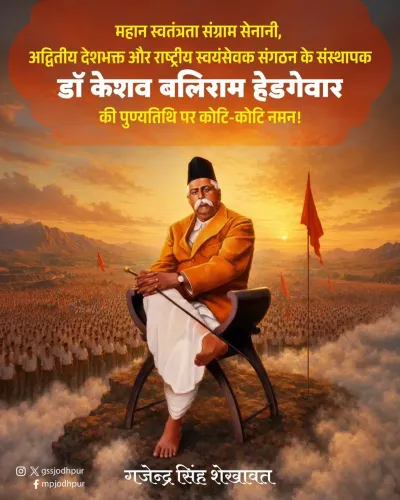
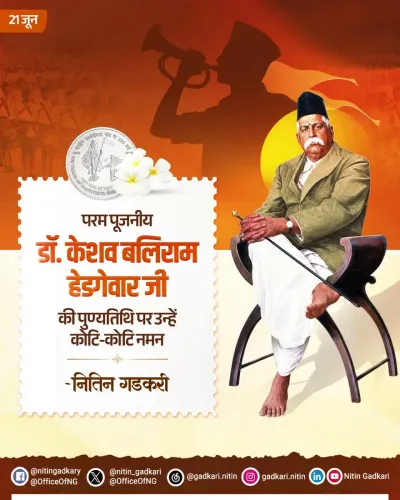
“The Congress was the only party that actively participated in the fight for India’s freedom. The RSS was established in 1925, during the height of the freedom struggle. However, K.B. Hedgewar, its founder, never urged his followers to engage in the independence movement,” Siddaramaiah pointed out.
He further noted that both Savarkar and Golwalkar of the Hindu Mahasabha were opposed to the Constitution, adhering instead to the Manusmriti and the Chaturvarna system, which they never supported.
“While BJP leaders criticize Nehru, it was under Mahatma Gandhi’s leadership that figures like Nehru, Sardar Patel, and Subhas Chandra Bose fought valiantly for India’s freedom. Our nation’s independence is owed to their relentless efforts. The BJP leaders did not take part in the freedom struggle; neither Savarkar nor Golwalkar contributed to it,” Siddaramaiah stated.
The Chief Minister called out the current BJP leaders for portraying themselves as great patriots, labeling it as “hypocrisy.”
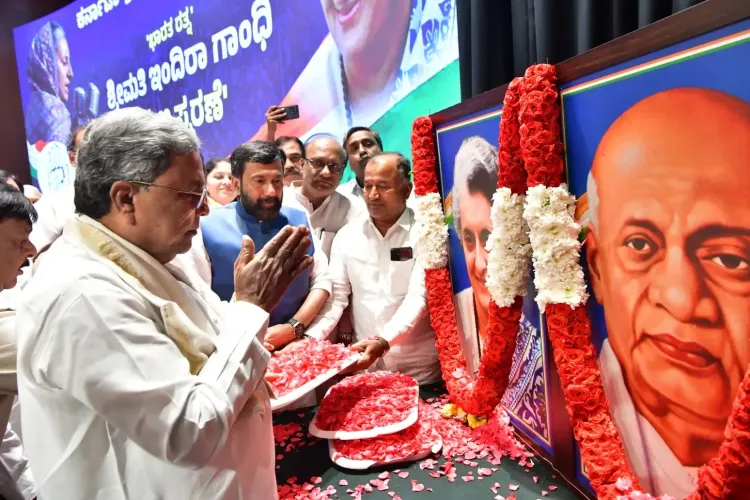
Siddaramaiah honored former Prime Minister Indira Gandhi, who he described as a martyr who left behind her ideals for others to follow.
“Indira Gandhi was a brave woman, often referred to as the Iron Lady. During the Bangladesh Liberation War, even Atal Bihari Vajpayee recognized her as Goddess Durga. Approximately 90,000 Pakistani soldiers were taken prisoner in that war, thanks to India's decisive victory over Pakistan,” he remarked.
He emphasized that Indira Gandhi initiated the ‘Garibi Hatao’ (Eradicate Poverty) movement.
“At that time, poverty was rampant, and inequality was widespread. To tackle poverty, she launched the 20-Point Programme,” Siddaramaiah explained.
He pointed out that the Constitution guarantees the right to live with dignity, yet the caste system has perpetuated inequality, preventing a majority of people, especially women, from accessing education and cultural opportunities.
“Under the Chaturvarna (fourfold) system, opportunities were primarily available to the first three castes, while even upper-caste women faced educational restrictions,” Siddaramaiah highlighted.
The Chief Minister mentioned Basavanna, who envisioned an egalitarian society and sparked a social revolution. He noted that his government has recognized Basavanna as a cultural leader, ordering his photograph to be displayed in all government offices.
Siddaramaiah also praised Vallabhbhai Patel, who, aside from being the first Deputy Prime Minister of India, was a key figure in the fight for India’s independence.
“It was Patel, in his role as Home Minister, who made significant efforts to integrate various states into the Indian Union, earning him the title of the Iron Man of India,” the Chief Minister concluded.
Point of View
It is essential to recognize the diverse narratives surrounding India's independence. Siddaramaiah's statements highlight the long-standing debate about contributions to the freedom struggle. It is crucial to examine historical facts while considering the broader political context and motivations behind such assertions.
NationPress
30 Sept 2026
Frequently Asked Questions
Who did Siddaramaiah say fought for India's independence?
Siddaramaiah stated that M.K. Gandhi and other Congress leaders fought for India's independence, not K.B. Hedgewar .
What did Siddaramaiah say about the RSS?
Siddaramaiah mentioned that the RSS was founded in 1925 and that its founder, K.B. Hedgewar , did not call upon his followers to join the independence movement.
What were Indira Gandhi's contributions according to Siddaramaiah?
Siddaramaiah praised Indira Gandhi for her courage and her initiatives like the 'Garibi Hatao' movement to eradicate poverty.
What historical figures did Siddaramaiah mention?
He referred to Mahatma Gandhi , Nehru , Sardar Patel , and Subhas Chandra Bose as significant leaders in the fight for India's freedom.
What social issues did Siddaramaiah address?
He addressed the inequality perpetuated by the caste system and emphasized the importance of the Constitution in ensuring dignity for all individuals.