DMK backs delimitation Bill; Stalin calls it South's big win
Synopsis
In April, the DMK fought the delimitation Bill. Now it is backing it. Stalin says the Centre has put both of the party's core demands in writing, including a uniform 50% seat rise based on 1971 population. Dayanidhi Maran insists this is no BJP alliance, just Tamil Nadu's interests protected for 25 years.
Key Takeaways
Stalin announced the DMK's support for the revised delimitation Bill on 28 November 2026 .
The two principal demands the DMK raised in April have been incorporated in writing, according to Stalin.
The Bill proposes a uniform 50 per cent increase in parliamentary constituencies based on 1971 population figures.
Dayanidhi Maran said the move protects southern states' rights for 25 years and helps implement women's reservation.
The Centre is expected to introduce the Bill in the special session of Parliament from 30 November .
The DMK denied any alliance with the BJP .
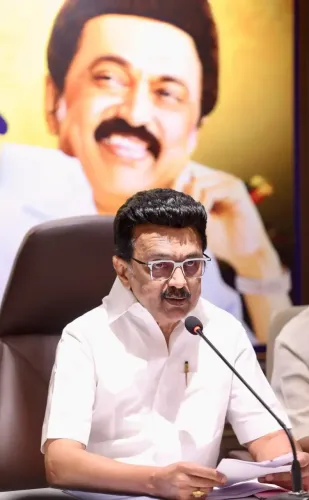
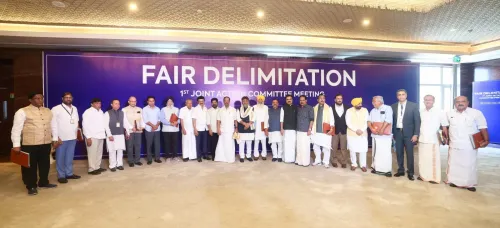
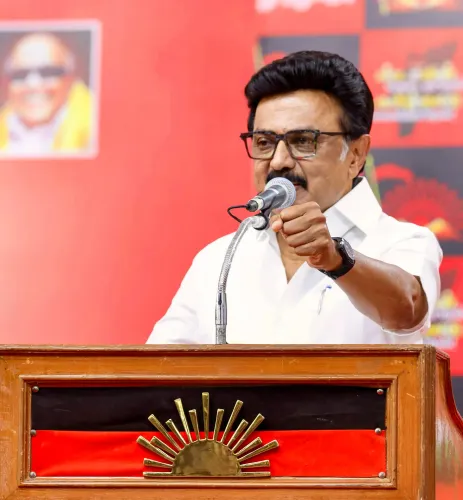
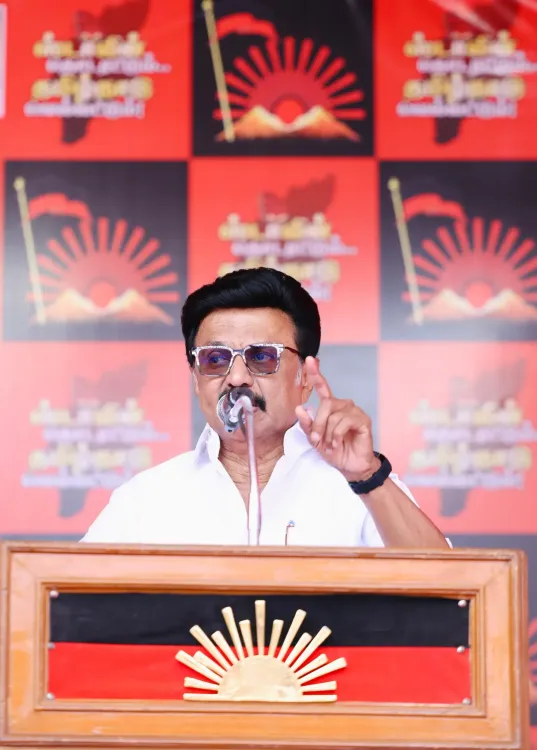
DMK President and former Tamil Nadu Chief Minister M.K. Stalin on Saturday, 28 November 2026, announced that the Dravida Munnetra Kazhagam (DMK) will support the revised delimitation Bill in Parliament. He called the inclusion of the party's key demands in the legislation a major victory for Tamil Nadu and other southern states. The decision was taken at a meeting of DMK Members of Parliament in Chennai, two days before a special session of Parliament where the Centre is expected to introduce the Bill.
Key Developments
The DMK formally adopted a resolution backing the revised Bill at a meeting of its MPs chaired by Stalin at the party headquarters, Anna Arivalayam. According to Stalin, the two principal demands the party raised while opposing the delimitation Bill in April have now been incorporated in writing in the revised legislation.
Stalin described the outcome as the result of the party's sustained campaign for fair delimitation, which it has run since 2024. He said the decision came after a thorough review of the revised provisions and their long-term implications for Tamil Nadu and the wider southern region.
What the Revised Bill Proposes
According to Stalin, the proposed legislation provides for a uniform 50 per cent increase in parliamentary constituencies across all states, calculated on the basis of 1971 population figures. He said this formula addresses long-standing concerns about the political representation of southern states.
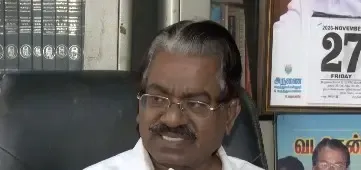
Senior DMK leader and Lok Sabha member Dayanidhi Maran told reporters after the meeting that the Centre had accepted the party's demand to keep the existing proportionate representation of states in Parliament. Maran said the uniform increase in seats would protect the rights of southern states for the next 25 years. He added that it would also help implement women's reservation.
The Political Context
The DMK's turnaround is significant because it comes ahead of the special session of Parliament beginning on 30 November. The Centre is seeking broader political consensus for the legislation.
Notably, the delimitation debate has centred on fears that states which successfully controlled population growth, largely in the south, would lose parliamentary weight if seats were redistributed on current population figures. Seat allocation has historically been tied to the 1971 Census, a freeze that was extended through earlier constitutional amendments.
Stalin urged political stakeholders to examine the issue objectively without being swayed by emotions. He also asked them to weigh carefully the consequences of missing an opportunity to secure such a delimitation framework.
DMK Rejects Talk of BJP Rapprochement
Maran dismissed suggestions that the move signalled a political thaw with the Bharatiya Janata Party (BJP). He asserted that the DMK remained consistent in its ideological commitments and political policies.
“This is not an alliance with the BJP; we are standing up for our state’s interests,” Maran said. He stressed that the DMK would never support any measure detrimental to Tamil Nadu.
What Happens Next
The revised Bill is expected to be introduced during the special session starting 30 November. The DMK's support could strengthen the Centre's push for consensus. All eyes will now be on how other southern and opposition parties respond when the legislation reaches the floor of Parliament.
Point of View
A rare outcome in recent Indian politics. Freezing proportional shares on 1971 figures, though, only postpones the core question by 25 years rather than resolving it. Northern states with faster population growth may see this as entrenched under-representation, and that contradiction could resurface in Parliament. Maran's insistence that this is no BJP alliance will be tested as the opposition watches whether issue-based cooperation becomes a pattern.
NationPress
28 Nov 2026
Frequently Asked Questions
Why is the DMK supporting the revised delimitation Bill?
The DMK is supporting the Bill because, according to M.K. Stalin, its two principal demands raised in April have been incorporated in writing. These include keeping the existing proportionate representation of states in Parliament.
What does the revised delimitation Bill propose?
It proposes a uniform 50 per cent increase in parliamentary constituencies across all states, based on 1971 population figures. The DMK says this protects southern states' representation.
When will the delimitation Bill be introduced in Parliament?
The Centre is expected to introduce the revised Bill during the special session of Parliament beginning on 30 November 2026.
Is the DMK forming an alliance with the BJP?
No. DMK leader Dayanidhi Maran said the decision is not an alliance with the BJP and that the party is standing up for Tamil Nadu's interests.
How does the Bill affect women's reservation?
According to Dayanidhi Maran, the proposed uniform increase in seats would facilitate the implementation of women's reservation while protecting southern states' rights for the next 25 years.