Is the New Employment Bill Undermining Rural Job Schemes?
Synopsis
The DMK's sharp critique of the newly passed VB-G RAM G Bill raises crucial questions about rural employment guarantees. As the party highlights potential risks to state autonomy and job security, the implications of this legislation could affect thousands of rural workers across Tamil Nadu.
Key Takeaways
Criticism of VB-G RAM G Bill highlights concerns over rural employment.
Legal provisions may allow the government to easily suspend job programs.
The 60:40 cost-sharing ratio is viewed as a financial burden on states.
Job restrictions during peak seasons harm rural workers.
Use of Multidimensional Poverty Index may misrepresent poverty levels.
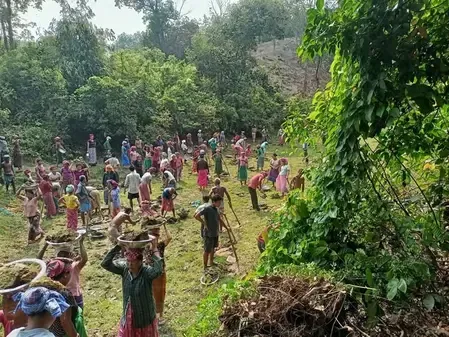
Chennai, Dec 20 (NationPress) The ruling Dravida Munnetra Kazhagam (DMK) of Tamil Nadu has sharply criticized the BJP-led Union government for its recent passage of the Viksit Bharat – Guarantee for Rozgar and Ajeevika Mission (Gramin) Bill, also known as VB-G RAM G. The party accuses the Centre of eroding the essential essence of rural employment guarantees and undermining the principles of federalism.
In an editorial published in its mouthpiece 'Murasoli', DMK articulated that the dispute surrounding the removal of Mahatma Gandhi's name from the initiative is merely a surface issue masking deeper systemic problems.
The party contends that the Bill threatens the core goal of ensuring guaranteed rural employment, giving the Centre the power to suspend or delay the program at will.
The editorial states that promises of 125 days of employment are misleading due to legal provisions that allow the government to easily curtail the scheme.
Furthermore, the DMK criticized the 60:40 cost-sharing ratio between the Centre and States, describing it as an excessive financial burden imposed on states for a Union-mandated initiative.
They also highlighted clauses that inhibit job creation during peak agricultural seasons, arguing that these restrictions disadvantage countless rural workers not involved in farming.
Another significant concern raised was the use of the Centre's Multidimensional Poverty Index to identify beneficiaries. The DMK argued that this could unfairly exclude states like Tamil Nadu, which have made notable progress in poverty alleviation, by inaccurately declaring poverty as "eliminated" based on biased data.
Moreover, the editorial pointed out that while the MGNREGA previously guaranteed a legal right to work, the new Bill shifts this to a mere possibility of employment if it is available, representing a departure from a rights-based framework.
Provisions allowing the Centre to set job quotas for states were criticized as an infringement on federal autonomy, potentially disadvantaging states not governed by the BJP.
Additionally, the DMK took aim at AIADMK leader Edappadi K. Palaniswami, accusing him of focusing solely on reinstating Mahatma Gandhi's name while neglecting other significant policy changes.
Questioning his political integrity, the 'Murasoli' editorial accused Palaniswami of misleading the public on matters such as the Citizenship Amendment Act and the now-repealed farm laws.
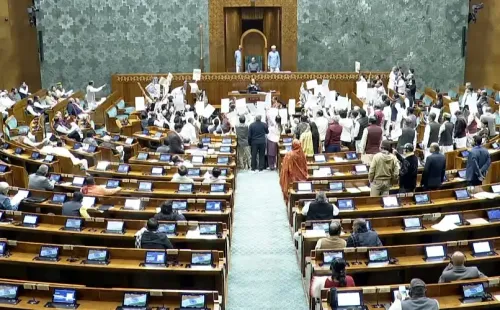
The Parliament approved the VB-G RAM G Bill earlier this week, replacing the two-decade-old MGNREGA framework. While the Centre asserts that the new legislation broadens opportunities, the DMK believes it threatens to undermine rural employment guarantees and diminish state authority.
Point of View
It is vital to assess the implications of the VB-G RAM G Bill on rural employment. While the government touts job creation, the DMK's concerns about federal overreach and potential job loss resonate strongly. This discourse is essential, particularly in understanding how policy changes can affect the grassroots level.
NationPress
7 Oct 2026
Frequently Asked Questions
What is the VB-G RAM G Bill?
The VB-G RAM G Bill replaces the previous MGNREGA framework, aiming to provide rural employment guarantees but has faced criticism for potentially undermining these guarantees.
Why is the DMK opposing the new employment bill?
The DMK argues that the new bill dilutes the spirit of rural employment guarantees and poses risks to federal principles and state autonomy.
How does the cost-sharing ratio affect states?
The 60:40 cost-sharing ratio places a significant financial burden on states for a Union-mandated scheme, which the DMK finds excessive.
What are the implications of job restrictions during agricultural seasons?
Restrictions on job generation during peak agricultural times could adversely affect rural workers who rely on employment outside of farming.
How does the Multidimensional Poverty Index impact beneficiary selection?
The use of the Multidimensional Poverty Index may lead to unfair exclusions of states like Tamil Nadu from rural jobs, as it could misrepresent poverty levels.