Do South Korea's DMZ Access Bills Conflict with the Armistice?
Synopsis
South Korea's unification ministry asserts that the proposed DMZ access bills align with the armistice agreement, despite UNC's objections. This situation raises important questions about military governance and cooperation between South Korea and the UN.
Key Takeaways
South Korea's unification ministry asserts the DMZ access bills do not conflict with the armistice.
Consultations with the United Nations Command are required for approval.
The bills aim to regulate non-military access to the DMZ.
Concerns regarding South Korea-U.S. relations are acknowledged.
Public interest in the peaceful use of the DMZ is emphasized.
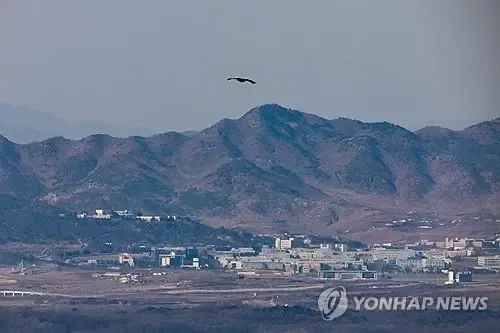
Seoul, Jan 29 (NationPress) The unification ministry of South Korea announced on Thursday that the proposed bills, which would allow the South Korean government to manage non-military access to the Demilitarised Zone (DMZ), are not in violation of the armistice. This is because the legislation mandates prior consultation with the United Nations Command (UNC).
This statement follows a day after the UNC expressed strong disapproval of these bills, claiming they are "completely at odds" with the armistice agreement that concluded the Korean War from 1950-53.
The ministry clarified, "The current discussions in parliament concerning DMZ-related legislation necessitate prior consultations with the UNC for any DMZ access to be approved, hence they do not conflict with the armistice whatsoever," as reported by Yonhap News Agency.
Continuing its support for the proposed legislation, the ministry expressed its dedication to collaborating on DMZ access bills while respecting the legislative rights of the National Assembly.
The bills, introduced by lawmakers from the ruling party, aim to empower the government to oversee non-military access to the DMZ, facilitating peaceful use of this military buffer zone that divides the two Koreas.
Despite this, the US.-led UNC has opposed the proposed legislation, emphasizing its role as the administrator of the DMZ as per the armistice agreement.
Earlier, Unification Minister Chung Dong-young reiterated his backing for the bills, asserting that they "do not conflict with the armistice." When questioned about increasing worries that divergent views between his ministry and the UNC could deteriorate South Korea-U.S. relations, Chung assured, "That will not be the case."
Conversely, the defence ministry adopted a more measured stance, indicating that it will maintain close collaboration with the UNC regarding the utilization of the military buffer zone.
"The defence ministry acknowledges the authority of the UNC based on the armistice agreement and will work closely with the UNC concerning the DMZ's usage," noted ministry spokesperson Chung Binna during a regular press briefing.
The foreign ministry, while affirming the necessity for close coordination with the UNC and regard for its mandate, acknowledged the public's interest in peaceful DMZ usage.
"We respect the legislative authority of the National Assembly and maintain that relevant bills must be debated in close coordination with the UNC, while honoring the Armistice Agreement and the UNC's mandate," stated ministry spokesperson Park Il in a briefing.
Simultaneously, he highlighted the importance of considering public interest and aspirations for the peaceful utilization of the DMZ.
Point of View
The ongoing discourse surrounding the DMZ access bills highlights a significant intersection of national legislative authority and international military agreements. It is crucial to respect both the legislative rights of the National Assembly and the established protocols under the armistice, ensuring that peace and security remain the priority.
NationPress
17 Sept 2026
Frequently Asked Questions
What are the DMZ access bills?
The DMZ access bills are proposed legislation that would allow the South Korean government to regulate non-military access to the Demilitarised Zone, requiring consultations with the United Nations Command.
Why does the UNC oppose these bills?
The UNC opposes the bills as they believe they contradict the armistice agreement that governs the DMZ's administration.
What is the significance of the armistice agreement?
The armistice agreement, signed in 1953, ended active combat in the Korean War and established the DMZ as a buffer zone between North and South Korea.
How could these bills affect South Korea-U.S. relations?
There are concerns that differing views between the South Korean government and the UNC may strain relations with the U.S., but officials assert that coordination remains strong.
What is the role of the National Assembly in this context?
The National Assembly holds legislative authority to discuss and approve bills related to DMZ access, balancing national interests and international obligations.