Should the Demilitarized Zone Be Politicized?
Synopsis
In a recent podcast, USFK Commander General Xavier Brunson stressed the importance of keeping the Demilitarized Zone (DMZ) free from political influences. His remarks come in light of proposed legislation in South Korea that could affect access to this critical area. Discover the implications of his statements on regional stability and international relations.
Key Takeaways
USFK Commander stresses DMZ should remain neutral.
Opposition to South Korean bill for government control.
Armistice agreement governs access to the DMZ.
Military talks with North Korea proposed for clarity.
South Korea's defense industry strengthens regional role.
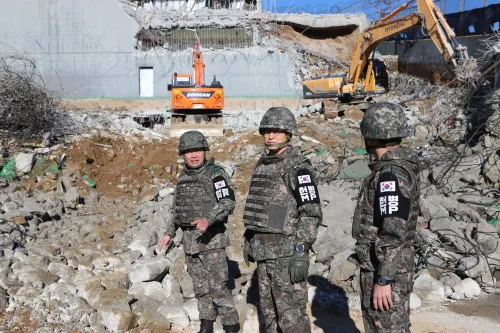
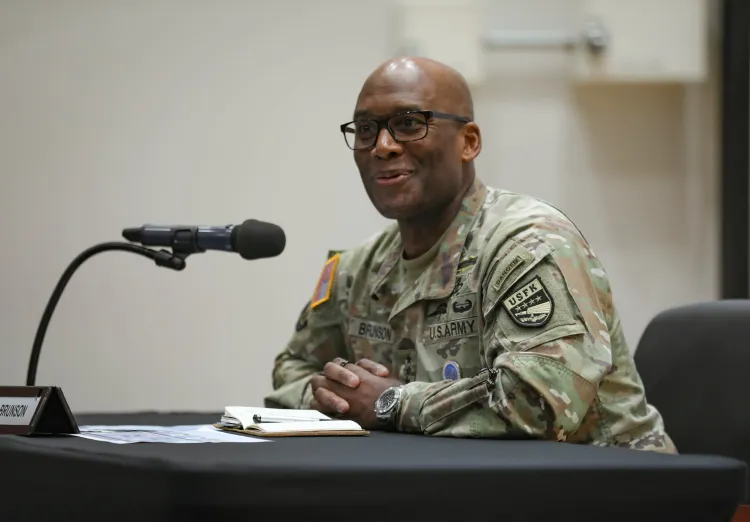
Seoul, December 19 (NationPress) The leader of the US Forces Korea (USFK), General Xavier Brunson, articulated on Friday that the Demilitarized Zone (DMZ) should remain free from political agendas. He expressed his disapproval of a South Korean legislative proposal aimed at giving the government authority over civilian access to this crucial buffer area.
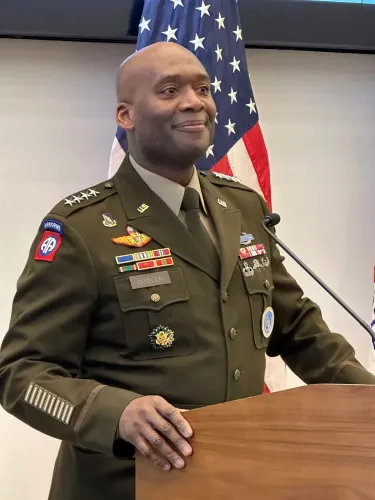
Brunson, who also holds the position of commander of the United Nations Command (UNC), made these statements following a recent release from the UNC that opposed the proposed legislation.
He emphasized that the armistice agreement that concluded the Korean War from 1950 to 1953 should continue to govern all related activities. According to this agreement, the UNC retains the power to grant or deny access to the DMZ, as reported by Yonhap News Agency.
"Our primary goal must be to prevent this area from being politicized ... we committed to maintaining this buffer zone," Brunson stated in a recent episode of the security-centric podcast series War on the Rocks.
He remarked that South Korea has recently suggested military discussions with North Korea to clarify the Military Demarcation Line within the DMZ, aiming to avert potential conflicts near the inter-Korean boundary. However, he stressed that all measures should align with the armistice agreement.
"Our actions must adhere to the armistice, and we must uphold the standards established within it. As long as we do that, we won't face any issues," he explained. "We cannot alter our procedures in violation of a legal document, which is the armistice."
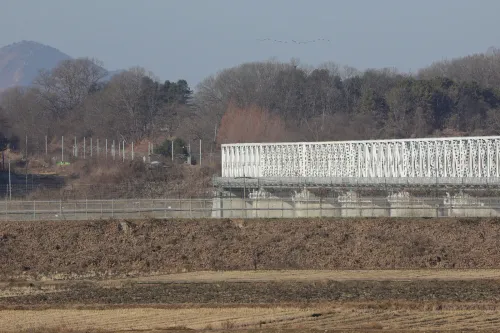
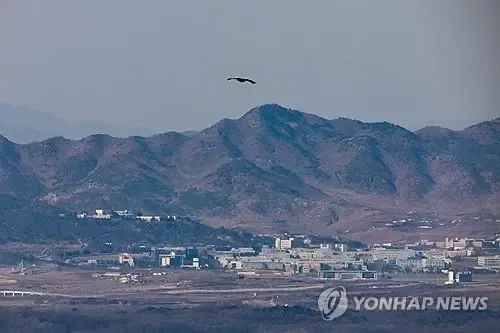
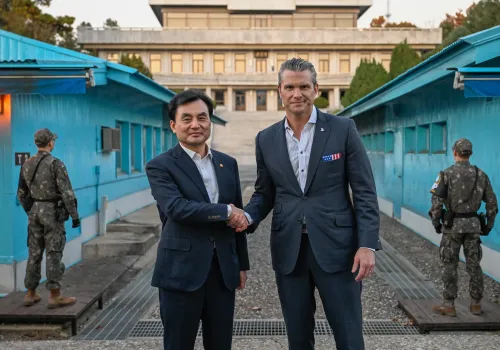
This appeal from the USFK commander for adherence to the armistice came just days after the UNC released a significant statement reaffirming its role as the administrator of the DMZ, which spans approximately 250 kilometers in length and 4 kilometers in width, serving as a buffer between the two Koreas since the cessation of the Korean War.
Regarding Seoul's initiative to obtain a conditions-based transfer of wartime operational control from the US within President Lee Jae Myung's term, which concludes in 2030, Brunson stated that the United States has no intention of obstructing this process.
Nonetheless, he reiterated that the mutually agreed conditions must be satisfied for the transfer to occur.
"We must ensure that all conditions are met, whether they are operational, material, or even related to simple protections, before we proceed with this transition," he noted.
In this context, Brunson praised South Korea's robust defense industry and its involvement in multinational exercises like Talisman Sabre, conducted in Australia, which have enhanced its capabilities and position in the broader Indo-Pacific region. He encouraged South Korea to further engage beyond the Peninsula.
"I've often highlighted the centrality of the Republic of Korea to the overall Indo-Pacific due to their economy, military size, and their ongoing technological advancements," he remarked, referring to South Korea by its formal name.
"They are crucial to maintaining peace in the Indo-Pacific region."
Point of View
It's vital to recognize the importance of stability in the Korean Peninsula. General Brunson's statements underscore the necessity of maintaining the DMZ as a neutral zone free from political manipulation. Upholding the armistice agreement is essential for peace, and South Korea must navigate its national interests carefully in light of these considerations.
NationPress
29 Sept 2026
Frequently Asked Questions
What is the Demilitarized Zone (DMZ)?
The DMZ is a buffer zone between North and South Korea, established to prevent military confrontations since the end of the Korean War in 1953.
Why should the DMZ not be politicized?
Politicizing the DMZ could lead to increased tensions and conflicts, undermining the stability and peace established by the armistice agreement.
What is the armistice agreement?
The armistice agreement is a legal document that ended active hostilities in the Korean War and established the rules governing relations between North and South Korea.
What are the implications of the proposed legislation in South Korea?
The proposed legislation could alter civilian access to the DMZ, potentially affecting military and diplomatic relations with North Korea.
How does South Korea's defense industry impact regional security?
A strong defense industry enhances South Korea's military capabilities, allowing for better engagement in multinational exercises and contributing to overall regional stability.