Is Dutch Cricket Facing a Paradox Amid Expansion?
Synopsis
Despite a growing talent pool and an expanding grassroots level, Dutch cricket is threatened by funding and infrastructure issues. With players balancing careers and cricket, the future seems uncertain. Can the Netherlands overcome these challenges and secure a brighter cricketing future?
Key Takeaways
Funding shortfall threatens growth in Dutch cricket.
Player availability challenges due to county commitments.
Grassroots cricket is thriving with increasing participation.
National team has qualified for six consecutive World Cups.
Infrastructure improvements are essential for future success.
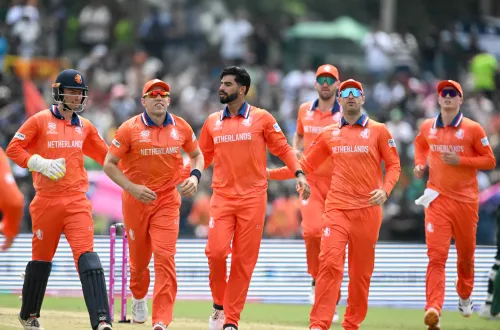
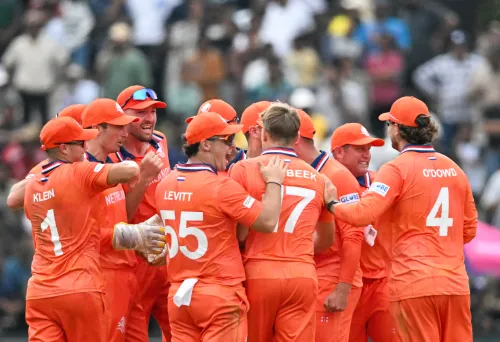
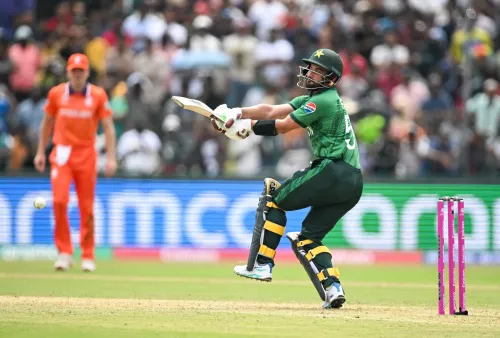
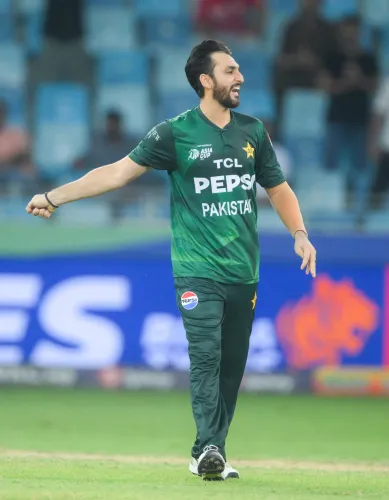
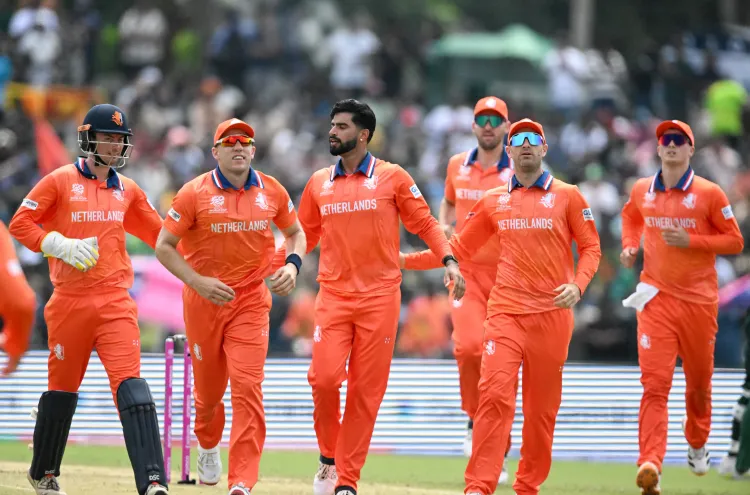
New Delhi, Feb 9 (NationPress) The Netherlands showcased a commendable effort before succumbing to a three-wicket defeat against Pakistan in the inaugural match of the 2026 Men’s T20 World Cup in Colombo. This match illustrated a significant reality regarding Dutch cricket: excelling despite facing numerous challenges.
As the team gears up for their Group A encounter with Namibia—another nation with a limited talent base but full-time professional athletes who recently hosted Men’s U19 World Cup matches—the disparity between their on-field competitiveness and off-field limitations is stark.
With around 5,000-6,000 active players spanning 60 clubs and a competitive eight-team Topklasse league, grassroots cricket is thriving, largely due to the influx of South Asian expatriates embracing the sport.
However, a funding gap of roughly 1.2 million euros—a quarter of the forecasted operating budget for the Royal Netherlands Cricket Board (KNCB) in 2024—coupled with infrastructure challenges and a scarcity of matches against major teams outside of the World Cups, poses a significant threat to aspirations just as the talent pool peaks.
John van Vliet, the Netherlands' manager and a veteran observer of the cricketing landscape, notes the substantial expansion of the player base in recent years. "To illustrate, assembling the squad for this tournament presented options. Six years ago, we lacked such choices. In fact, five or six players who contributed to our qualification aren't present today," van Vliet stated.
"This is partly due to national contracts, and the absence of global leagues. Yet, it provides us with a solid foundation," he told reporters on Monday.
The current depth in talent marks a significant shift from previous generations. Nevertheless, this depth underscores persistent issues regarding player availability. "This summer, during the World Cricket League, not all county players will be available. Our coach prioritizes availability to avoid putting players in difficult situations," he explained.
"While ICC regulations permit certain selections, it could jeopardize their careers in county cricket. Therefore, we prioritize player availability. For instance, during qualification, we could have flown in one or two players for a match but opted against it to avoid complications."
Despite these challenges, progress is palpable. "We recognize our circumstances. Yet, compared to previous years, the squad has expanded. I'm not claiming that the additional players would elevate our strength, but we now have a broader selection to choose from," he remarked.
Several Dutch players have experience in county cricket, although post-Brexit regulations have complicated their paths. Players like Roelof van der Merwe enjoyed successful tenures at Somerset, while Tim Pringle, Bas de Leede, Paul van Meekeren, and Colin Ackermann have also participated in county matches.
"Given the new Brexit and EU regulations, securing county contracts has become challenging for our players, as they are often categorized as foreign players. If I’m honest, I would prefer an Australian player over some others. It’s a tough decision when selecting foreign players against a Dutch player," he added.
When asked about ambitions for Test cricket, van Vliet was candid about the hurdles. "We have a long way to go before we can play Test cricket. For example, we lack a proper stadium. We can build a temporary one, as we did for World League matches against England. It might be feasible in the future, but without vision, it remains uncertain."
"To be clear, I don't perceive any genuine Test ambitions currently. We certainly aspire for ODI status, but we need to reach that point before contemplating further goals. Each reduction in funding is a setback for us."
The financial struggles are multifaceted. A drastic reduction in ICC funding, failure to secure expected sponsorship, inflation, and a disappointing subsidy from the NOC*NSF (Netherlands Olympic and National Sports Federation) have left the KNCB with a 1.2 million euro deficit for 2025.
Issues are compounded by ICC predictions of a potential 30 percent revenue decline in 2028 when media rights contracts are renegotiated. Van Vliet elaborated on the impact of currency fluctuations: "For instance, the current strength of the Euro against the dollar affects our budget negatively, as ICC funding is dollar-based."
Only recently did the board secure a title sponsor, Globe Group of Companies, just three days before the T20 World Cup commenced, while players are under a nine-month contract. "Finding a sponsor just days before the tournament is extremely challenging," van Vliet remarked.
Infrastructure deficits extend beyond stadiums to training facilities and international exposure. Van Vliet observed that while the Netherlands has developed high-quality pitches, attracting major teams for warm-up games remains a challenge.
At present, the Netherlands has one primary venue—the VRA Ground in Amstelveen, currently covered in snow. This ground hosted ODI Super League matches against England and the West Indies in 2022, with temporary stands added to increase spectator capacity.
"Major teams, not just India, prefer to visit England annually for preparation matches. Although we have several pitches suitable for warm-up games, they still prefer English venues, which complicates our efforts."
"For them, it’s more convenient to remain in England during a Test series, making travel to Ireland or Scotland easier than venturing to non-EU countries with additional visa complexities. Thus, they prefer to stay within the UK, despite Ireland's geographical proximity."
The team’s World Cup preparations reflected these constraints, with one group training in South Africa, another in Mumbai, and all converging in Chennai before flying to Colombo for their match against Pakistan.
Management operates on tight budgets. "For instance, I'm a part-time manager and only traveled to Colombo, while our coach, Ryan Cook, handled managerial responsibilities in Chennai. It’s a juggling act with considerable demands on him."
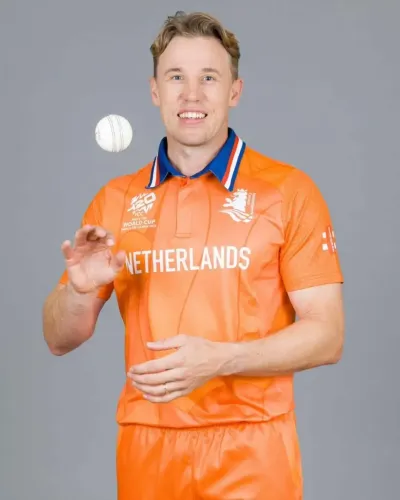
A number of Dutch players balance their cricket careers with jobs or studies. Fast bowler Saqib Zulfiqar works at ABN Amro, while Bas de Leede and Aryan Dutt are pursuing education. Despite financial constraints at the elite level, participation is on the rise, especially among younger demographics. Encouragingly, homegrown talent is emerging within the 20-25 age range.
A year or two ago, the federation received a request from ASML, a chip manufacturer in Eindhoven, asking for assistance in establishing a cricket pitch. This is a first in our history, driven by the demand from employees of Indian, Pakistani, or Bangladeshi descent wanting to play cricket.
"There are now several clubs in southern Netherlands, where previously there was only one, now expanding to eight clubs. If we assess our national junior teams, at least half are comprised of expat children, some of whom have roots in other countries but are eager to represent Holland, often visiting their ancestral homes upon arriving in the Netherlands for the first time."
Public awareness of Dutch cricket is modest yet increasing. "Our national broadcaster is heavily focused on the Winter Olympics, yet they are live streaming our matches in this World Cup, a remarkable development compared to three years ago when they wouldn’t have done so during another event. This change is significant."
"To be honest, media coverage is limited. However, I believe there’s a growing awareness of our participation in the World Cup. Probably, people won’t know the exact timing or location of our matches. Previously, only two matches from the ODI World Cup were streamed, but that’s changing now."
Notably, the 2023 ODI World Cup victory over South Africa was a landmark moment. "It made the prime-time news for the first time in our history, marking a significant achievement," van Vliet expressed.
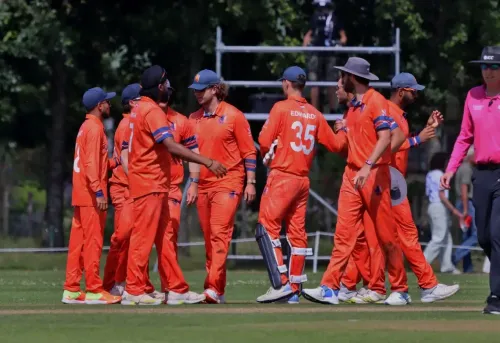
The Netherlands has now qualified for six consecutive World Cups across both ODI and T20 formats, with the women’s team entering the T20 World Cup for the first time, offering unprecedented stability for long-term planning despite current concerns.
"Our football team has missed several World Cups in the past. While we may face similar challenges in the future, the current situation allows us to plan with a degree of stability. I’m not suggesting we have finalized plans for the 2027 World Cup, but we are strategizing towards qualification," van Vliet concluded.
Point of View
It is crucial to highlight the resilience of Dutch cricket amid financial and infrastructural challenges. The dedication of players and management, coupled with an expanding talent pool, suggests that while obstacles exist, there is hope for a brighter future.
NationPress
27 Sept 2026
Frequently Asked Questions
What are the funding challenges faced by Dutch cricket?
Dutch cricket is facing a funding shortfall of approximately 1.2 million euros, which constitutes a significant part of the Royal Netherlands Cricket Board's budget, impacting overall growth and development.
How has player availability affected the national team?
Player availability remains a critical issue, particularly with county commitments affecting the selection of key players during crucial matches like the World Cricket League.
What is the current status of Dutch cricket on the international stage?
The Netherlands has qualified for six consecutive World Cups across ODI and T20 formats, and their women's team has also made history by entering the T20 World Cup.
How are grassroots initiatives contributing to cricket in the Netherlands?
Grassroots cricket is flourishing with around 5,000-6,000 active players and an increasing number of clubs, particularly benefiting from the engagement of South Asian expatriates.
What steps are being taken to improve infrastructure in Dutch cricket?
While the Netherlands has developed quality pitches, efforts are ongoing to attract major teams for warm-up matches and to secure better training facilities.