EC assures action on fake Form 7 voter deletions, says Karnataka CM Shivakumar
Synopsis
Karnataka CM D.K. Shivakumar marched to the Election Commission with his Cabinet and Congress leaders, alleging a coordinated BJP-JD(S) conspiracy to delete thousands of minority, Dalit and backward-class voters via fake Form 7 applications. The EC responded with tightened deletion rules and a threat of criminal action under the Representation of the People Act — a rare escalation that could reshape how voter-roll manipulation is prosecuted in India.
Key Takeaways
Shivakumar met Election Commission officials on 1 October over alleged bulk fake Form 7 voter-deletion applications.
Shivakumar alleged BJP and JD(S) leaders were behind 'fraud, illegal activities and a criminal conspiracy' targeting eligible voters.
Opposition leader R.
Ashoka reportedly admitted around 25,000 forms had been distributed, according to Shivakumar.
The Election Commission directed EROs to approve Form 7 deletions only for death (with death certificate) or duplicate entries .
EROs can now prosecute false-declaration applicants under Section 31 of the Representation of the People Act, 1950 after an inquiry under Rule 20 of the Registration of Electors Rules, 1960.
Multiple FIRs have been registered in different Karnataka districts; the state government says it will not interfere in police investigations.
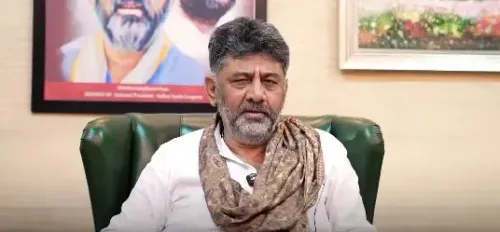
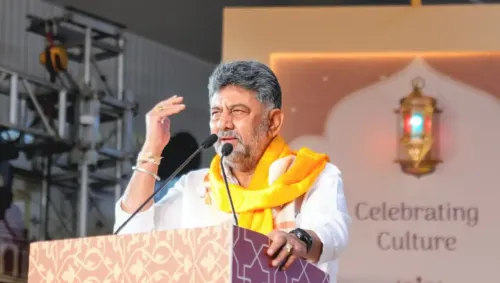
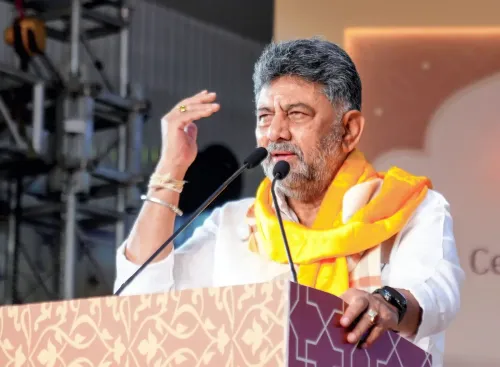
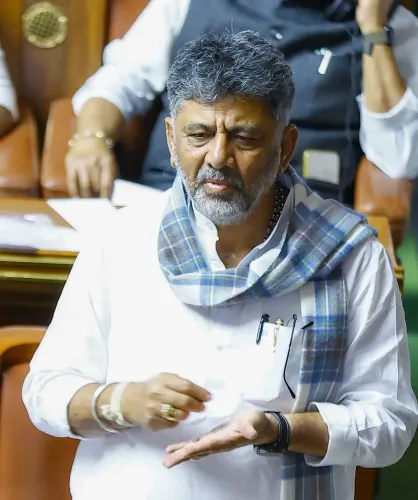
Karnataka Chief Minister D.K. Shivakumar on Thursday night, 1 October, said the Election Commission of India (ECI) had assured him of strict action against those who knowingly file false claims in electoral forms, after widespread complaints emerged over the alleged bulk submission of Form 7 applications aimed at deleting eligible voters from electoral rolls in Karnataka.
What Prompted the Visit
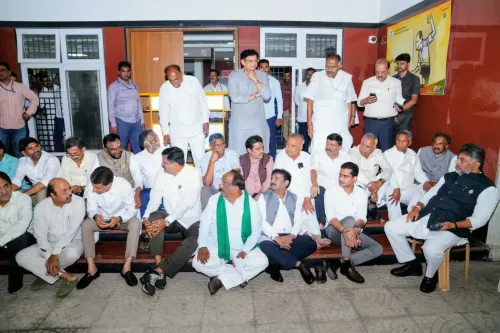
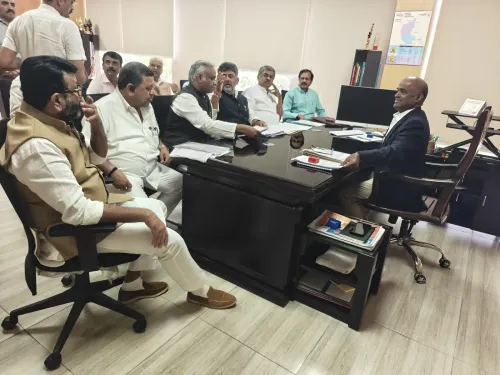
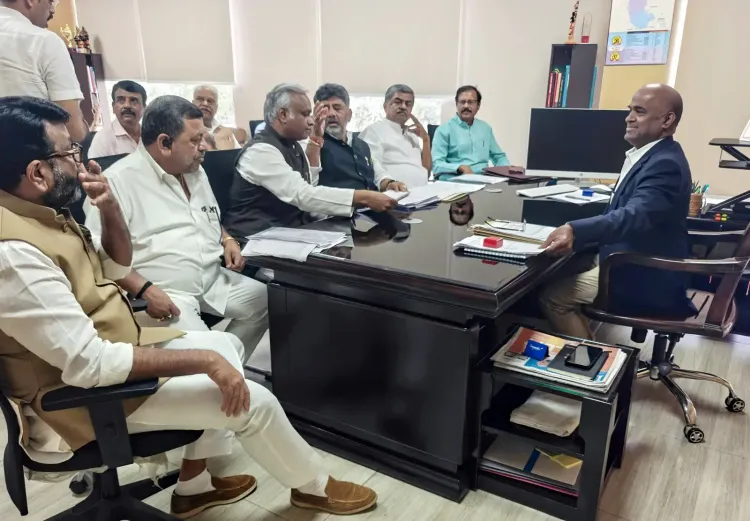
Shivakumar, accompanied by a high-level delegation that included former Chief Minister Siddaramaiah, Karnataka Pradesh Congress Committee (KPCC) president B.K. Hariprasad, and Deputy Chief Minister G. Parameshwara, met Election Commission officials and submitted a detailed representation on the matter. He subsequently staged a protest outside the Commission's office.
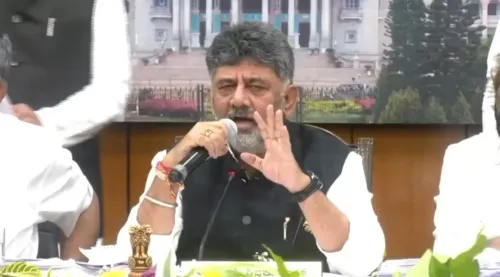
Addressing reporters afterwards, Shivakumar alleged that thousands of pre-filled Form 7 applications — carrying details such as EPIC numbers and voters' names — had been generated and distributed at the grassroots level across multiple constituencies. In some areas, he claimed, the number of such applications ran into the thousands.
Allegations Against BJP and JD(S)
The Chief Minister alleged that leaders of the Bharatiya Janata Party (BJP) and Janata Dal (Secular) [JD(S)] were involved in what he described as 'fraud, illegal activities and a criminal conspiracy against eligible voters.' He further alleged that the targeted deletion attempts disproportionately affected minorities, backward classes, Dalits and economically weaker sections.
Shivakumar cited BJP leader and Leader of the Opposition in the Karnataka Assembly, R. Ashoka, as having stated that around 25,000 forms had been distributed. 'Whether it is one, 10, 25,000 or 25 lakh, the investigation will take its own course. Where were these forms printed? How were they printed? Who distributed them?' the Chief Minister asked. He also claimed that some political leaders had admitted to receiving Form 7 applications from senior party leaders, and that multiple FIRs had already been registered in different districts.
Election Commission's Directives
Following the representations, the Election Commission directed Electoral Registration Officers (EROs) to approve Form 7 deletion applications only in cases involving death or duplicate entries. For death-based deletions, uploading a death certificate is now compulsory; for duplicate entries, the second EPIC number must be mentioned in the Block Level Officer (BLO) remarks.
Crucially, according to the communication cited by Shivakumar, EROs have been directed to invoke Section 31 of the Representation of the People Act, 1950, against applicants who knowingly make false statements or declarations in Forms 6, 6A, 7 and 8. Any such action will be preceded by an inquiry under Rule 20 of the Registration of Electors Rules, 1960.
Government's Stance
Shivakumar said he cancelled a scheduled Cabinet meeting to remain at the Election Commission office until the complaints were addressed. 'It is my bound duty as Chief Minister to protect the votes of the citizens of the state. It is my bound duty to protect every section of the people,' he said. He added that police would independently investigate the FIRs already registered, and that the state government would not interfere in the process. 'The law will take its own course,' he said.
The development signals an escalating political confrontation in Karnataka over electoral roll integrity ahead of upcoming elections, and raises broader questions about oversight mechanisms for bulk voter-deletion applications across the country.
Point of View
Not the structural ease with which such forms can be generated and distributed at scale. The invocation of Section 31 of the Representation of the People Act is significant but rarely enforced historically, raising the question of whether this will translate into actual prosecutions or remain a deterrent on paper. With Karnataka's Congress government and the BJP-JD(S) opposition locked in an escalating political war, the risk is that the investigation becomes a political football rather than a credible inquiry — which would be the worst outcome for voter confidence.
NationPress
2 Oct 2026
Frequently Asked Questions
What is Form 7 and why is it at the centre of the Karnataka controversy?
Form 7 is an application used to request the deletion of a name from electoral rolls, typically on grounds of death, shifting of residence, or duplicate entry. The controversy arose after Karnataka CM Shivakumar alleged that thousands of pre-filled Form 7 applications — carrying real EPIC numbers and voter names — were bulk-generated and distributed at the grassroots level to fraudulently delete eligible voters, disproportionately targeting minorities, Dalits, and backward classes.
What action has the Election Commission taken?
The Election Commission has directed Electoral Registration Officers (EROs) to approve Form 7 deletion requests only in cases of death — with a mandatory death certificate upload — or duplicate entries, where the second EPIC number must appear in BLO remarks. EROs have also been directed to invoke Section 31 of the Representation of the People Act, 1950, against anyone found to have knowingly made false declarations, following an inquiry under Rule 20 of the Registration of Electors Rules, 1960.
Who has Karnataka CM Shivakumar accused of being behind the alleged voter deletion drive?
Shivakumar has alleged that leaders of the BJP and JD(S) were involved in 'fraud, illegal activities and a criminal conspiracy against eligible voters.' He cited BJP leader and Leader of the Opposition R. Ashoka as having stated that around 25,000 forms had been distributed, and claimed some political leaders admitted receiving the forms from senior party figures.
Have any FIRs been filed in connection with the alleged voter deletions?
Yes. According to Shivakumar, several voters have already lodged complaints and FIRs in different districts after finding their names or voting rights affected. The Chief Minister stated that police would investigate these FIRs independently and that the state government would not interfere in the process.
What legal provisions can be used against those who file false electoral forms?
Under Section 31 of the Representation of the People Act, 1950, any person who knowingly makes a false statement or declaration in Forms 6, 6A, 7, or 8 can face legal action. This action must be preceded by an inquiry under Rule 20 of the Registration of Electors Rules, 1960, as directed by the Election Commission.