Karnataka CM Shivakumar claims records on Form-7 voter deletion misuse, vows to expose BJP
Synopsis
Karnataka CM D.K. Shivakumar has gone on the offensive over the Form-7 voter deletion row, displaying an alleged sack of fake applications and claiming they were printed at BJP headquarters and targeted minority, Dalit, and backward-class voters. With over one lakh deletions allegedly attempted and the Election Commission reportedly writing to all states, this has escalated from a state-level political dispute into a national electoral integrity alarm.
Key Takeaways
Shivakumar on 8 October 2026 alleged BJP leaders criminally misused Form-7 applications to delete voters' names from electoral rolls.
He claimed attempts were made to delete the names of more than one lakh voters , primarily targeting minority, Dalit, and backward-class communities.
Shivakumar displayed what he described as a full sack of fake, computerised forms allegedly printed at a BJP headquarters.
He alleged BJP leaders approached the Governor and BLOs to halt cases and retrieve submitted applications after the government filed complaints.
The Election Commission of India reportedly directed all states to conduct a special campaign following the controversy.
Shivakumar pledged to hand all evidence to the Congress high command and pursue a formal investigation.
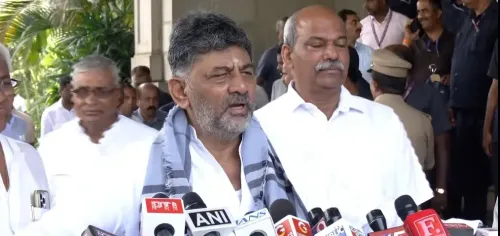
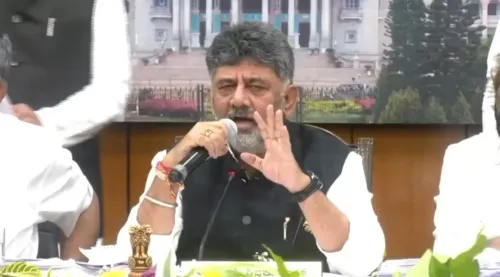
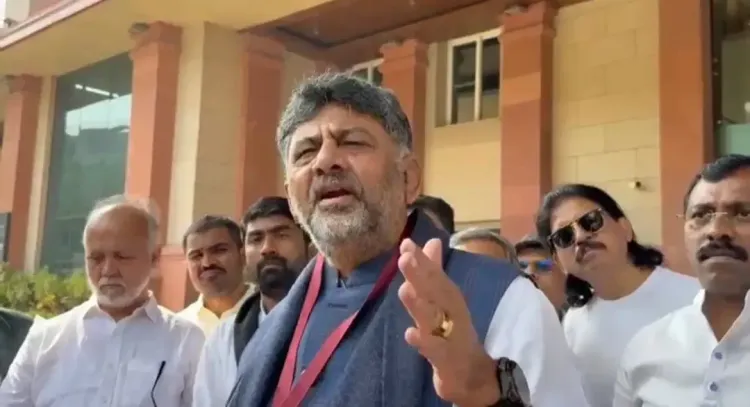
Karnataka Chief Minister D.K. Shivakumar on Thursday, 8 October 2026, alleged that Bharatiya Janata Party (BJP) leaders were criminally involved in the misuse of Form-7 applications to seek illegal deletion of voters' names from electoral rolls, stating he possessed documentary evidence that would be handed to the Congress high command to demand a thorough investigation. Addressing a press conference in New Delhi, Shivakumar displayed what he described as a full sack of fake Form-7 applications, alleging they were printed at a BJP headquarters and systematically distributed to local leaders.
Key Allegations and Evidence Cited
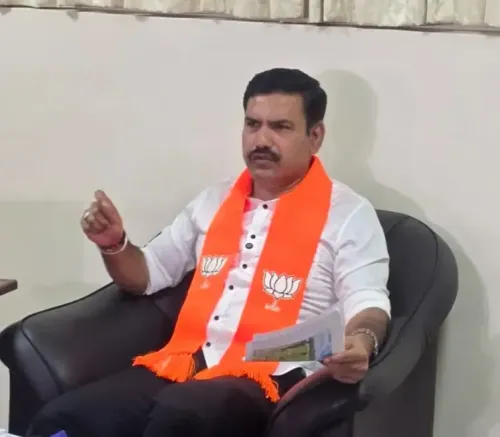
Chief Minister Shivakumar claimed that the fraudulent applications were computerised and pre-filled with names and addresses of minority, Dalit, and backward-class voters, and questioned whether ordinary villagers could have independently prepared such detailed forms. He alleged that local BJP leaders submitted their own identity cards and phone numbers while filing these applications, and that once the government registered complaints, those leaders immediately approached Booth Level Officers (BLOs) to retrieve the submitted forms.
'I have information and records. I will expose this and hand over all the information to the high command. The BJP leaders are indulging in utterly lowly criminal work without any shame,' Shivakumar said.
He further alleged that the misuse originated in Bengaluru before spreading across Karnataka, and that attempts had been made to delete the names of more than one lakh voters through what he described as a systematic operation.
Government Steps and the Role of the Election Commission
Shivakumar stated that his government had taken measures to ensure that even homeless and vulnerable citizens were not excluded from electoral rolls, writing to officials to allow a one-month window to rectify entries and include marginalised individuals. He credited intervention by the authorities with stopping the alleged deletions, and claimed the Election Commission of India (ECI) had since directed all states to conduct a special campaign on voter list integrity.
'The criminal act was supposed to happen and we stopped it. The Election Commission was convinced and wrote to all states for a special campaign,' he said.
Political Flashpoint: Governor, Opposition, and Rahul Gandhi
The Chief Minister criticised Union Minister H.D. Kumaraswamy and BJP leaders R. Ashoka and Chalavadi Narayaswamy for approaching the Governor along with other National Democratic Alliance (NDA) leaders to demand that cases and investigations be dropped. He also questioned the Governor's decision to seek explanations from government officials over the filing of cases against those allegedly involved.
Shivakumar described the Opposition's resistance to a probe as self-incriminating, asking why leaders would oppose an investigation unless they had reason to fear its findings. He also praised Leader of the Opposition in the Lok Sabha, Rahul Gandhi, for raising the issue at the national level, calling it 'the country's biggest conspiracy' and asserting that 'the right to vote is the right to live.'
Broader Implications for Voter Rights
This controversy arrives at a politically charged moment in Karnataka, where the ruling Congress government and the BJP-led opposition have been locked in an escalating battle over electoral integrity. Notably, if the allegations are substantiated, the systematic targeting of minority and Dalit voter entries would represent a serious breach of democratic process, with implications that could extend well beyond the state. The ECI's reported directive to all states suggests the concerns have national resonance.
Shivakumar reiterated that his government would safeguard the electoral rights of every voter, including those who support the BJP, and vowed to pursue the investigation regardless of political pressure. The next moves — including whether the Congress high command formally petitions investigative agencies and how the ECI responds — will determine how far this controversy travels.
Point of View
However, is the Election Commission's reported directive to all states, which, if confirmed, lends the allegations a credibility beyond partisan claim and counter-claim. The deeper question this row surfaces is structural: Form-7, the mechanism by which any citizen can seek deletion of another's name, has long been a vulnerability in India's voter roll system, and its alleged weaponisation against marginalised communities is not a first-time concern. Whether the Congress high command follows through with a formal petition to the ECI or central agencies — or whether this remains a state-level political salvo — will determine if this becomes a watershed moment for electoral reform or simply the latest chapter in Karnataka's fierce partisan battles.
NationPress
8 Oct 2026
Frequently Asked Questions
What is the Form-7 voter deletion controversy in Karnataka?
Form-7 is the mechanism by which a person can apply to have a voter's name deleted from electoral rolls. Karnataka CM D.K. Shivakumar has alleged that BJP leaders systematically misused this form by printing pre-filled applications targeting minority, Dalit, and backward-class voters and distributing them to local leaders to submit fraudulently, in an attempt to delete over one lakh voters' names.
What evidence has CM Shivakumar claimed to have?
Shivakumar displayed what he described as a full sack of computerised, pre-filled Form-7 applications at a press conference in New Delhi on 8 October 2026, alleging they were printed at a BJP headquarters. He stated that some applications bore the identity cards and phone numbers of local BJP leaders who submitted them, and said he would hand all records to the Congress high command.
What action has the Election Commission of India taken?
According to CM Shivakumar, the Election Commission of India was convinced of the seriousness of the issue and has directed all states to conduct a special campaign on voter list integrity. The ECI has not issued an independent public statement on the matter as reported in the source.
Why has the BJP approached the Governor over this issue?
Shivakumar alleged that BJP leaders, including Union Minister H.D. Kumaraswamy and leaders R. Ashoka and Chalavadi Narayaswamy, approached the Governor to demand that cases filed against those allegedly involved in submitting fraudulent Form-7 applications be dropped and investigations not pursued. The CM criticised this move and questioned the Governor's decision to seek explanations from government officials over the cases.
What steps has the Karnataka government taken to protect voters?
The Karnataka government has written to officials directing that even homeless and vulnerable citizens be included in electoral rolls, with a one-month window provided to rectify entries. CM Shivakumar said his government would protect the electoral rights of all voters, including BJP supporters, whose names may have been wrongly targeted for deletion.