Karnataka CM Shivakumar urges Congress workers to report bulk Form 7 deletions
Synopsis
Karnataka CM D.K. Shivakumar has put his party's entire booth-level machinery on alert, alleging that BJP leaders are filing Form 7 applications in bulk to delete minority, OBC, SC and ST voters from electoral rolls across multiple constituencies. The charge — unverified but politically explosive — strikes at the heart of voter-roll integrity during a sensitive SIR exercise.
Key Takeaways
Shivakumar on 1 October 2026 urged Congress BLAs and party workers to report alleged bulk Form 7 voter-deletion filings during the Special Intensive Revision (SIR) process.
He alleged, without independent verification, that BJP leaders were targeting minority, Backward Class, SC and ST voters through coordinated Form 7 submissions.
Affected areas reportedly include Belagavi , Bhalki , Mudigere , Mysuru and the Aland constituency.
Shivakumar has sought information from the police , Deputy Commissioners and the Chief Electoral Officer of Karnataka .
He warned of stringent action and said every genuine voter's name must remain on the electoral roll regardless of religion or social background.
Karnataka Chief Minister D.K. Shivakumar on Thursday, 1 October 2026, appealed to Congress booth-level agents (BLAs), party leaders and workers across Karnataka to report alleged bulk submissions of Form 7 applications — used to seek deletion of names from electoral rolls — during the ongoing Special Intensive Revision (SIR) process. The appeal came amid allegations, which have not been independently verified, that certain Bharatiya Janata Party (BJP) leaders were misusing the mechanism to target voters from minority communities, Backward Classes, Scheduled Castes and Scheduled Tribes.
What Shivakumar Said
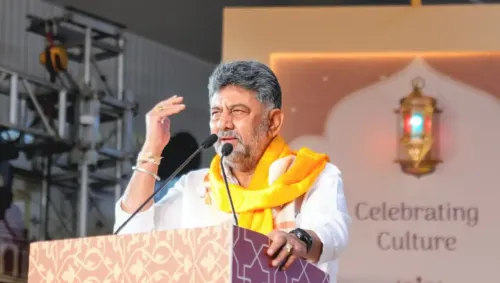
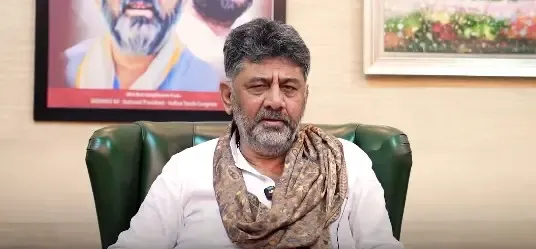
In two videos shared on social media, Shivakumar urged BLAs, BLA-1s, BLA-2s and other party functionaries to coordinate with booth-level officers (BLOs) and verify whether objections had been filed against voters in their respective Assembly constituencies and polling booths. He asked them to collect authenticated data on the number of applications submitted, the constituencies and booths affected, and send details to his office and email address before noon.
The Chief Minister said he had already sought information from the police, Deputy Commissioners and the Chief Electoral Officer of Karnataka regarding the applications and alleged irregularities. He warned of stringent action to ensure that eligible voters are not disenfranchised.
Constituencies Flagged
Shivakumar said he had received reports of suspected bulk Form 7 submissions from Belagavi, Bhalki, Mudigere, Mysuru and several other parts of Karnataka, including constituencies held by Congress MLAs. He specifically cited the Aland constituency as an instance where, he alleged, Form 7 was being misused to challenge Congress electorally. These claims are attributed to the Chief Minister and have not been independently established.
What Form 7 Is and Why It Matters
Form 7 is the official instrument through which a citizen can submit objections seeking the deletion of a name from the electoral roll. Such applications are subject to verification under election rules before any deletion is acted upon. The current controversy centres on allegations that coordinated bulk filings could be deployed to remove eligible voters — particularly from vulnerable communities — in targeted booths, without their knowledge.
This comes amid a broader national debate over the integrity of voter-roll revisions during SIR exercises, with opposition parties in multiple states flagging the potential for misuse. Notably, the Election Commission of India has prescribed safeguards requiring BLO verification before any deletion is processed, but critics argue that the volume of simultaneous applications can overwhelm ground-level verification capacity.
The Political Dimension
Shivakumar's appeal is explicitly partisan in framing — he is directing his own party machinery to act as a watchdog — but he also invoked a broader principle, stating that the right to vote must be protected irrespective of political affiliation, religion or social background, and that every genuine voter's name should remain on the roll.
The BJP had not responded publicly to the allegations at the time of reporting. With Karnataka's political landscape remaining sharply contested since the Congress government came to power in 2023, electoral-roll integrity is set to remain a flashpoint in the run-up to future elections.
Point of View
But it also risks being dismissed as partisan noise without independent corroboration. The deeper issue is structural: the SIR process, by design, invites mass Form 7 filings, and the Election Commission's BLO verification safeguard is only as strong as its ground-level capacity. If the allegations are substantiated, they point to a systemic vulnerability in Karnataka's voter-roll management that goes beyond any single party's conduct. The absence of a BJP response and the lack of independent verification at the time of reporting mean the full picture remains incomplete.
NationPress
1 Oct 2026
Frequently Asked Questions
What is Form 7 and why is it controversial in Karnataka?
Form 7 is the official form used to file objections seeking deletion of a name from the electoral roll. In Karnataka, the controversy stems from allegations — attributed to Chief Minister D.K. Shivakumar but not independently verified — that BJP leaders are submitting these forms in bulk to remove eligible voters, particularly from minority, Backward Class, SC and ST communities, during the ongoing Special Intensive Revision process.
What action has CM Shivakumar taken over the alleged bulk deletions?
Shivakumar has urged Congress booth-level agents and party workers to verify and report suspected bulk Form 7 filings to his office before noon on 1 October 2026. He has also sought information from the police, Deputy Commissioners and the Chief Electoral Officer of Karnataka, and has warned of stringent action.
Which Karnataka constituencies have been flagged?
According to Shivakumar, reports of suspected bulk Form 7 submissions have come from Belagavi, Bhalki, Mudigere, Mysuru and several other parts of Karnataka, including Congress-held constituencies. The Aland constituency was specifically cited as a case of alleged misuse.
Who is most at risk from bulk Form 7 submissions?
Shivakumar has alleged that the filings disproportionately target voters from minority communities, Backward Classes, Scheduled Castes and Scheduled Tribes. However, these allegations have not been independently established at the time of reporting.
What safeguards exist against fraudulent Form 7 deletions?
Under Election Commission of India rules, Form 7 applications must be verified by a booth-level officer before any deletion is processed. Critics argue, however, that coordinated bulk submissions can strain the verification capacity of individual BLOs, potentially allowing illegitimate deletions to slip through.