How is the ECI Strengthening Supervision for SIR in Bengal?
Synopsis
As the countdown to the draft voters’ list release in West Bengal begins, the ECI has ramped up its oversight with the appointment of five additional roll observers. This strategic move aims to ensure a robust electoral process amidst ongoing revisions. Find out who the new observers are and what this means for the upcoming elections.
Key Takeaways
The ECI has appointed five new special roll observers to enhance the supervision of the SIR process.
A total of 17 observers are now overseeing the ongoing revision exercise.
The second stage of the SIR will include filing claims and objections regarding voters’ eligibility.
Over 56 lakh names have been identified for potential exclusion from the voters’ list.
Progeny mapping is being emphasized to ensure accuracy in parental identification on the voters’ list.
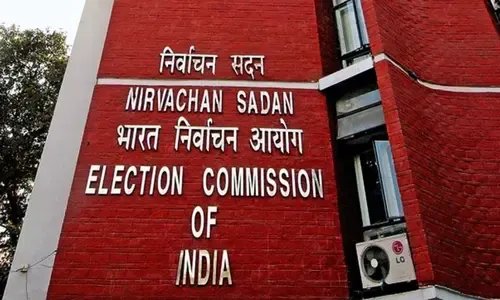
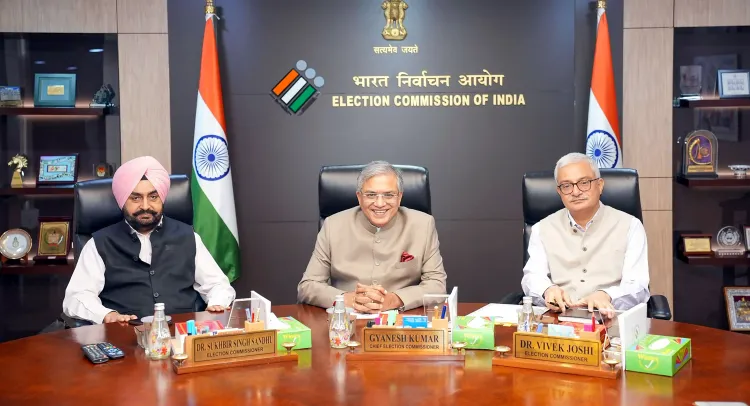
Kolkata, Dec 8 (NationPress) With merely eight days remaining until the conclusion of the first phase of the three-stage Special Intensive Revision (SIR) in West Bengal, which culminates with the release of the draft voters’ list on December 16, the Election Commission of India (ECI) has appointed five more special roll observers to enhance oversight in the state.
This latest appointment brings the total count of special roll observers overseeing the ongoing revision process to 17, with all five new appointees being current Indian Administrative Service (I.A.S.) officers.
The newly designated special roll observers include Kumar Ravi Kant Singh, Neeraj Kumar Bansod, Krishna Kumar Nirala, Aloke Tiwari, and Pankaj Yadav.
According to insiders at the Chief Electoral Officer (CEO) office in Kolkata, the objective of this new appointment is to bolster the supervisory framework for the second phase of the revision process, which will commence following the release of the draft voters’ list.
The second phase of the SIR will include procedures for filing claims and objections, alongside a notification phase involving the issuance, hearing, verification, and resolution of enumeration forms, which will be managed concurrently by the Electoral Registration Officers (EROs).
Upon the completion of this second phase, the final stage will involve the publication of the definitive electoral roll on February 14. Subsequently, the ECI is anticipated to announce the dates for the significant Assembly elections in the state.
Each of the five newly appointed special roll observers will supervise one of the five divisions in West Bengal: Presidency Division, Midnapore Division, Burdwan Division, Malda Division, and Jalpaiguri Division.
Kumar Ravi Kant Singh will oversee the Presidency Division, while Neeraj Kumar Bansod will manage the Midnapore Division, and Krishna Kumar Nirala will be in charge of the Burdwan Division. Aloke Tiwari and Pankaj Yadav will supervise the Malda and Jalpaiguri divisions, respectively.
With the digitization of enumeration forms nearing completion, over 56 lakh names have already been identified as potentially excluded from the voters’ list, including deceased voters, untraceable individuals, those who have relocated, duplicate entries, and others removed for various reasons.
The ECI had previously instructed electoral officers in the state to prioritize meticulous progeny mapping, given the serious discrepancies detected concerning the identities of parents in the current voters’ list dated October 27.
Progeny mapping aims to verify whether the names of a voter’s parents on the current list correspond with those on the 2002 list, the last time the SIR was implemented in West Bengal.
As of October 27, the total number of voters recorded stands at 7,66,37,529.
Point of View
It is imperative to recognize the ECI's proactive measures in strengthening electoral integrity in West Bengal. The appointment of additional observers reflects a commitment to transparency and accountability, ensuring that the electoral process remains robust and free from discrepancies. This strategic move aligns with the ECI's overarching goal of facilitating free and fair elections nationwide.
NationPress
28 Sept 2026
Frequently Asked Questions
What is the purpose of the Special Intensive Revision (SIR)?
The SIR aims to update and ensure the accuracy of the electoral rolls by revising the list of voters, allowing for claims and objections regarding voter eligibility.
Who are the new special roll observers appointed by the ECI?
The newly appointed observers are Kumar Ravi Kant Singh, Neeraj Kumar Bansod, Krishna Kumar Nirala, Aloke Tiwari, and Pankaj Yadav, all of whom are serving IAS officers.
What is the timeline for the SIR process in West Bengal?
The process consists of three stages, with the first stage ending on December 16, followed by the second stage of claims and objections, and concluding with the final electoral roll publication on February 14.
How many names have been identified for exclusion from the voters’ list?
Over 56 lakh names have been identified as potentially excludable, including deceased voters, untraceable individuals, and duplicate entries.
What does progeny mapping involve?
Progeny mapping is a verification process to ensure that parents' names on the current voters’ list match those on the last conducted list from 2002, addressing discrepancies.