Is the ECI Ensuring That Voters Aged 85+ Are Exempt from Hearings?
Synopsis
The Election Commission of India (ECI) has mandated that Booth-Level Officers ensure voters aged 85+ are exempt from physical hearings. This decision aims to protect the elderly and those with critical health issues from unnecessary travel. Awareness campaigns will be crucial to inform the public of these new regulations.
Key Takeaways
Voters aged 85+ are exempt from attending hearings in person.
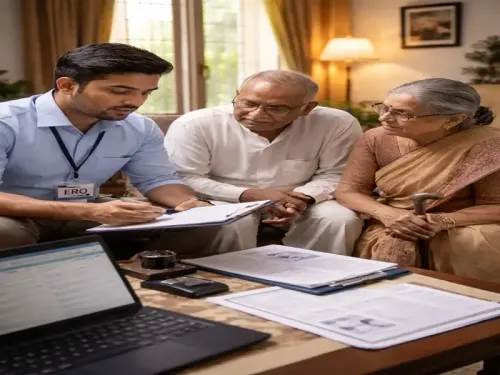
Document verification for these voters will occur at home.
Awareness campaigns will be conducted by EROs and AEROs.
Requests for extending exemptions to voters over 60 have been denied.
Categories for home hearings include elderly, critically ill, and differently-abled voters.
Kolkata, Jan 2 (NationPress) The Election Commission of India (ECI) has taken steps to hold the Booth-Level Officers (BLOs) and their supervisors responsible for ensuring that voters aged 85 years and older are not required to attend hearings in person regarding claims and objections on the draft voters’ list.
Additionally, the ECI has mandated that the Electoral Registration Officers (EROs) and Assistant Electoral Registration Officers (AEROs) must conduct sufficient awareness campaigns within their jurisdictions to inform the public about the exemption for voters over 85 from physical attendance at these sessions.
“If any voter aged over 85 has already received a hearing notice, BLOs or supervisors must reach out to them directly to advise them against coming to the hearing center. For these voters, document verification will occur at their homes,” confirmed a source from the Chief Electoral Officer (CEO) of West Bengal.
This same approach will apply to voters facing severe health issues. The decision on whether such voters should attend a hearing or have their documents verified at home will be made on an individual basis by the relevant ERO or AERO.
However, sources from the CEO’s office clarified that the request from the Trinamool Congress to extend this relaxation to voters aged over 60 cannot be accommodated. “Neither the Commission nor the CEO’s office has the capacity to implement that. Thus, the decision to extend this relaxation is strictly limited to those over 85,” the CEO’s office source added.
On December 29 of the previous year, the ECI outlined categories of voters for whom hearings will be exclusively conducted at their homes. These categories include voters aged over 85, individuals with serious illnesses, and those with disabilities.
Despite these explicit directions from the ECI, there have been reports of exempted voters appearing at hearing centers, leading some political factions to politicize the matter.
In light of these controversies, the ECI has now held the EROs and AEROs accountable for ensuring that voters aged 85 and above do not have to attend hearing centers in person.
Point of View
It is essential to recognize the ECI's efforts to prioritize the well-being of elderly voters. By ensuring that those aged 85 and above are exempt from in-person hearings, the commission is taking a commendable step towards accessibility and inclusivity in the electoral process. However, the insistence on limiting this exemption to only the post-85 demographic raises questions about broader voter support that should be addressed in future reforms.
NationPress
19 Sept 2026
Frequently Asked Questions
Why are voters aged 85 and above exempt from hearings?
The ECI aims to protect elderly voters from the challenges and risks of attending in-person hearings, ensuring their safety and accessibility.
What about voters with serious health conditions?
Voters with critical health issues may also be exempt from in-person hearings, with decisions made on a case-by-case basis by the ERO or AERO.
Can the relaxation be extended to voters over 60?
No, the ECI has confirmed that the relaxation will only apply to voters aged 85 and above, rejecting requests for broader exemptions.
How will awareness be raised regarding these changes?
The EROs and AEROs are responsible for conducting outreach programs to inform voters about the new regulations and exemptions.
What happens if an exempt voter receives a notice?
BLOs or supervisors must contact these voters directly to advise against attending the hearing center and arrange for document verification at home.