East Coast Railway launches AI robot DSC ARJUN for station security
Synopsis
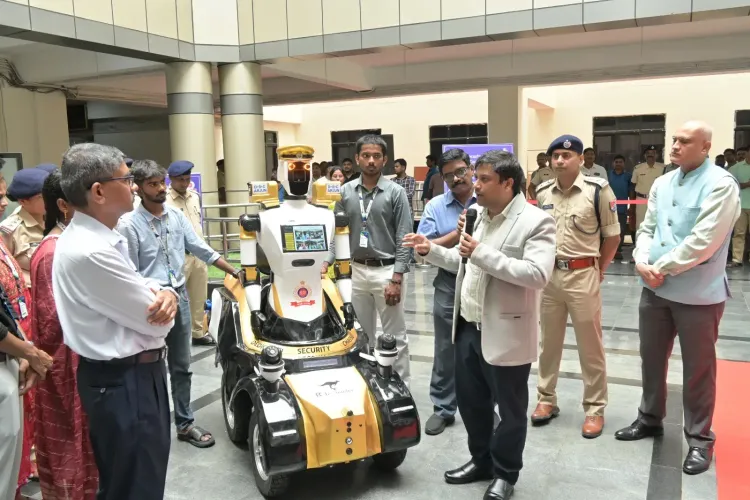
East Coast Railway's DSC ARJUN isn't just another CCTV upgrade — it's a fully autonomous AI robot capable of facial recognition, crowd analytics, and real-time alerts across station premises. Unveiled in Bhubaneswar on 22 July, it marks the third generation of ARJUN-series robots on Indian Railways, evolving from a pandemic-era prototype into a comprehensive 24/7 security platform for the RPF.
Key Takeaways
East Coast Railway launched DSC ARJUN , an AI-powered robotic surveillance platform, in Bhubaneswar on 22 July .
The robot integrates AI facial recognition , crowd analytics , unattended baggage detection , and real-time alert generation .
DSC ARJUN can be deployed across platforms, concourses, booking offices, waiting halls, parking zones , and other vulnerable areas.
Robotic policing on Indian Railways began with Captain ARJUN , developed by Central Railway in 2020 during the COVID-19 pandemic.
ECoR previously introduced the humanoid robot ASC ARJUN at Visakhapatnam Railway Station on 23 January 2026 .
East Coast Railway (ECoR) on Wednesday, 22 July unveiled DSC ARJUN — short for Dedicated Security Chassis Advanced Railway Junction Under Network Enabled Surveillance — an Artificial Intelligence (AI)-powered robotic surveillance platform designed to strengthen passenger safety, station security, and operational efficiency across its network. The launch took place in Bhubaneswar in the presence of the General Manager of East Coast Railway, senior railway officials, and Railway Protection Force (RPF) officers.
What DSC ARJUN Is and What It Can Do
DSC ARJUN is built on a convergence of AI, Computer Vision, Machine Learning, and Internet of Things (IoT) technologies. According to ECoR, the platform functions as a force multiplier for RPF personnel, enabling round-the-clock surveillance and intelligent monitoring without fatigue or blind spots.
Its capabilities include AI-based facial recognition, real-time crowd analytics, passenger head count, unattended baggage detection, suspicious activity detection, public address announcements, live video streaming, and instant alert generation. ECoR stated that these features 'significantly enhance situational awareness, facilitate timely decision-making and strengthen preventive and evidence-based policing.'
Where the Platform Will Be Deployed
DSC ARJUN can be stationed across a wide range of sensitive locations within railway premises — including platforms, station concourses, booking offices, waiting halls, circulating areas, parking zones, and parcel offices. It is also designed to respond during emergencies such as fire outbreaks, medical incidents, and security-related situations.
The Evolution of Robotic Policing on Indian Railways
The lineage of DSC ARJUN traces back to 2020, when Central Railway developed Captain ARJUN during the COVID-19 pandemic to protect frontline railway personnel. Building on that foundation, ECoR introduced the humanoid robot ASC ARJUN at Visakhapatnam Railway Station on 23 January 2026. DSC ARJUN represents the next stage in this technological evolution, integrating advanced surveillance analytics into a more comprehensive security platform.
Significance for Passenger Safety
ECoR described DSC ARJUN as a milestone in building a 'smart, technology-driven security ecosystem.' By enabling continuous monitoring and intelligent analytics, the robot assists RPF personnel in preventing crime, managing passenger movement during peak hours, and protecting railway assets. This deployment reflects a broader push by Indian Railways to embed emerging technologies into public safety infrastructure — a trend that has accelerated since the pandemic-era robotics experiments of 2020.
Point of View
But the real measure of success will be operational reliability under India's high-footfall station conditions — not controlled demonstrations. Facial recognition at scale raises legitimate civil liberties questions that ECoR has not publicly addressed. Indian Railways has a history of technology announcements that outpace deployment; whether DSC ARJUN becomes a network-wide standard or stays a showcase installation will depend on procurement scale, maintenance budgets, and RPF training — none of which have been detailed yet.
NationPress
21 Oct 2026
Frequently Asked Questions
What is DSC ARJUN launched by East Coast Railway?
DSC ARJUN — Dedicated Security Chassis Advanced Railway Junction Under Network Enabled Surveillance — is an AI-powered robotic surveillance platform unveiled by East Coast Railway in Bhubaneswar on 22 July. It uses AI, Computer Vision, Machine Learning, and IoT to support Railway Protection Force personnel with round-the-clock security monitoring.
What are the key features of the DSC ARJUN robot?
DSC ARJUN is equipped with AI-based facial recognition, real-time crowd analytics, passenger head count, unattended baggage detection, suspicious activity detection, public address announcements, live video streaming, and instant alert generation. It can also respond during emergencies such as fire, medical incidents, and security situations.
Where will DSC ARJUN be deployed at railway stations?
The robot can be stationed across platforms, station concourses, booking offices, waiting halls, circulating areas, parking zones, parcel offices, and other vulnerable locations within railway premises requiring enhanced surveillance.
How does DSC ARJUN relate to earlier ARJUN robots on Indian Railways?
Robotic policing on Indian Railways began in 2020 when Central Railway developed Captain ARJUN during the COVID-19 pandemic. East Coast Railway then introduced the humanoid robot ASC ARJUN at Visakhapatnam Railway Station on 23 January 2026. DSC ARJUN is the next generation, adding advanced AI surveillance and analytics capabilities.
How does DSC ARJUN help the Railway Protection Force?
DSC ARJUN functions as a force multiplier for RPF personnel, enabling continuous surveillance without fatigue. It assists in crime prevention, peak-hour crowd management, asset protection, and emergency response — enhancing situational awareness and supporting evidence-based policing.