ED raids Yavatmal uncover ₹242 crore fraud at Babaji Date Mahila Bank

Synopsis
The ED's Mumbai unit has cracked open a ₹242 crore fraud at a Maharashtra cooperative bank whose RBI licence was cancelled in 2022 — with dummy loan accounts, property valuation manipulation, and kickbacks to officials all allegedly part of a structured scheme to loot depositors, many of them women.
Key Takeaways
The ED's Mumbai Zonal Office-II searched 9 locations in Yavatmal, Maharashtra on 6 October 2026 under PMLA.
The probe targets a ₹242 crore alleged fraud at Babaji Date Mahila Sahakari Bank Ltd .
The bank's RBI licence was cancelled in 2022 following depositor complaints of fraud and fund misutilisation.
Officials allegedly opened dummy loan accounts , manipulated property valuations, and paid kickbacks to bank staff.
A local police chargesheet has already been filed; ED investigation is ongoing with document seizures made.
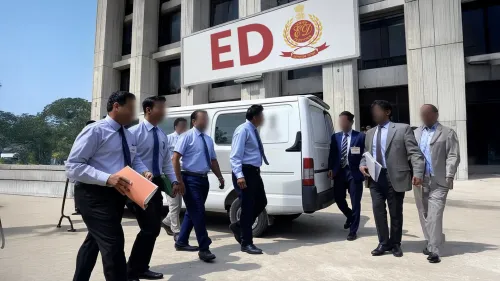
The Enforcement Directorate's (ED) Mumbai Zonal Office-II conducted search operations across nine locations in Yavatmal district, Maharashtra, on 6 October 2026, exposing an alleged ₹242 crore fraud at Babaji Date Mahila Sahakari Bank Ltd, a cooperative lender whose licence was cancelled by the Reserve Bank of India (RBI) in 2022. The searches were carried out under the Prevention of Money Laundering Act (PMLA), 2002, with the probe implicating senior bank officials, borrowers, valuers, and auditors.
How the Fraud Unfolded
Investigators allege that the bank's Chairperson, CEO, Directors, and other officials colluded with borrowers to disburse loans without adequate collateral or any meaningful assessment of repayment capacity. The diverted funds were reportedly used in multiple ways: siphoned for personal use, withdrawn in cash, deployed for evergreening of loans, and routed back to bank officials as kickbacks.
In a particularly brazen dimension of the scheme, officials allegedly used the credentials of existing borrowers to open dummy loan accounts and manipulated the valuation of mortgaged properties to inflate disbursable amounts. A state government-ordered special audit first brought these systemic lapses to light.
Background: RBI Cancellation and FIRs
The bank, originally registered under Section 9(1) of the Maharashtra Cooperative Societies Act, 1960, had its licence revoked by the RBI in 2022 following a spate of depositor complaints alleging fraud and misutilisation of funds. The ED launched its money-laundering investigation on the basis of multiple First Information Reports (FIRs) registered by Avdhutwadi Police Station, Yavatmal. The local law enforcement agency has already filed a chargesheet in the case.
What the Searches Established
During the 6 October operations, investigators seized a large number of incriminating documents, including property papers, establishing what the agency described as a 'large nexus' between bank management and borrowers. The evidence points to a structured and sustained diversion of public deposits — funds entrusted by ordinary account holders — on a significant scale.
Notably, the cooperative bank's failure mirrors a pattern seen in several Maharashtra-based cooperative lenders in recent years, where weak internal controls and inadequate regulatory oversight have allowed connected insiders to treat depositor money as a personal credit line.
Investigation Status and What Comes Next
The ED has confirmed that further investigation is in progress. Proceeds of crime identified under PMLA can be attached, and the agency is expected to issue summons to key accused in the coming weeks. Depositors of the now-defunct bank, many of them women given its Mahila (women-focused) cooperative status, remain among the most directly affected stakeholders.
Point of View
Enabled by thin oversight, politically connected management, and depositors who lack the institutional muscle to push back. The RBI cancelled this bank's licence in 2022, yet the full scale of the alleged fraud is only surfacing now through an ED-led PMLA investigation, raising questions about why state-level regulatory action did not trigger faster central scrutiny. With dummy accounts, valuation manipulation, and kickbacks all alleged under one roof, this case deserves a judicial fast-track — both to recover depositor funds and to send a deterrent signal to a sector where accountability remains patchy.
NationPress
6 Oct 2026
Frequently Asked Questions
What is the Babaji Date Mahila Sahakari Bank fraud case?
It is an alleged ₹242 crore financial fraud at Babaji Date Mahila Sahakari Bank Ltd in Yavatmal, Maharashtra, where the bank's Chairperson, CEO, and Directors allegedly colluded with borrowers to disburse unsecured loans and divert funds. The RBI cancelled the bank's licence in 2022, and the ED is now investigating money laundering under PMLA.
Why did the ED raid Yavatmal on 6 October 2026?
The ED searched nine locations in Yavatmal to gather evidence in a PMLA money-laundering investigation stemming from multiple FIRs filed by Avdhutwadi Police Station against bank officials and borrowers. The raids led to the seizure of property papers and other incriminating documents.
How was the fraud carried out at the cooperative bank?
According to investigators, bank officials disbursed loans without collateral, opened dummy loan accounts using existing borrowers' credentials, manipulated property valuations, and siphoned funds through cash withdrawals, loan evergreening, and kickbacks to officials. A state-government-ordered special audit first uncovered these irregularities.
Who is affected by the Babaji Date Mahila Sahakari Bank closure?
Depositors of the bank — many of them women, given its Mahila (women-focused) cooperative mandate — are the primary victims, having lost access to their savings after the RBI revoked the bank's licence in 2022. The ongoing ED probe could potentially lead to attachment of proceeds of crime, which may aid future recovery efforts.
What happens next in the ED's Yavatmal bank fraud investigation?
The ED has confirmed that further investigation is in progress following the 6 October searches. Under PMLA, the agency can attach properties identified as proceeds of crime and summon key accused for questioning. A local police chargesheet has already been filed in the case.