Qatar says talks, message exchanges ongoing to end US-Iran conflict
Synopsis
Qatar has confirmed that negotiations and message exchanges between parties to the US-Iran regional conflict are actively continuing through Doha — even as President Trump warns Iran of serious consequences over alleged threats that triggered the movement of US bombers from Britain. Seven months in, the war of signals is loud; a breakthrough remains elusive.
Key Takeaways
Qatar's Foreign Ministry confirmed on 6 October 2026 that talks and message exchanges among parties to the regional conflict are continuing through Doha and its partners.
Ibrahim bin Sultan Al-Hashmi said details of the diplomatic exchanges could not be disclosed but confirmed negotiations are actively ongoing.
The US-Iran conflict has stretched beyond seven months with no breakthrough reported.
President Trump warned Iran it would 'suffer greatly' over alleged threats that prompted the US to move military assets out of Britain .
Trump confirmed threats prompted the bomber repositioning, but stopped short of publicly naming Iran as the source initially.
Trump also reiterated openness to direct talks with Tehran, reflecting a dual-track pressure-and-engagement posture.
Qatar confirmed on Tuesday, 6 October 2026 that negotiations and exchanges of messages among parties to the US-Iran regional conflict are continuing through Doha and its regional partners, as the standoff stretches beyond seven months with no breakthrough in sight.
What Qatar Said
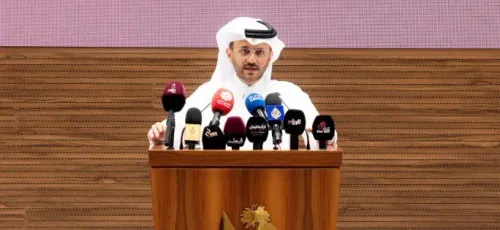
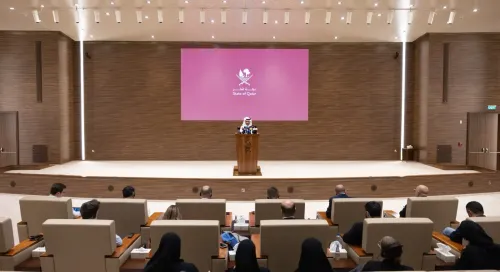
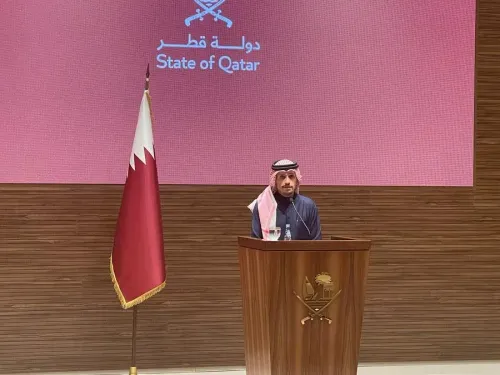
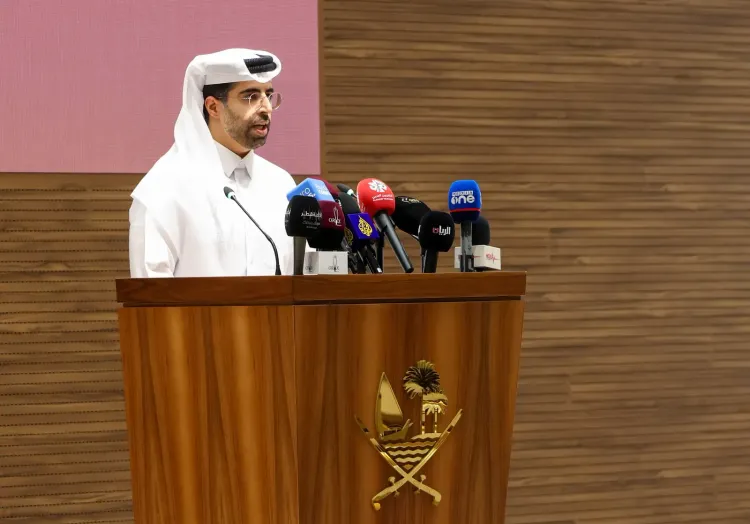
Ibrahim bin Sultan Al-Hashmi, director of the media and communications department at Qatar's Foreign Ministry, made the disclosure at a weekly media briefing in Doha. He said Qatar could not reveal the specifics of the ongoing diplomatic exchanges but confirmed that talks were actively continuing.
'The scale of this conflict and the magnitude of the price that the whole world is paying require us to put our best efforts to end this immediately through a negotiable solution on the negotiation table,' Al-Hashmi said.
He added that negotiations had taken into consideration the concerns of the various parties, without specifying further details.
Trump's Warnings and Military Movements
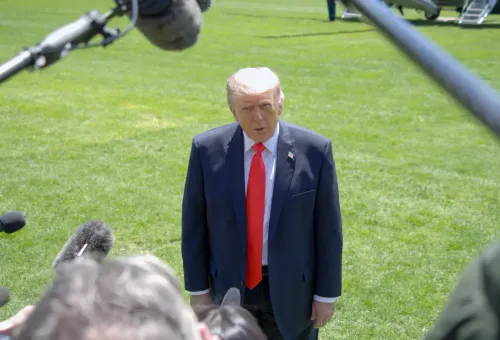
The Qatari remarks come as US President Donald Trump issued fresh warnings to Iran, saying Tehran would 'suffer greatly' if it was found to be behind threats that prompted Washington to move military assets out of Britain. Trump made the remarks to reporters before departing aboard Marine One, fielding questions on the movement of US bombers, Middle East tensions, energy supplies, and an attack involving Flydubai.
When asked whether a specific threat had prompted the pullback of bombers from Britain, Trump confirmed that threats had been received. 'Yeah, I think we can say that. I mean, they didn't fly out by accident, yeah,' Trump said. He elaborated: 'No, but there were some threats and, rather than tempting the enemy, we'll capture the enemy and beat the enemy. But why should we leave them there? So, we moved them around a little bit, not very far.'
Trump did not initially identify the party responsible for the threat. He was subsequently asked whether Iran had brought combat drones into Britain and whether that was the reason US assets had been repositioned, though he did not directly confirm the specific allegation.
The Diplomatic Context
The conflict between the United States and Iran has dragged on for more than seven months, with no clear resolution on the horizon. Qatar, which has historically served as a diplomatic back-channel — notably in negotiations over Gaza ceasefire talks — once again finds itself at the centre of de-escalation efforts. Notably, this is not the first time Doha has played mediator in a conflict where direct US-Iran communication is strained.
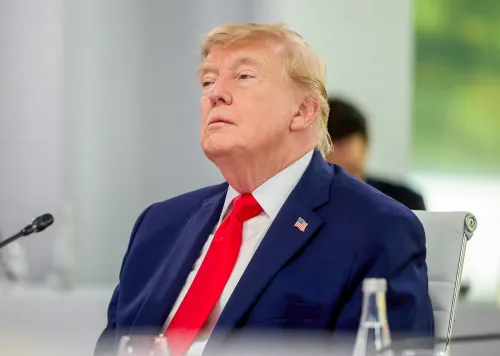
Trump, even as he issued warnings, reiterated that he remained open to direct talks with Tehran — a dual-track posture of pressure and engagement that has defined his administration's approach to Iran policy.
What Happens Next
With Qatar confirming that diplomatic channels remain open and Trump signalling conditional openness to direct dialogue, the immediate question is whether the message exchanges will translate into a formal negotiating framework. Regional partners involved in the mediation have not been publicly identified. The next indicator to watch will be any shift in the US military posture in the region or a formal Iranian response to the diplomatic overtures being facilitated through Doha.
Point of View
But carefully worded — 'exchanges of messages' is not the same as structured negotiations, and Doha has an interest in being seen as indispensable to any resolution. The real story is Trump's dual posture: issuing pointed military warnings to Iran in the same breath as leaving the door open to direct talks. This mirrors the maximum-pressure-with-an-exit-ramp playbook from his first term, which eventually produced neither a deal nor a decisive confrontation. Seven months into this conflict, the absence of a breakthrough despite active mediation suggests that the gap between US and Iranian positions remains wide — and that Qatar's role, while valuable, has limits that neither side has yet chosen to close.
NationPress
7 Oct 2026
Frequently Asked Questions
What has Qatar said about the US-Iran conflict negotiations?
Qatar confirmed on 6 October 2026 that negotiations and exchanges of messages among parties to the regional conflict are continuing through Doha and its regional partners. The Foreign Ministry said it could not disclose specifics but confirmed talks are actively ongoing.
How long has the US-Iran conflict been going on?
According to reports, the conflict between the United States and Iran has continued for more than seven months as of early October 2026, with no breakthrough reported despite ongoing diplomatic efforts.
What did President Trump say about Iran and the movement of US bombers?
Trump confirmed that threats had prompted the United States to move military assets — specifically bombers — out of Britain, saying the assets were repositioned rather than left vulnerable. He warned Iran would 'suffer greatly' if it was found to be responsible, while also saying he remained open to direct talks with Tehran.
What is Qatar's role in US-Iran diplomacy?
Qatar is serving as a back-channel mediator, facilitating message exchanges between the parties. Doha has historically played this role in regional conflicts, including Gaza ceasefire negotiations, given that it maintains communication lines with parties that do not engage each other directly.
Is a resolution to the US-Iran conflict imminent?
No breakthrough appears imminent. Qatar's Foreign Ministry acknowledged that negotiations are ongoing but offered no timeline. Trump's dual posture of threats and openness to talks has not yet produced a formal negotiating framework.