Qatar delegation visits Tehran to de-escalate US-Iran tensions
Synopsis
Qatar has publicly confirmed it is actively mediating between the US and Iran, with a delegation visiting Tehran just days ago and proposals still moving through back-channels. Iran's Supreme Leader Khamenei is insisting on 'conditions first,' while Tehran's seven-day Strait of Hormuz offer from September hangs unresolved — making Qatar's shuttle diplomacy the most active front in one of the world's most combustible standoffs.
Key Takeaways
Qatar confirmed on 27 October 2026 that its delegation visited Tehran on Sunday as part of mediation efforts to ease US-Iran tensions.
Ibrahim bin Sultan Al Hashmi of Qatar's Foreign Ministry said proposals are still being exchanged between Washington and Tehran through intermediaries.
Iran's Supreme Leader Mojtaba Khamenei described the situation as 'neither war nor peace,' insisting Iran's conditions must be met to end the conflict.
On 22 September , Iran offered to end the war and reopen the Strait of Hormuz within seven days if the US accepted its conditions.
Iranian President Masoud Pezeshkian met Qatari Emir Sheikh Tamim bin Hamad Al Thani in Moscow on the sidelines of the Gas Exporting Countries Forum summit.
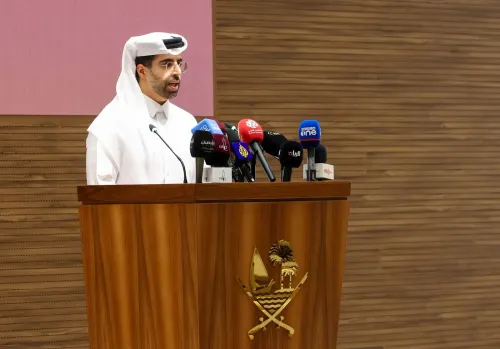
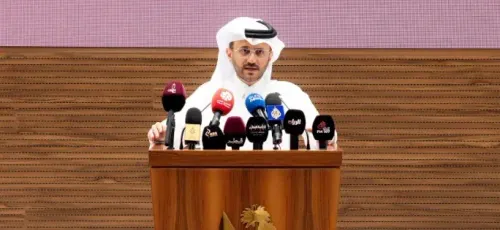
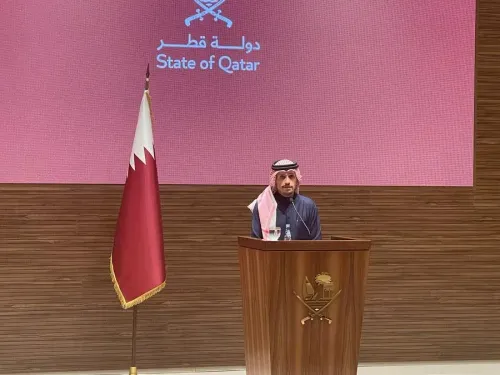
Qatar confirmed on Tuesday, 27 October 2026 that a Qatari delegation's visit to Tehran on Sunday formed part of active mediation efforts to ease mounting US-Iran tensions, with Doha simultaneously calling for a new regional security architecture grounded in sovereignty and non-aggression. The disclosure, made at a weekly Foreign Ministry press briefing, signals that back-channel diplomacy between Washington and Tehran remains alive despite the absence of direct talks.
Qatar's Role as Mediator
Ibrahim bin Sultan Al Hashmi, Director of the Media and Communications Department at Qatar's Foreign Ministry, told reporters that proposals continued to be exchanged between the United States and Iran through intermediaries. He urged that the crisis be resolved through dialogue and diplomacy rather than escalation. Al Hashmi also reiterated Qatar's call for a regional security framework built on mutual respect for national sovereignty and non-aggression — a position Doha had previously articulated at the United Nations.
Khamenei's Conditions for Ending the War
Iran's Supreme Leader Mojtaba Khamenei on Tuesday described the current state of affairs as 'neither war nor peace,' stressing the importance of securing what he termed the conditions stipulated by Iran's officials as a prerequisite for ending the conflict. In a statement published on his website, Khamenei also called for safeguarding the rights of Iran and those of the regional 'resistance front.' The remarks underline Tehran's insistence that any settlement must meet Iranian terms before hostilities formally cease.
Iran's Seven-Day Proposal at the UN
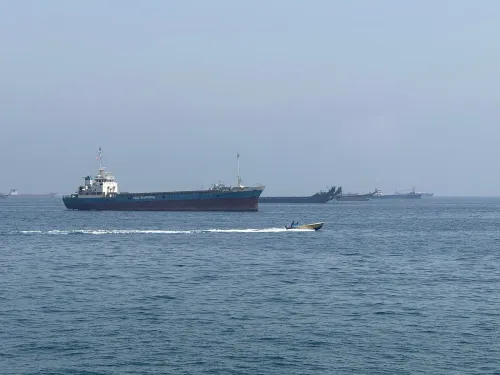
The diplomatic context deepened in late September, when Iran on 22 September conveyed a new plan to the United States through mediators on the sidelines of the 81st session of the UN General Assembly in New York. Under the proposal, Tehran offered to end the war and reopen the Strait of Hormuz within seven days, provided Washington accepted Iran's conditions. The Strait of Hormuz is a critical global energy chokepoint through which roughly 20% of the world's oil supply passes, making its status a major concern for energy markets worldwide.
Pezeshkian and Qatari Emir Meet in Moscow
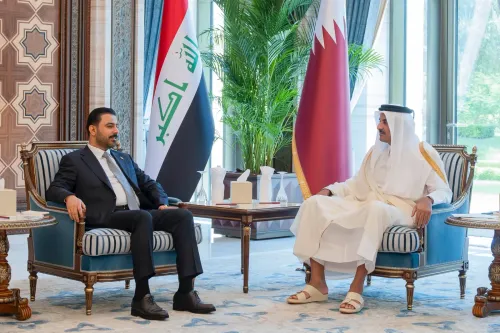
On the same day, Iranian President Masoud Pezeshkian met Qatari Emir Sheikh Tamim bin Hamad Al Thani on the sidelines of the 8th Summit of Heads of State and Government of the Gas Exporting Countries Forum in Moscow. The two leaders discussed expanding bilateral relations and energy cooperation, according to Iran's official news agency. Pezeshkian had arrived in Moscow on Monday night and was scheduled to hold further bilateral meetings with participating nations' leaders. The Moscow encounter between the Iranian president and the Qatari emir reinforces Doha's dual role as both a geopolitical mediator and an energy partner to Tehran.
What Comes Next
With proposals reportedly still circulating between Washington and Tehran, the immediate question is whether Iran's conditions — as yet not publicly detailed in full — will find any receptivity from the US side. Qatar's public confirmation of the mediation channel adds diplomatic weight to the process, but the gap between Khamenei's 'conditions first' posture and Washington's known reservations about Iran's nuclear and regional behaviour remains substantial. Analysts will watch closely for any signal from the US State Department acknowledging the Qatari channel, which could indicate whether a breakthrough is plausible in the near term.
Point of View
Yet Iran's insistence on undisclosed preconditions leaves the gap between the two sides opaque and potentially unbridgeable. What mainstream coverage underplays is Qatar's structural advantage: it hosts the largest US air base in the Middle East and maintains deep energy ties with Iran, making it the only actor with genuine leverage on both sides. Whether that leverage is enough — given Tehran's 'neither war nor peace' posture and Washington's domestic political constraints — is the defining question of the coming weeks.
NationPress
28 Oct 2026
Frequently Asked Questions
Why did Qatar send a delegation to Tehran?
Qatar sent a delegation to Tehran on Sunday as part of ongoing mediation efforts to ease tensions between the United States and Iran. Qatar's Foreign Ministry confirmed the visit on 27 October 2026, saying proposals are still being exchanged between Washington and Tehran through intermediaries.
What is Iran's proposal regarding the Strait of Hormuz?
Iran proposed on 22 September 2026, through mediators at the UN General Assembly in New York, to end the war and reopen the Strait of Hormuz within seven days — provided the United States accepted Iran's conditions. The conditions have not been publicly detailed in full.
What did Iran's Supreme Leader Khamenei say about the conflict?
Supreme Leader Mojtaba Khamenei on Tuesday described the current situation as 'neither war nor peace' and stressed the need to secure the conditions stipulated by Iran's officials before the war can end. He also called for protecting the rights of Iran and the regional 'resistance front.'
Where did the Iranian president and Qatari emir meet?
Iranian President Masoud Pezeshkian and Qatari Emir Sheikh Tamim bin Hamad Al Thani met on 27 October 2026 in Moscow, on the sidelines of the 8th Summit of the Gas Exporting Countries Forum. They discussed expanding bilateral relations and energy cooperation.
What regional security framework is Qatar calling for?
Qatar is calling for a new regional security framework founded on respect for national sovereignty and mutual non-aggression among regional states. Qatar's Foreign Ministry noted this position had previously been outlined at the United Nations.