CM Pema Khandu bets on Pasighat as India's next Smart City success

Synopsis
Arunachal Pradesh CM Pema Khandu has publicly declared Pasighat capable of becoming one of India's most successful Smart City projects, arguing that the town's engaged local community — not just investment funds — is its decisive advantage.
Key Takeaways
CM Pema Khandu expressed strong public confidence in Pasighat as a top-tier Smart City success story on October 6, 2026 .
He grounded his confidence in community ownership, long-term thinking, and civic responsibility — not project funding alone.
Pasighat , headquarters of East Siang district , is Arunachal Pradesh's oldest town and is included under India's Smart Cities Mission .
The statement sets a public benchmark for the state government's urban development performance in the region.
A successful outcome in Pasighat would serve as a proof-of-concept for Smart City implementation in India's remote northeastern frontier towns.
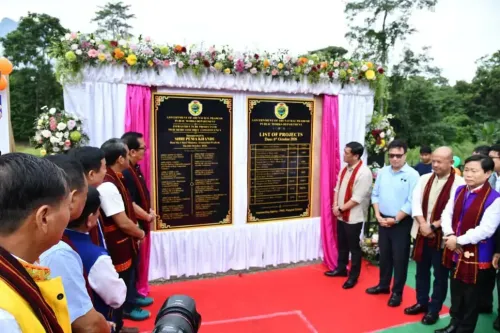
It is not the money that makes Pasighat special — it is the people. That is the argument Arunachal Pradesh Chief Minister Pema Khandu made on Tuesday, October 6, 2026, when he publicly backed the town to emerge as one of India's most successful Smart City projects, placing community ownership at the centre of his confidence.
Why Pasighat — and why now?
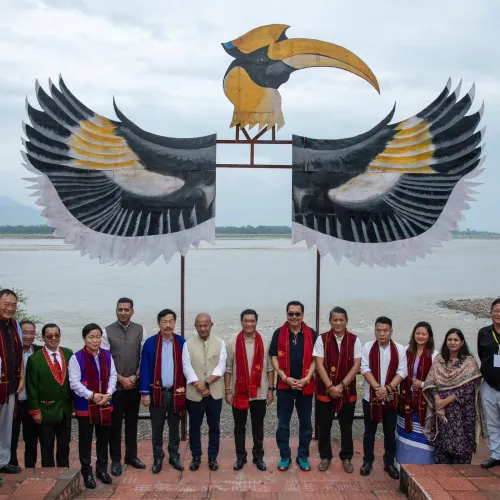
Pasighat, the oldest town in Arunachal Pradesh and the headquarters of East Siang district, sits at the point where the Siang river descends from the Tibetan plateau into the Assam plains — a location that is as strategically significant as it is scenic. Its inclusion under India's Smart Cities Mission marked a turning point for a town that has long been the cultural and commercial heart of eastern Arunachal. Smart City status brings with it structured urban investment, digital infrastructure, and a governance framework designed to lift smaller cities beyond the pace of routine municipal development.
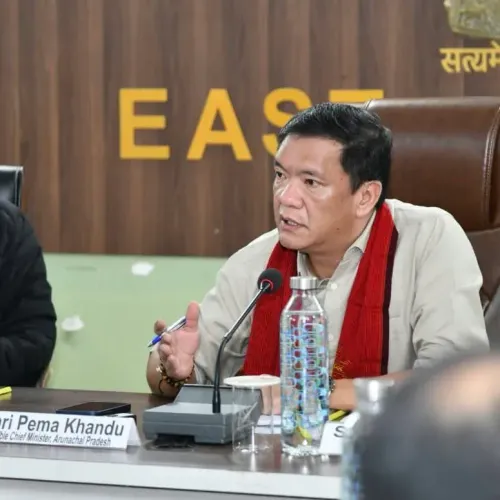
CM Khandu did not frame his confidence around project budgets or government timelines. His post was pointed: 'I genuinely believe Pasighat has the potential to become one of the most successful Smart City projects in the country. And I don't say this simply because of the funds being invested. I say it because of the local community involved, their sense of responsibility, who care about the long term, and who have the courage to plan for the future.' That is a deliberate rhetorical choice — grounding a national-scale urban scheme in the agency of a local community rather than in the machinery of government spending.
Community ownership as the real metric
The Smart Cities Mission, launched by the Government of India, has faced scrutiny in several cities over slow project execution and the gap between ambition and ground reality. What CM Khandu is pointing to — local responsibility, long-term thinking, civic courage — is precisely the ingredient that urban planners have identified as decisive. Cities where residents and local bodies treat the mission as their own, rather than as an externally delivered gift, consistently show better outcomes.
For a frontier state like Arunachal Pradesh, where connectivity and urban infrastructure have historically lagged behind the national average, a Smart City that actually delivers would carry significance far beyond Pasighat itself. It would become a proof of concept — evidence that remote, ecologically sensitive towns in India's northeast can absorb and steward large-scale urban investment without losing their character.
The Chief Minister's confidence, expressed publicly and without caveats, is also a form of political accountability. He has now set a benchmark his own administration will be judged against.
Point of View
He shifts the accountability narrative away from bureaucratic timelines and onto civic identity — a move that is harder to contest and easier to rally around. For the BJP in Arunachal Pradesh, championing a visible, tangible urban project in a border state also carries geopolitical undertones, as developed frontier towns reinforce India's presence in a sensitive region. If Pasighat does deliver, it hands the state government a model to replicate; if it stumbles, the CM's public confidence becomes a pointed measure of failure. Either way, Khandu has made Smart City performance a personal political stake.
NationPress
7 Oct 2026
Frequently Asked Questions
What is the Pasighat Smart City project?
Pasighat, the oldest town in Arunachal Pradesh and headquarters of East Siang district, was selected under India's Smart Cities Mission, a central government programme that funds integrated urban development including digital infrastructure, mobility, and civic services in chosen cities.
Why did CM Pema Khandu praise Pasighat's Smart City potential?
CM Khandu cited the local community's sense of responsibility, long-term planning outlook, and civic courage as the primary reasons for his confidence — emphasising that community ownership matters more than funding alone.
Where is Pasighat located in Arunachal Pradesh?
Pasighat is situated in East Siang district, at the point where the Siang river descends from the Tibetan plateau toward the Assam plains, making it both a cultural hub and a strategically significant frontier town.
What is India's Smart Cities Mission?
The Smart Cities Mission is a Government of India initiative that provides structured investment and a governance framework to selected cities, aiming to improve urban infrastructure, digital services, and quality of life, particularly in smaller and mid-tier cities.
What does CM Khandu's statement mean for Arunachal Pradesh's urban development?
A successful Smart City outcome in Pasighat would serve as a proof-of-concept for large-scale urban investment in India's remote northeastern towns, potentially influencing how similar projects are designed and governed across the region.