Michigan Senate race: El-Sayed fires back at Rogers over Muslim Brotherhood attacks
Synopsis
Michigan Democrat Abdul El-Sayed has accused Republican Mike Rogers of weaponising religion — saying Rogers invoked the Muslim Brotherhood purely 'to repeat the word Muslim.' The broader story is even more striking: a wave of faith- and heritage-based attacks is hitting minority candidates from Michigan to Texas ahead of 3 November, with Indian Americans among the most visible targets.
Key Takeaways
Abdul El-Sayed accused Republican rival Mike Rogers of making roughly ten references to the Muslim Brotherhood to exploit his Muslim identity.
El-Sayed denied any personal or family ties to the Muslim Brotherhood.
In Ohio , Republican candidate Vivek Ramaswamy was called an 'anchor baby' by far-right commentator Nick Fuentes , according to the Texas Tribune .
Texas Democrat Pooja Sethi would be the first Indian American and first Hindu in the state Legislature if elected on 3 November .
Ten Indian Americans are on the 3 November US House ballot, with three more contesting governor or statewide races.
The El-Sayed–Rogers Senate race is considered competitive enough to influence control of the US Senate .
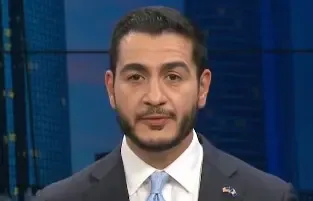
Michigan Democratic Senate candidate Abdul El-Sayed sharply rebuked his Republican rival Mike Rogers on Sunday, accusing him of invoking the Muslim Brotherhood solely because 'he really wanted to repeat the word Muslim.' The remarks came during an interview on NBC's Meet the Press, recorded at Central Michigan University in Mount Pleasant, as faith- and heritage-based attacks against minority candidates intensify ahead of the 3 November midterm elections.
What El-Sayed Said
Host Kristen Welker noted that Rogers, a former Congressman, had made 'roughly ten references' to the Muslim Brotherhood in a debate and in campaign advertisements, attempting to tie El-Sayed and his family to the organisation. El-Sayed denied any connection flatly. 'His only strategy is to point to me and my name and my faith and to say that we're different. And that you should suspect people simply because they are different than you in how they pray,' he said.
El-Sayed, a physician by training, called such tactics 'the approach of small people with small ideas, who don't really care about solving big problems.' He also invoked his personal experience, noting that he 'was a junior in high school with 9/11' and describing the attacks as 'truly shameful.' He broadened the argument beyond his own faith, saying: 'I know what it's like to be discriminated against for how I pray. I don't want anybody to face that in the United States of America, whether they're being discriminated against because they're Jewish or Sikh or Hindu or Muslim or Christian.'
A Pattern Across Minority Candidates
El-Sayed's experience is not isolated. Ahead of the 3 November midterms, several Indian-American candidates have faced comparable heritage and faith-based attacks. In Ohio, Republican gubernatorial candidate Vivek Ramaswamy — the son of immigrants from Kerala — was targeted by far-right commentator Nick Fuentes, who reportedly called him an 'anchor baby who got your birthright citizenship from your H-1B parents,' according to the Texas Tribune. Ramaswamy responded at Turning Point's AmericaFest in December 2025, saying: 'If you believe in normalizing hatred towards any ethnic group — toward Whites, toward Blacks, towards Hispanics, towards Jews, towards Indians, you have no place in the future of the conservative movement,' as quoted by The Washington Post.
In Texas, Democrat Pooja Sethi — who would become the first Indian American and first Hindu elected to the state Legislature — responded on X to a Turning Point commentator: 'My heritage isn't an insult. It's my story.' A third Texas candidate, India-born Sandeep Srivastava, challenging Republican Matt Shaheen in House District 66, reportedly faced online attacks over his accent, according to American Bazaar.
Stakes in Michigan and Beyond
The El-Sayed–Rogers contest is considered a tight race that could help determine which party controls the US Senate. El-Sayed also recalled telling former President Bill Clinton in 2007 that 'people like me with names like mine can't' run for office — a recollection that underscores how much, and how little, has changed in two decades.
Across the country, ten Indian Americans are on the 3 November ballot for the US House, four of them incumbents, while three others — including Ramaswamy — are contesting governor or statewide races. The cluster of heritage-based attacks this cycle suggests the trend is systemic rather than incidental.
Historical Context
The use of religious or ethnic identity as a political weapon against minority candidates has precedent in American electoral history, but the scale and coordination of such attacks in the 2026 midterm cycle — amplified by social media — has drawn renewed scrutiny from civil liberties organisations and political analysts alike. This is not the first election in which Muslim or South Asian candidates have had to contend with identity-based smears, but the breadth of targets this time, spanning multiple states and both parties, marks a notable escalation.
How voters in Michigan, Ohio, and Texas respond to these tactics on 3 November will serve as a significant barometer of where American political culture stands on the question of minority representation.
Point of View
So does the weaponisation of identity. Rogers' reported ten invocations of 'Muslim Brotherhood' in a single campaign cycle is not a slip — it is a strategy, and El-Sayed's read of it as a device to 'repeat the word Muslim' is analytically precise. What mainstream coverage tends to underplay is the coordinated nature of these attacks: from Fuentes targeting Ramaswamy to anonymous trolls targeting Srivastava's accent, the playbook is similar across states and parties. The real question for 3 November is whether the electorate in these contested races punishes identity-baiting or rewards it — the answer will shape how candidates are attacked for at least a generation.
NationPress
12 Oct 2026
Frequently Asked Questions
What did Abdul El-Sayed say about Mike Rogers' Muslim Brotherhood accusations?
El-Sayed said Rogers raised the Muslim Brotherhood repeatedly only because 'he really wanted to repeat the word Muslim,' characterising it as an identity-based smear rather than a substantive allegation. He denied that he or his family had any ties to the organisation.
How many times did Rogers reportedly reference the Muslim Brotherhood?
NBC's Meet the Press host Kristen Welker stated that Rogers made roughly ten references to the Muslim Brotherhood across a debate and campaign advertisements. Rogers is a former Congressman running against El-Sayed for Michigan's US Senate seat.
Which Indian-American candidates have faced similar heritage-based attacks in 2026?
Vivek Ramaswamy in Ohio was reportedly called an 'anchor baby' by far-right commentator Nick Fuentes. In Texas, Pooja Sethi was targeted on social media over her heritage, and Sandeep Srivastava faced online attacks over his accent. All three, along with ten Indian Americans on the US House ballot, are contesting the 3 November midterms.
Why does the Michigan Senate race matter nationally?
The El-Sayed–Rogers contest is considered competitive enough to influence which party controls the US Senate after 3 November. A Democratic win in Michigan could be pivotal to the party's Senate majority calculus.
Who is Pooja Sethi and what would her election mean?
Pooja Sethi is a Texas Democratic candidate who, if elected on 3 November, would become the first Indian American and first Hindu in the Texas state Legislature. She responded to a heritage-based attack on X, writing: 'My heritage isn't an insult. It's my story.'