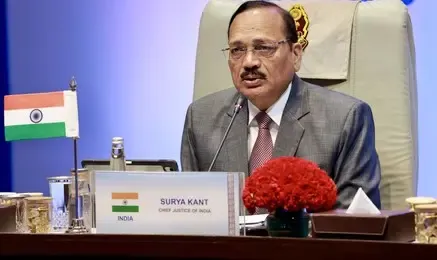
CJI Surya Kant rejects INDIA bloc meeting request, asks for petition
Synopsis
Chief Justice Surya Kant has shut the door on a political meeting with the INDIA bloc — but not on the courts. By redirecting the Opposition to a petition, the CJI has drawn a clear constitutional line, even as the bloc prepares to march on the Supreme Court on Monday over electoral roll deletions and the controversial 2023 immunity law shielding the Chief Election Commissioner.
Key Takeaways
CJI Surya Kant declined a meeting request from the INDIA bloc , advising them to file a petition in the Supreme Court instead.
The CJI reportedly stated that the issues are already sub judice and the court cannot meet a political delegation administratively.
The INDIA bloc's march to the Supreme Court on Monday, 13 October 2026 , is expected to proceed despite the refusal.
Opposition demands include the resignation of Chief Election Commissioner Gyanesh Kumar and restoration of 13.3 crore voters allegedly deleted from electoral rolls.
Congress President Mallikarjun Kharge criticised the 2023 Act that grants legal immunity to the Chief Election Commissioner , arguing even the President and CJI do not enjoy such protection.
The INDIA bloc submitted a four-point charter to President Droupadi Murmu last Friday, including the repeal of the 2023 immunity law and suspension of the SIR exercise.
Chief Justice of India Surya Kant has declined a formal request by the Congress-led INDIA bloc for a meeting, directing the Opposition leaders to file a petition in court instead, ahead of their planned march to the Supreme Court on Monday, 13 October 2026. The refusal, conveyed through sources, underscores the constitutional boundary the judiciary has drawn between adjudication and political engagement.
What the CJI Conveyed
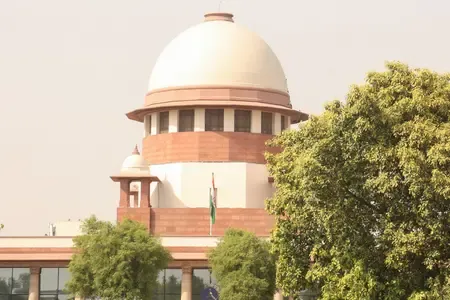
According to reports, the CJI indicated that the matters the Opposition intends to raise are already sub judice and are being heard by the Supreme Court. He is learnt to have stated that the court cannot receive a delegation representing a political party at the administrative level. Surya Kant reportedly reaffirmed that the judiciary's role is limited to hearing petitions and delivering judgments, and stressed that the Supreme Court's doors remain 'open 24 hours a day for all' and that it is 'committed to protecting the fundamental rights of every citizen.'
The INDIA Bloc's Demands
The Opposition march, despite the CJI's refusal to meet, is reportedly set to proceed on Monday. The protest is part of a broader campaign by Opposition parties demanding the resignation of Chief Election Commissioner Gyanesh Kumar over alleged irregularities in the Special Intensive Revision (SIR) of electoral rolls. The INDIA bloc submitted a charter of four key demands to President Droupadi Murmu last Friday, centred on electoral reforms and alleged vote manipulation.
These demands include the resignation of Gyanesh Kumar, the repeal of the 2023 law that grants legal immunity to the Chief Election Commissioner and Election Commissioners, an immediate suspension of the SIR exercise, and the restoration of all 13.3 crore voters allegedly deleted from electoral rolls.
Rahul Gandhi and Congress's Position
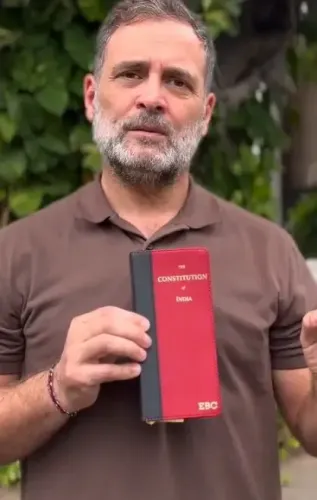
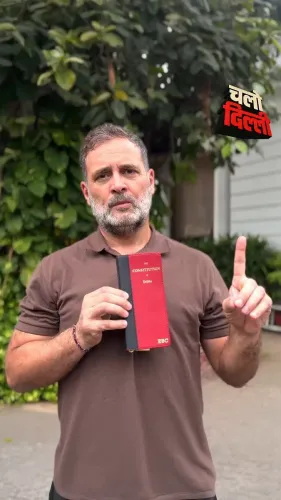
Leader of the Opposition in the Lok Sabha, Rahul Gandhi, has maintained that the planned march is 'not of a political party, but of all Indians', seeking to frame it as a civic movement rather than a partisan exercise. He has alleged that the government directly benefited from the SIR exercise, making it a central flashpoint between the Opposition and the Election Commission of India (ECI).
Kharge Targets the 2023 Election Commission Law
Congress President Mallikarjun Kharge, speaking on Sunday, targeted the legal protection afforded to the ECI's leadership under the 2023 Act. 'To create such an atmosphere, PM Modi brought the 2023 Act to protect the Chief Election Commissioner and members. That immunity he gave. That immunity is not even for the President of India, not the Chief Justice, but that is given to one Election Commissioner,' Kharge said. The Congress president argued that the legislation was deliberately introduced to shield election officials from legal accountability.
What Comes Next
With the CJI's refusal to hold an administrative meeting, the INDIA bloc is expected to pursue its demands through a formal Supreme Court petition, as advised. The march on Monday will test the Opposition's ability to mobilise and sustain public pressure on both the Election Commission and the Narendra Modi-led government at the Centre. The controversy over the SIR exercise and the 2023 immunity law is expected to intensify as the Opposition escalates its campaign.
Point of View
The Supreme Court has preserved the separation of powers at a moment when the Opposition was at risk of blurring the line between judicial access and political theatre. The more substantive question is whether the SIR controversy and the 2023 immunity law will survive judicial scrutiny. If the Opposition files a credible petition, the very issues it failed to raise in an administrative meeting could end up before a bench — and that, not the march, is where accountability is actually tested.
NationPress
12 Oct 2026
Frequently Asked Questions
Why did CJI Surya Kant refuse to meet the INDIA bloc?
CJI Surya Kant declined the meeting because the issues the Opposition intended to raise are reportedly already sub judice and being heard by the Supreme Court. He also stated that the court cannot meet a delegation representing a political party at the administrative level, and directed them to approach the court through a formal petition.
What are the INDIA bloc's key demands related to the Election Commission?
The INDIA bloc has demanded the resignation of Chief Election Commissioner Gyanesh Kumar, the repeal of the 2023 law granting legal immunity to the CEC and Election Commissioners, an immediate suspension of the Special Intensive Revision (SIR) of electoral rolls, and the restoration of 13.3 crore voters allegedly removed from those rolls.
What is the Special Intensive Revision (SIR) of electoral rolls?
The SIR is an exercise conducted by the Election Commission of India to update and revise electoral rolls. The INDIA bloc has alleged irregularities in the process, including the deletion of 13.3 crore voters, and claims the ruling government benefited from the exercise.
What is the 2023 Election Commission immunity law that the Opposition wants repealed?
The 2023 law provides legal immunity to the Chief Election Commissioner and Election Commissioners from prosecution, a protection Congress President Mallikarjun Kharge has argued is not even extended to the President of India or the Chief Justice of India. The Opposition argues the law was enacted to shield ECI officials from legal accountability.
Will the INDIA bloc's march to the Supreme Court go ahead on Monday?
Yes, despite the CJI's refusal to grant an administrative meeting, the INDIA bloc's march is reportedly set to proceed on Monday, 13 October 2026. Rahul Gandhi has described the march as representing 'all Indians' rather than a single political party.