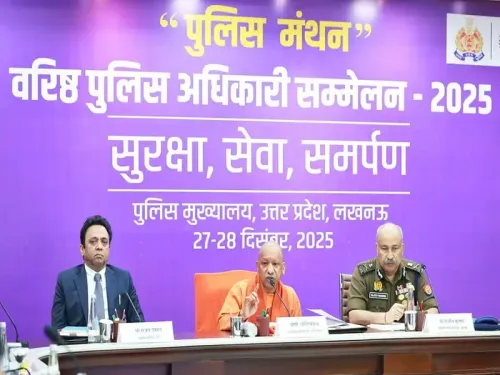
CM Yogi Credits Zero-Tolerance Policy for UP Women's Safety Gains
Synopsis
On Navratri 2026, CM Yogi Adityanath highlighted UP's transformation on women's safety since 2017: the women police workforce has grown from 10,000 to over 44,000, three Women PAC Battalions have been formed, and Mission Shakti has run five phases — all under a declared zero-tolerance policy on crime.
Key Takeaways
CM Yogi Adityanath posted on October 12, 2026 — the second day of Navratri — linking the goddess Brahmacharini's ethos of resolve to UP's governance record on women's safety.
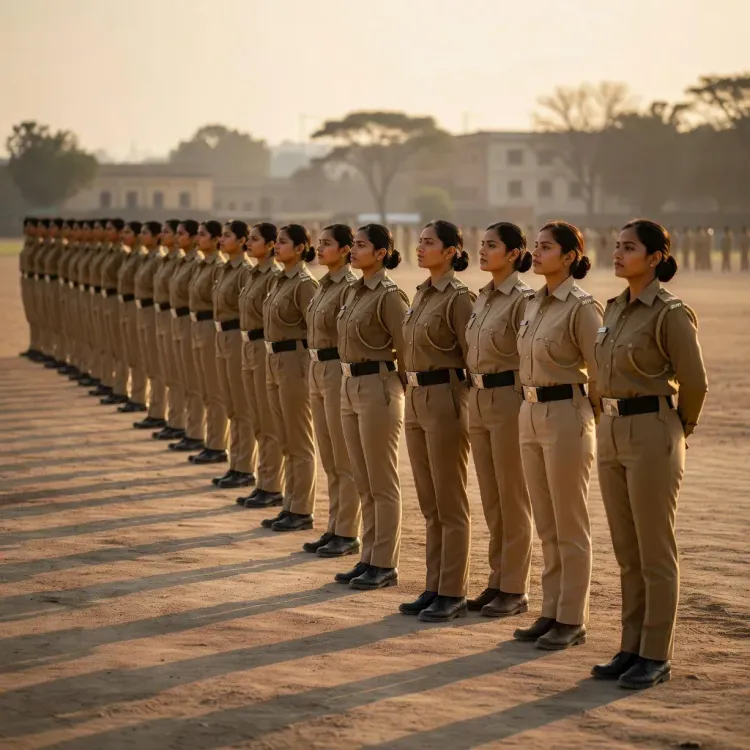
The UP women police workforce has expanded from 10,000 to more than 44,000 officers, supported by a 20% reservation in police recruitment.
Three Women PAC Battalions have been established in Lucknow, Gorakhpur, and Badaun, named after 1857-era warrior women from marginalised communities.
Mission Shakti has completed five phases ; complementary programmes include the Safe City Project, Mission Shakti Kendras, and Women Beat Policing.
The CM contrasted the present with the period before 2017 , when UP's women's safety record was widely criticised, framing the improvement as a product of zero-tolerance policing and technology-based surveillance.
The overarching state commitment is expressed as 'Sashakt Nari, Samridh Uttar Pradesh' — 'Empowered Women, Prosperous Uttar Pradesh.'
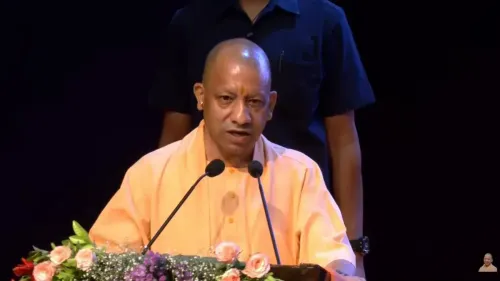
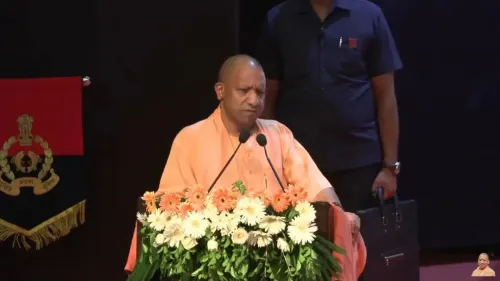
On the second day of Navratri, as devotees across Uttar Pradesh honour Maa Brahmacharini — the goddess of penance and resolve — Uttar Pradesh Chief Minister Yogi Adityanath drew a direct line between divine feminine power and the state's evolving record on women's safety, arguing that a state once defined by its failures on this front has been fundamentally transformed.
Posting on Monday, October 12, 2026, CM Yogi wrote that the goddess's mantra of austerity and determination teaches us 'ki dridh ichchhashakti se asambhav dikhne wale lakshya bhi siddh kiye ja sakte hain' — 'that even goals that appear impossible can be achieved through unwavering willpower.' He then applied that frame directly to governance: Uttar Pradesh, he said, which was 'mired in questions' about women's security before 2017, has today become a new symbol of women's safety and empowerment.
Nine Years of Zero Tolerance: What Changed in UP
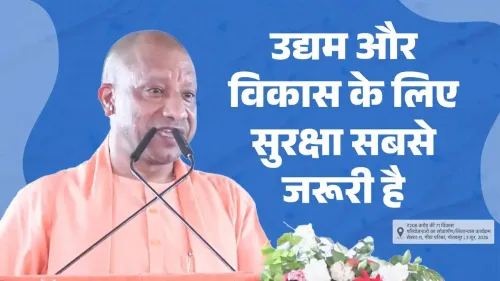
The Chief Minister credited 9.5 years of a declared zero-tolerance policy against crime and criminals, combined with technology-based surveillance, swift police action, and public-awareness campaigns, for creating what he described as a 'fear-free environment' for women across the state. The framing is deliberate: in the years before the BJP came to power in Lucknow in 2017, Uttar Pradesh routinely ranked among the worst states in India for crimes against women — a political liability the administration has worked methodically to address.
Mission Shakti's Five Phases and the Safe City Push
CM Yogi specifically highlighted Mission Shakti — run across five phases — as the operational backbone of the safety architecture. The mission, alongside the Safe City Project, dedicated Mission Shakti Kendras (help centres), and Women Beat Policing, has together built what he called a 'comprehensive and robust foundation' for women's security. Each of these initiatives targets a different vulnerability: safe-city infrastructure addresses public spaces; beat policing makes law enforcement visible and accessible at the neighbourhood level; mission centres provide a first-response support system.
Women in Uniform: From 10,000 to 44,000
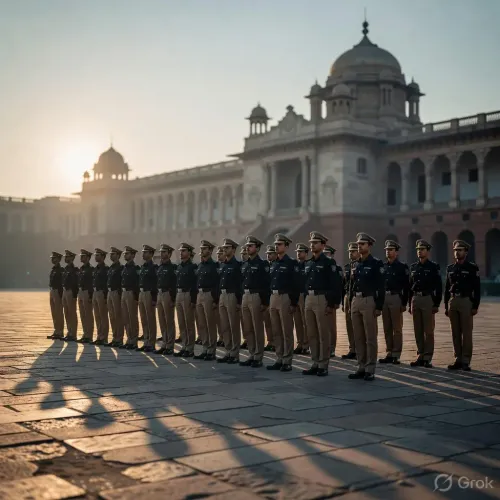
The most striking data point in the post is institutional: the UP women police workforce has grown from 10,000 to more than 44,000, backed by a 20% reservation in police recruitment. Alongside this, the state has raised three dedicated Women PAC Battalions — named after historical warrior women: Veerangana Uda Devi Pasi in Lucknow, Veerangana Jhalkari Bai Kori in Gorakhpur, and Veerangana Avantibai Lodhi in Badaun. The choice of names — all from marginalised communities who fought in the 1857 uprising — carries both historical resonance and deliberate social messaging about whose legacy the state chooses to celebrate.
CM Yogi closed by invoking the state government's guiding resolve: 'Sashakt Nari, Samridh Uttar Pradesh' — 'Empowered Women, Prosperous Uttar Pradesh' — framing safety not as an end in itself but as the first step toward broader economic and social empowerment. The post ended with 'Jai Mata Ki', anchoring the governance message firmly within the Navratri context.
With the 2027 Uttar Pradesh assembly elections on the horizon, the administration's sustained emphasis on women's safety as a measurable governance achievement — complete with workforce numbers and named battalions — signals that this issue will remain central to the ruling party's re-election argument.
Point of View
000-to-44,000 police workforce jump) is a calculated move: it grounds a spiritual moment in verifiable institutional progress, making the message harder to dismiss as rhetoric alone. The naming of Women PAC Battalions after Dalit and OBC warrior women is an equally deliberate piece of social politics — it simultaneously honours marginalised communities and signals that the BJP's women's empowerment pitch is not limited to upper-caste constituencies. The deeper policy arc, however, will be tested by independent crime data: the true measure of Mission Shakti's success lies not in workforce numbers but in whether reported and unreported crimes against women in UP have demonstrably declined.
NationPress
12 Oct 2026
Frequently Asked Questions
What is Mission Shakti in Uttar Pradesh?
Mission Shakti is a flagship women's safety and empowerment programme launched by the Yogi Adityanath government in Uttar Pradesh. It has run across five phases and operates through dedicated Mission Shakti Kendras, Women Beat Policing units, and coordination with the Safe City Project to create a comprehensive support and security network for women across the state.
How many women police officers are there in Uttar Pradesh now?
According to CM Yogi Adityanath's post on October 12, 2026, the UP women police workforce has grown from 10,000 to more than 44,000 officers, supported by a 20% reservation in police recruitment introduced by the current state government.
What are the Women PAC Battalions in UP?
The Uttar Pradesh government has raised three dedicated Women Provincial Armed Constabulary (PAC) Battalions. They are named Veerangana Uda Devi Pasi Battalion in Lucknow, Veerangana Jhalkari Bai Kori Battalion in Gorakhpur, and Veerangana Avantibai Lodhi Battalion in Badaun — all named after women warriors from the 1857 uprising.
What is the Safe City Project in Uttar Pradesh?
The Safe City Project is a government initiative in Uttar Pradesh focused on improving women's safety in urban public spaces through infrastructure, surveillance technology, and rapid-response mechanisms. It operates alongside Mission Shakti as part of the broader women's security framework.
Why did CM Yogi post about women's safety during Navratri 2026?
CM Yogi Adityanath's post coincides with Navratri, specifically the day dedicated to Maa Brahmacharini, the goddess associated with penance and determination. He used the occasion to draw a parallel between the goddess's resolve and his government's nine-and-a-half year effort to transform Uttar Pradesh's record on women's safety.