PM Modi Shares Sanskrit Shloka for Navratri Blessings
Synopsis
Prime Minister Narendra Modi marked Navratri 2026 by posting a Sanskrit shloka from the Devi Mahatmyam, invoking Goddess Ambika's blessings for the nation — a reflection of his practice of blending religious observance with public outreach.
Key Takeaways
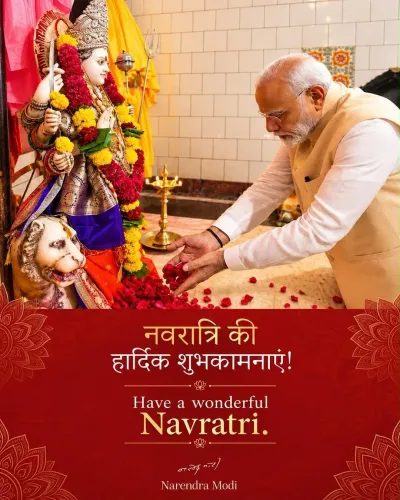
Prime Minister Narendra Modi posted a Sanskrit devotional shloka on 12 October 2026 to mark Navratri 2026 .
The verse is from the Devi Mahatmyam (Durga Saptashati), a 700-verse Shakta scripture central to Navratri observance.
The shloka prays to Goddess Ambika — described as the combined power of all gods — to bestow auspiciousness on all.
The post was composed entirely in Sanskrit , India's classical liturgical language, reflecting the sacred register of the occasion.
Sharad Navratri culminates in Dussehra , one of India's most widely observed Hindu festivals.
On the auspicious occasion of Navratri 2026, Prime Minister Narendra Modi turned to the ancient language of Sanskrit to invoke the blessings of Goddess Ambika, sharing a devotional shloka from the Devi Mahatmyam tradition — a gesture that blends statecraft with spiritual observance in a manner that has become a hallmark of his public persona.
The shloka, posted in the early hours of Monday, 12 October 2026, reads: 'Devyā yayā tatam idaṃ jagad ātmaśaktyā niḥśeṣadevagaṇaśaktisamūhamūrtyā. Tām ambikām akhiladeva-maharṣi-pūjyāṃ bhaktyā natāḥ sma vidadhātu śubhāni sā naḥ.' — 'We bow with devotion to that Ambika, who pervades this universe with her own power, who is the combined form of the strength of all the gods, and who is worshipped by all the gods and great sages — may she bestow auspiciousness upon us.'
A Verse from the Heart of Shakta Tradition
The verse is drawn from the Devi Mahatmyam (also known as the Durga Saptashati), one of the most revered texts in the Shakta tradition of Hinduism, comprising 700 verses in praise of the Divine Mother. Its recitation is considered especially meritorious during the nine nights of Navratri, when devotees across India observe fasts, perform puja, and celebrate the victory of the goddess over evil. The choice of Sanskrit — India's classical liturgical language — rather than a vernacular translation underscores the verse's sacred register.
Navratri, the Nine-Night Festival
Sharad Navratri, observed in the Hindu lunar month of Ashwin, is one of the most widely celebrated festivals in India, culminating in Dussehra — the day marking the triumph of good over evil. The festival draws participation from millions of Hindus across the country and in the Indian diaspora, making a Prime Ministerial message during this period a moment of broad cultural resonance. Modi has consistently used his social-media platforms during major Hindu festivals to share prayers, shlokas, and festival greetings.
In a single Sanskrit verse, the Prime Minister's message carries a weight that no press release could: a prayer that auspiciousness — śubhāni — touch every citizen.
Point of View
When temple attendance and religious sentiment peak, such a gesture amplifies the BJP's consistent brand identity as the party of cultural continuity. It is soft-power politics executed with the vocabulary of devotion.
NationPress
12 Oct 2026
Frequently Asked Questions
What Sanskrit shloka did PM Modi post for Navratri 2026?
PM Modi posted a verse from the Devi Mahatmyam invoking Goddess Ambika, praying that she — the combined power of all gods and worshipped by sages — bestow auspiciousness on all. The shloka begins 'Devyā yayā tatam idaṃ jagad ātmaśaktyā.'
What is Navratri and why is it celebrated?
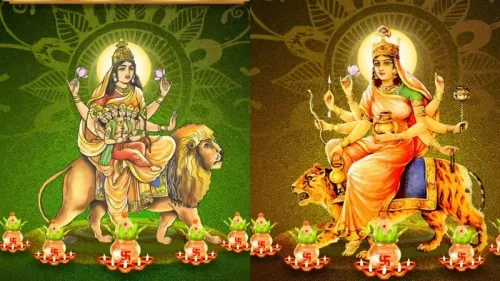
Navratri is a nine-night Hindu festival honouring the Divine Mother in her various forms. Sharad Navratri, observed in the month of Ashwin, is the most prominent and culminates in Dussehra, marking the victory of good over evil.
What is the Devi Mahatmyam?
The Devi Mahatmyam, also called the Durga Saptashati, is a Sanskrit text of 700 verses from the Markandeya Purana that glorifies the goddess Durga. It is among the most recited scriptures during Navratri.
Why did Modi write in Sanskrit instead of Hindi or English?
Sanskrit is the classical liturgical language of Hindu scripture, and using it lends the post a devotional and culturally rooted character that a vernacular translation would not carry. It also aligns with the BJP-led government's broader promotion of Sanskrit heritage.
When does Navratri 2026 end?
Sharad Navratri 2026 concludes with Dussehra, which falls on the tenth day (Vijayadashami) after the festival begins in mid-October.