Has the Campaigning for 29 Maha Municipal Corporations Come to a Close?
Synopsis
The campaign for the 29 municipal corporations, including the vital BMC, has concluded, setting the stage for elections on January 15. With a significant candidate pool and critical political contention, this election is crucial for the state's urban future. Will the results reshape Maharashtra's political landscape?
Key Takeaways
Election Date: January 15.
Number of Candidates: 1,729 for BMC.
Coalitions: Mahayuti and MVA.
Eligible Voters in BMC: 1.03 crore.
Significance: A crucial test of political sentiment.
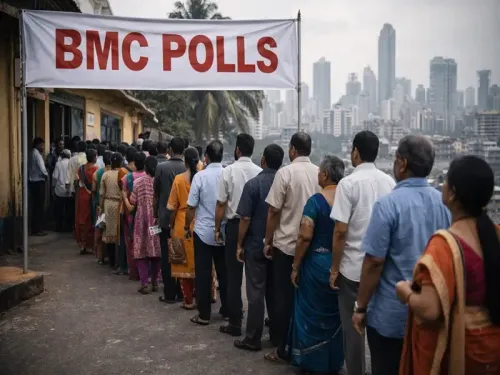
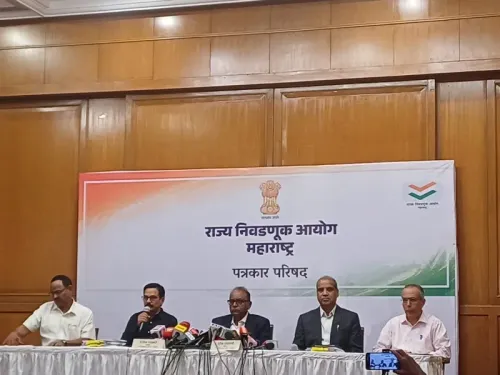
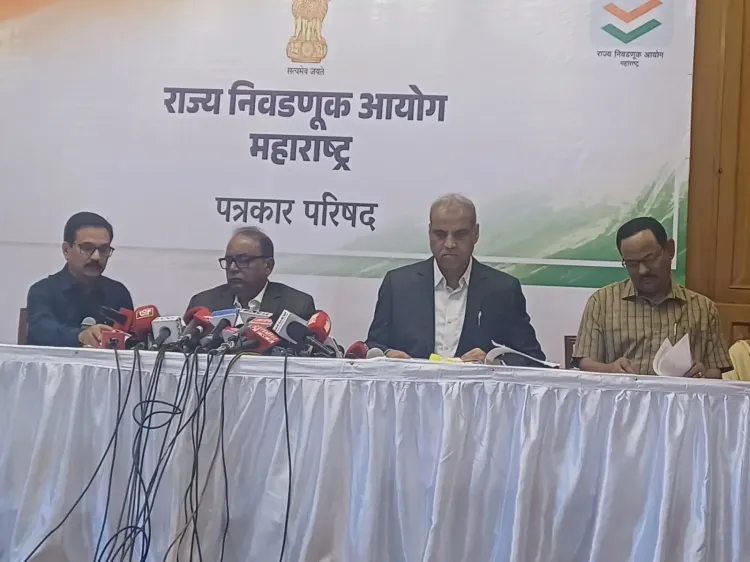
Mumbai, Jan 13 (NationPress) The vibrant election campaign for 29 municipal corporations, including the Brihanmumbai Municipal Corporation (BMC), wrapped up on Tuesday. The State Election Commission (SEC) has deployed specialized teams to oversee adherence to the Model Code of Conduct.
Following weeks of rallies, roadshows, and heated political debates, the state is now in a "silent period" leading up to the polls scheduled for January 15, with counting set for January 16.
These elections are being regarded as a "mini-Assembly" contest, gauging the sentiments of the populace across major urban hubs including Mumbai, Pune, Thane, Nashik, and Nagpur.
Polling will cover 2,869 seats, with approximately 3.48 crore citizens expected to participate.
As India's wealthiest civic body, the BMC is deemed the "jewel in the crown." This election follows a notable delimitation process that saw about 20-25 percent of ward boundaries altered to reflect population dynamics.
In BMC elections, around 1,729 candidates are contesting for 227 seats. Among these candidates, 879 are women and 821 are men, reflecting nearly 50 percent reservation for women. The BMC has 1.03 crore eligible voters.
The campaign featured significant clashes between the state's primary coalitions — Mahayuti (BJP, Shiv Sena-Eknath Shinde, NCP-Ajit Pawar) and Maha Vikas Aghadi (MVA) (Shiv Sena-UBT, INC, NCP-Sharad Pawar) — focusing on infrastructure, welfare initiatives, and urban renewal.
The Mahayuti promoted the 'Ladki Bahin' scheme and pledged further bus fare concessions for women, metro expansion, and a Redevelopment Project.
Conversely, the MVA centered its campaign on "preserving Mumbai's identity," criticizing the government for the delay in the elections (originally due in 2022) and pledging free medicines for seniors alongside initiatives for a crime-free city.
Chief Minister Devendra Fadnavis led the campaign for the ruling coalition, traversing the state to rally support for Mahayuti candidates. Deputy Chief Minister Eknath Shinde also campaigned extensively for party nominees.
Meanwhile, Deputy Chief Minister Ajit Pawar of the NCP, a crucial Mahayuti ally, was strategically sidelined to attract "non-Hindu" voters, as noted by observers.
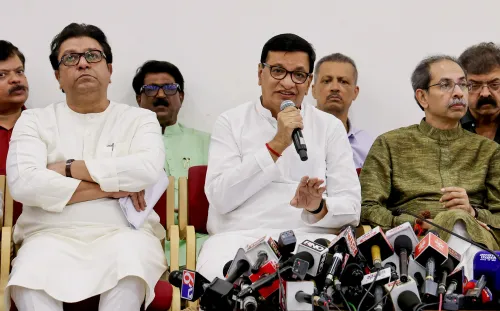
The pre-election period witnessed the reunion of estranged cousins Uddhav and Raj Thackeray after two decades, united in their efforts to consolidate Marathi votes, while rival factions of the NCP collaborated for elections in Pune, Pimpri-Chinchwad, and Parbhani.
This election marks the first BMC election for the Shiv Sena post the 2022 split, where Eknath Shinde departed with the majority of legislators, the party name, and its symbol. The undivided Shiv Sena previously governed the nation's richest civic body for 25 years.
The Congress party has also made a strong showing this election, stepping out from the shadow of its MVA partners, Shiv Sena (UBT) and NCP (SP) in Mumbai.
Aligning with Prakash Ambedkar's Vanchit Bahujan Aghadi (VBA) and the Rashtriya Samaj Paksha in the capital, the Congress is contesting independently in Nagpur.
The elections for these 29 municipal corporations are occurring after a hiatus of over six years, with their previous tenure ending between 2020 and 2023.
Among these, nine municipalities are situated in the Mumbai Metropolitan Region (MMR), the state's most urbanized area.
The electoral battles will take place in Chhatrapati Sambhajinagar, Navi Mumbai, Vasai-Virar, Kalyan-Dombivli, Kolhapur, Nagpur, Mumbai, Solapur, Amravati, Akola, Nashik, Pimpri-Chinchwad, Pune, Ulhasnagar, Thane, Chandrapur, Parbhani, Mira-Bhayandar, Nanded-Waghala, Panvel, Bhiwandi-Nizampur, Latur, Malegaon, Sangli-Miraj-Kupwad, Jalgaon, Ahilyanagar, Dhule, Jalna, and Ichalkaranji.
Star campaigners included Telangana Minister Mohammad Azharuddin, AIMIM chief Asaduddin Owaisi, and Tamil Nadu BJP leader K Annamalai.
Fadnavis, Shinde, and Ajit Pawar campaigned for their candidates statewide, while the Thackeray cousins concentrated their efforts in Mumbai, Thane, Nashik, and Chhatrapati Sambhajinagar, where Uddhav addressed a rally.
Both Mahayuti and the Shiv Sena (UBT)-MNS emphasized populist promises for women in their manifestos. Mahayuti has pledged a 50 percent concession for women in BEST bus travel, while the Thackeray cousins guaranteed a Rs 1,500 monthly allowance for women domestic workers along with a property tax waiver for homes up to 700 square feet.
The Congress manifesto, in contrast, is centered on addressing pollution in Mumbai, enhancing the BEST fleet, and improving the city's financial health.
The post of Mumbai Mayor became a focal point of the campaign discourse, with the BJP alleging that a Muslim mayor would emerge if the Sena (UBT) gains power, while Uddhav Thackeray's faction countered this by assuring a Marathi mayor.
CM Fadnavis also confirmed that the future mayor would be a "Hindu and Marathi" individual.
In the final seat-sharing agreements for Mumbai, the BJP is contesting 137 seats, the Eknath Shinde-led Shiv Sena 90, while the NCP is competing separately on 94 seats. The Shiv Sena (UBT) has nominated 163 candidates, the MNS 52, the Congress 143, and the VBA 46 in the city. The Congress has also put forth 1,263 candidates across the rest of the state.
To ensure transparency, the Commission will utilize the July 1, 2025, electoral roll. In an effort to prevent duplicate voting, the SEC has identified approximately 15 lakh duplicate entries statewide, marking them with a "double star" on the voters' list for enhanced verification.
Point of View
My perspective underscores the importance of these municipal elections as a reflection of the public's sentiment in Maharashtra. With significant political coalitions clashing and a diverse candidate pool, the outcome will undoubtedly influence the state's governance and urban development. Our commitment remains to provide balanced coverage of the unfolding political dynamics.
NationPress
23 Sept 2026
Frequently Asked Questions
What is the date of the municipal elections in Maharashtra?
The municipal elections in Maharashtra are scheduled for January 15.
How many candidates are contesting in the BMC elections?
There are approximately 1,729 candidates contesting for 227 seats in the BMC elections.
What are the main political coalitions in this election?
The main political coalitions are Mahayuti (BJP, Shiv Sena-Eknath Shinde, NCP-Ajit Pawar) and Maha Vikas Aghadi (MVA) (Shiv Sena-UBT, INC, NCP-Sharad Pawar).
How many eligible voters are there in BMC?
There are 1.03 crore eligible voters in the BMC.
What is the significance of these elections?
These elections are considered a 'mini-Assembly' battle and will gauge the political pulse of Maharashtra's urban centers.