Why Are Experts Condemning Corporate Farming and Land Grabbing in Pakistan?
Synopsis
In a compelling revelation, experts in Pakistan are raising alarms over the rampant corporate farming and land acquisition that is displacing farmers and privatizing vital resources. This report delves into the recent PKRC meeting's findings and the planned nationwide protests set to challenge these pressing issues.
Key Takeaways
Corporate farming is displacing local farmers.
Land and water resources are being privatized.
Nationwide protests are planned for March 28.
The sugar sector is heavily politically influenced.
There is a need for reforms to address systemic exploitation.
New Delhi, Jan 21 (NationPress) Experts in Pakistan have criticized the surge of corporate agriculture and land acquisition, expressing concern that these governmental initiatives are uprooting farmers and privatizing crucial land and water resources, especially in the regions of Punjab and Sindh.
A report from viacampesina.org revealed the outcomes of the Pakistan Kissan Rabita Committee (PKRC) gathering held in Lahore, which declared a nationwide campaign against corporate agriculture, land grabbing, and the escalating agrarian crisis.
Approximately 170 representatives from 35 farming and rural worker organizations throughout Pakistan assessed the nation’s political, economic, agrarian, and environmental challenges.
They attributed the issues to “IMF-driven neoliberal strategies leading to surging input costs, decreasing farm revenues, and heightened stress on smallholder farmers and tenants,” as stated in the report.
The discussion also covered climate-related challenges, such as flooding, water shortages, and soil deterioration, with participants noting that rural communities bear the brunt of these crises.
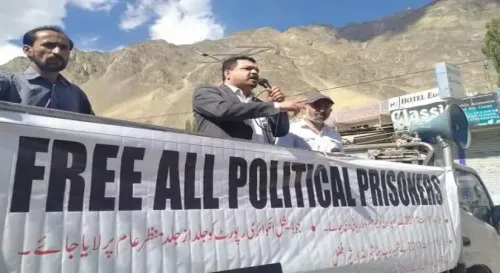
The assembly announced plans for nationwide demonstrations on March 28, targeting corporate agriculture, land acquisition, unfair crop pricing, and the absence of a guaranteed minimum support price, among other grievances.
According to a recent analysis, Pakistan's sugar sector has transformed into a hub of political favoritism, economic exploitation, and institutional manipulation, largely influenced by politically connected families. These entities dominate both production and policymaking in a sector that once served as the backbone of the South Asian country’s agricultural productivity and rural livelihoods.
The Greek publication Directus highlighted that at the root of this crisis is a well-established sugar cartel that exploits its dual position as both industrialists and lawmakers to control supply chains, distort pricing, and reap excessive profits at the expense of farmers and consumers.
The report indicated that this results in a regressive wealth transfer amounting to 610 billion Pakistani rupees annually, which is about 1.22 percent of Pakistan’s GDP, diverting funds from ordinary households into the hands of wealthy mill owners.
The sugar crisis is not merely a natural disaster but a man-made economic catastrophe stemming from elite capture, policy manipulation, and institutional shortcomings. Without transparent reforms, strong enforcement, and a political commitment to dismantling entrenched interests, Pakistan is likely to remain ensnared in a cycle of artificial shortages, inflated prices, and systemic exploitation, the report concluded.
Point of View
It is imperative to highlight the concerns raised by experts regarding corporate farming and land acquisition in Pakistan. These actions not only threaten the livelihoods of local farmers but also risk the sustainability of vital agricultural resources. The call for protests emphasizes the urgency of addressing these issues as they carry significant implications for the future of our rural communities.
NationPress
17 Sept 2026
Frequently Asked Questions
What are the main concerns regarding corporate farming in Pakistan?
Experts are concerned that corporate farming is displacing local farmers and privatizing essential land and water resources.
When are the planned protests against corporate farming?
Nationwide protests are scheduled for March 28.
What economic impacts are linked to corporate farming?
Corporate farming is linked to rising input costs, decreasing farm incomes, and increased pressure on small farmers.
What is the role of the sugar cartel in this crisis?
The sugar cartel manipulates supply chains and pricing, leading to significant economic exploitation.
How does this situation affect rural communities?
Rural communities are suffering the most from the impacts of corporate farming and land grabbing.