How Did a Pakistani Father’s Debt Lead to Forced Conversion?
Synopsis
In a distressing tale from Islamabad, a Pakistani Christian father’s forced conversion due to debt has left his children struggling to reclaim their Christian identity. The family's plight raises pressing questions about religious freedom and identity in a predominantly Muslim nation. Discover the impact of societal pressures on their faith and identity.
Key Takeaways
Forced conversion can have lasting effects on family identity.
The NADRA's registration system links children's identities to their parents.
Debt practices in industries can lead to exploitation .
The Masih family's case highlights the challenges faced by minority communities .
Religious persecution remains a significant concern in Pakistan.
Islamabad, Feb 22 (NationPress) A Christian worker at a brick kiln in Pakistan was forced to convert to Islam, a change that has now impacted his five children's ability to register their Christian identity on national identity cards.
Sufyan Masih, who works at a kiln in the Kasur district of Punjab Province, revealed that his father, Sadiq Masih, was pressured into converting to Islam years ago due to financial hardships stemming from a debt owed to a previous employer.
A report from the Christian Daily International indicates that this conversion was recorded in the national records maintained by the National Database and Registration Authority (NADRA), leading to the issuance of a second Computerised National Identity Card (CNIC) under the name “Muhammad Sadiq”.
“Since my father is listed as a Muslim in NADRA, we have been informed that we are unable to register as Christians. We desire our documents to reflect our true identity, but we are being denied this right,” Sufyan stated.
The report elaborated that the family's financial struggles intensified around 15 years ago when Sadiq Masih's wife, Rasheeda, fell severely ill.
“My father borrowed 400,000 Pakistani rupees ($1,430) from his employer for her treatment and to cover household expenses,” Sufyan mentioned.
Debt practices are prevalent in Pakistan's brick kiln industry, where workers often rely on advances from kiln owners to meet basic needs between paydays.
Human rights advocates have consistently cautioned that these practices can render workers vulnerable to exploitation and coercion.
“We are impoverished. Taking out a loan ties you down. The pressure was relentless. My father, being illiterate, was in a vulnerable position,” Sufyan added.
The ongoing pressure eventually led Sadiq to convert to Islam and adopt a Muslim identity in official documents.
“This name was not his choice,” Sufyan lamented, regarding the name on the CNIC.
“It was forced upon him due to his financial dependence. He did not change his faith internally.”
Sufyan noted that the consequences of this change extend beyond his father, as the NADRA system links children's registration to their parents' data.
Officials have informed the family that the children can only register as Muslims.
“We have been told that because our father is registered as a Muslim, we too must be registered as Muslims. But we are Christians. We were raised as Christians. Why should we renounce our faith for an identity card?” Sufyan questioned.
The Masih family insists that their only request is to restore Sadiq's original name and faith in the national database, along with the right for his children to be officially registered as Christians.
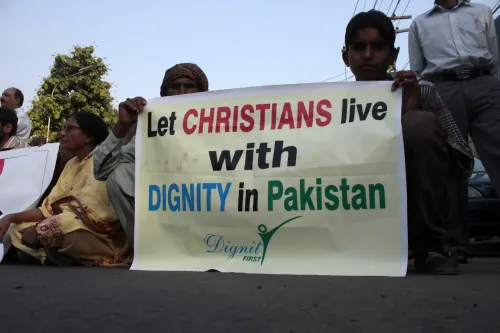
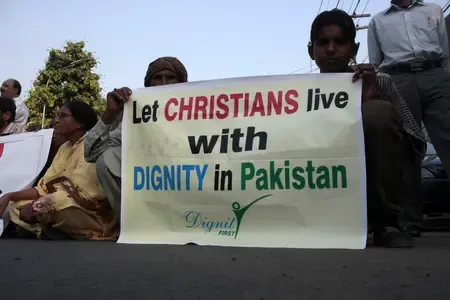
The report emphasized that Pakistan, where over 96 percent of the population is Muslim, is ranked eighth on Open Doors' 2026 World Watch List of nations where Christians face considerable persecution.
Point of View
This story underscores the ongoing challenges faced by minority communities in Pakistan. The case highlights systemic issues of coercion and identity rights, prompting a broader conversation about the need for legal reform to protect religious freedoms. As the nation grapples with its diverse identities, it is essential to ensure that every citizen's right to their faith is respected and upheld.
NationPress
3 Oct 2026
Frequently Asked Questions
What led to Sadiq Masih's conversion to Islam?
Sadiq Masih was coerced into converting to Islam due to financial difficulties and a debt owed to his employer.
How has this conversion affected Sadiq's children?
The conversion has prevented Sadiq's five children from registering as Christians on their national identity cards, as their registration is linked to their father's status.
What are the implications of NADRA's registration system?
NADRA's system links children's registration to their parents' data, meaning if a parent is registered as a Muslim, the children must also be registered as such.
What is the Masih family's main demand?
The Masih family's primary demand is to revert Sadiq's original name and faith in the national database and allow his children to be officially registered as Christians.
What is the current situation for Christians in Pakistan?
Pakistan is ranked eighth on Open Doors' 2026 World Watch List for nations where Christians face severe persecution, highlighting ongoing issues of religious freedom.