What is Driving the Rise of Gang Wars in Canada?

Synopsis
The recent shooting of Punjabi singer Teji Kahlon in Canada reveals a rising tide of gang violence. As these conflicts escalate across borders, the involvement of ISI and Khalistani elements complicates the security landscape, making it imperative for Canada and India to collaborate on solutions.
Key Takeaways
Gang wars in Canada are escalating, posing security challenges.
Connections between gangs and the ISI are significant.
Recent violence indicates a shift towards open conflicts.
Canada and India are beginning to collaborate on solutions.
Public safety is at risk due to gang operations.
New Delhi, Oct 24 (NationPress) The recent shooting of Punjabi singer Teji Kahlon in Canada highlights the alarming escalation of gang wars within the nation. Over the past few years, various incidents, including this shooting, have surfaced, creating a significant challenge for security officials in Canada.
These gang wars are not confined to Canada; they have also spilled over into the United States. Authorities attribute the intensification of these conflicts to the rift between gang leaders Lawrence Bishnoi and Goldy Brar. Earlier this month, as a consequence of this feud, Harry Boxer, operating the Bishnoi gang from abroad, was targeted in California.
The shootings in both Canada and the US were claimed by Rohit Godara, a member of the Goldy Brar gang. Central Intelligence agencies predict that the violence will only escalate as the rivalry between these two once-allied gangs deepens.
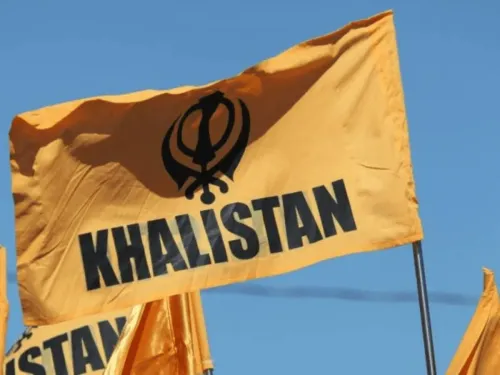
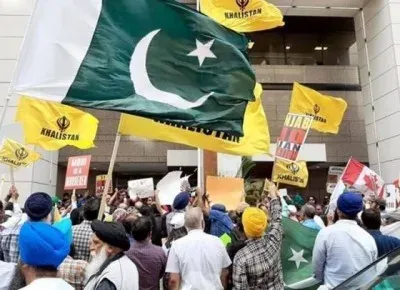
Several factors contribute to the persistence of these gangs. Primarily, many gangsters enjoy the support of the ISI, which utilizes them to advance its Khalistan agenda. Investigations by the National Investigation Agency (NIA) have revealed that these ISI-backed gangs collaborate with Khalistani elements, who have found refuge in Canada. For years, Canada has sidestepped this pressing issue.
However, following Mark Carney’s assumption of the Prime Minister's office, diplomatic relations with India have been redefined, and both nations are striving to address this predicament. An official remarks that while this is a positive development, such matters take time to resolve.
The connection between these gangs and the ISI is longstanding. Initially, the ISI enlisted these gangs primarily to facilitate narcotics and arms trafficking, subsequently involving them in the Khalistan movement. The gangsters, operating under the ISI’s patronage in countries like Canada, organize individuals to execute terrorist attacks.
Moreover, the ISI advises notorious gangsters wanted in India to seek asylum in Canada. To guarantee their safety, the ISI has engaged the Sikhs for Justice (SFJ). The SFJ's political connections are instrumental for these gangs operating abroad.
In a recent chargesheet, the NIA accused Goldy Brar, Ankit Bhawish, and US-based Randeep Singh of orchestrating bomb attacks on the Warehouse Club and Human Club in Gurugram, Haryana, as part of a broader conspiracy directed by Babbar Khalsa International (BKI).
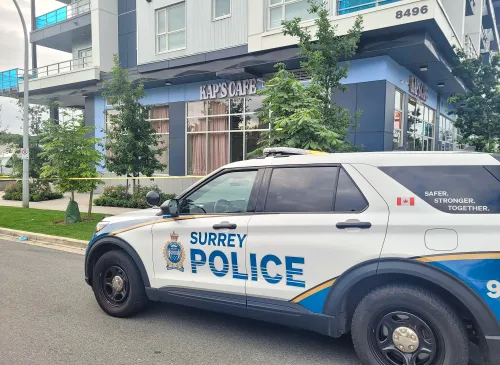
While these individuals pose a significant threat to India, they have also started to emerge as serious challenges for both Canada and the US. These gangsters are no longer operating in secrecy; they now openly roam the streets. The recent incidents in Canada, alongside the repeated attacks on Kaps Cafe, underscore the violence spilling out onto public spaces.
Indian officials warn that the gang wars are set to escalate further, and Canada must take decisive action. It is crucial to tackle this issue with an iron fist to safeguard Canada’s security. Unlike in the past, when these gangsters merely used Canada as a refuge while conducting narcotics and extortion operations in India, the violence has now infiltrated Canadian streets. The ongoing rivalry between the Bishnoi and Brar gangs exacerbates the internal security situation.
Point of View
It is crucial to acknowledge the troubling rise of gang violence in Canada. The interplay between local criminals and international elements, such as the ISI, signifies a complex security challenge that requires immediate and robust action from authorities. The safety of Canadian citizens must remain a top priority.
NationPress
30 Sept 2026
Frequently Asked Questions
What triggered the recent gang wars in Canada?
The recent gang wars in Canada have been exacerbated by a split between prominent gang leaders, leading to violent confrontations, including the shooting of singer Teji Kahlon.
How is the ISI involved in Canada's gang issues?
The ISI supports various gangs in Canada to advance its Khalistan agenda, facilitating narcotics and arms trafficking, and providing refuge for criminals wanted in India.
What steps are Canada and India taking to address this problem?
Following a reset in diplomatic ties, both Canada and India are collaborating to tackle the gang violence issue, although effective solutions will require time.
Why are gangsters becoming a problem for Canada?
Gangsters have transitioned from operating covertly to openly threatening public safety in Canada, as evidenced by recent shootings and attacks.
What is the role of Sikhs for Justice in this context?
The Sikhs for Justice organization assists ISI-backed gangsters by providing political connections and shelter, enabling their operations abroad.