Why Are Members of the Gauhati High Court Bar Association on a Three-Day Hunger Strike?
Synopsis
In a bold move, members of the GHCBA have embarked on a hunger strike to oppose the relocation of the Gauhati High Court. This protest not only highlights their dissent against the Assam government's decision but also raises questions about the future of judicial accessibility in the region.
Key Takeaways
Members of the Gauhati High Court Bar Association are on a hunger strike to protest the court's relocation.
The protest is a response to the Assam government's plans for a new judicial township.
The Bar Association emphasizes the need for judicial accessibility.
The foundation stone for the new complex is set to be laid soon.
The hunger strike underscores the Bar's commitment to their cause.
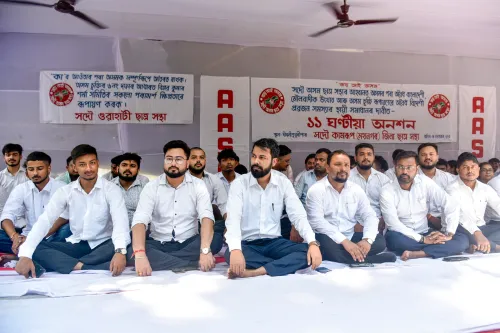
Guwahati, Jan 8 (NationPress) Members of the Gauhati High Court Bar Association (GHCBA) initiated a three-day hunger strike on Thursday to voice their opposition against the Assam government’s proposal to relocate the Gauhati High Court to North Guwahati, intensifying the dissent against the planned judicial township at Rangmahal.
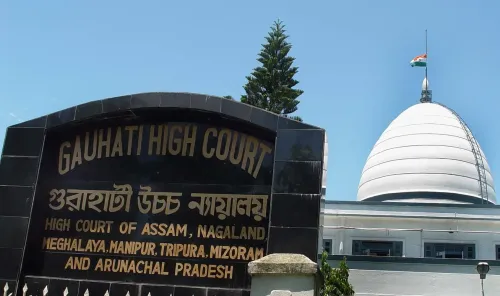
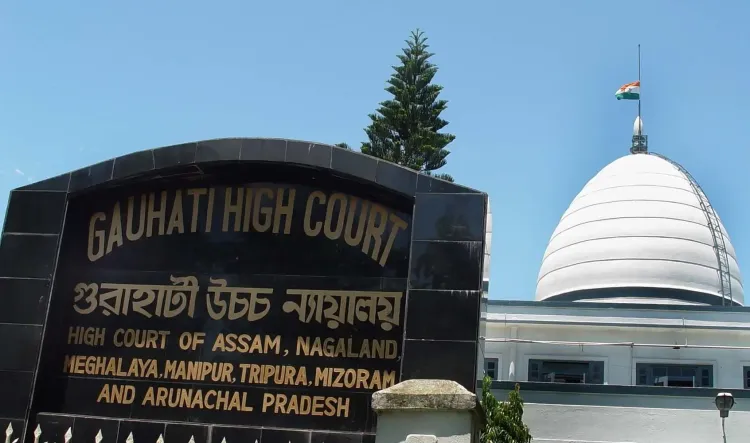
The protest is organized to last for six hours each day, starting at 10 a.m. in front of the historic High Court building located at Uzan Bazar.
This action follows a resolution that was passed during an extraordinary general meeting of the Bar Association earlier this week.
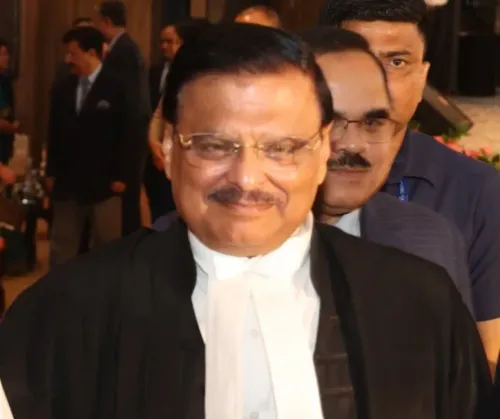
Leading the protest is GHCBA President K.N. Choudhury.
The state government has proposed the establishment of a new High Court complex as part of a judicial township spanning 129 bighas, or over 42.5 acres, at Rangmahal on the northern bank of the Brahmaputra River.
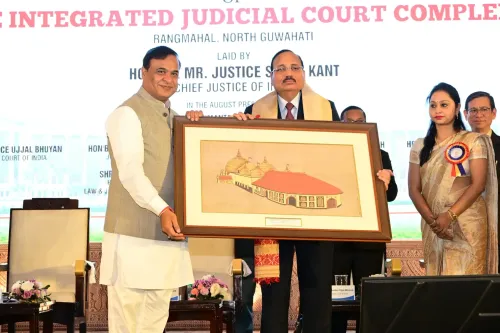
The foundation stone for this initiative is set to be laid on Sunday by Chief Justice of India Surya Kant, a ceremony that the Bar Association has decided to boycott.
In a public statement, the GHCBA characterized the hunger strike as a “peaceful and democratic expression” of their opposition to the relocation scheme.
The Association emphasized that its general body has persistently opposed the shift of the principal seat from its current location in central Guwahati after thorough discussions.
This stance has been previously reflected in formal resolutions and a referendum conducted among its members.
The Bar Association has urged all advocates to honor the collective decision and avoid attending the foundation stone-laying event.
In November of last year, the Assam Cabinet approved a budget of Rs 479 crore for the first phase of constructing the judicial township.
The government claims that the relocation is part of a wider strategy to develop the Brahmaputra riverfront, necessitating the use of the High Court land at Uzan Bazar.
Currently, the Gauhati High Court operates from a historic building alongside a modern multi-storey complex built in recent years.
These two facilities, situated on opposite sides of Mahatma Gandhi Road, are connected by an underground tunnel equipped with escalators.
The GHCBA has consistently maintained that relocating the court complex would lead to significant inconvenience for both litigants and lawyers and has called for an immediate cessation of the project, citing the interests of all involved stakeholders and the public.
Point of View
The ongoing protest by the Gauhati High Court Bar Association is not merely a local issue; it reflects broader concerns about judicial accessibility and governance. The decision to relocate such a pivotal institution warrants careful reconsideration, as it directly impacts the legal rights of citizens. The Bar Association's stance emphasizes the importance of engaging stakeholders in discussions that shape the judicial landscape.
NationPress
24 Oct 2026
Frequently Asked Questions
What is the reason behind the hunger strike?
The hunger strike is a protest against the Assam government's decision to relocate the Gauhati High Court to North Guwahati, which the Bar Association believes will lead to significant inconvenience for litigants and lawyers.
How long will the hunger strike last?
The hunger strike is scheduled for three days, with protests taking place for six hours each day.
Who is leading the protest?
The protest is being led by K.N. Choudhury, the President of the Gauhati High Court Bar Association.
What is the government's stance on the relocation?
The Assam government claims that the relocation is part of a broader plan to develop the Brahmaputra riverfront, necessitating the use of the High Court land at Uzan Bazar.
What has the Bar Association requested from lawyers?
The Bar Association has requested all advocates to respect their collective decision and refrain from attending the foundation stone-laying ceremony for the new High Court complex.