Does One Nation, One Election Violate the Basic Structure of the Constitution? Insights from ex-CJI Gavai
Synopsis
In a significant address, ex-CJI B.R. Gavai asserts that the One Nation, One Election initiative aligns with the Basic Structure doctrine, aiming for synchronized elections without compromising democracy or federalism. This pivotal discussion sheds light on the constitutional legitimacy of electoral reforms in India.
Key Takeaways
Gavai confirms that the ONOE initiative does not breach the Constitution's Basic Structure.
The amendment aims to synchronize Lok Sabha and state Assembly elections.
Concerns about government accountability under simultaneous elections are addressed.
The historical precedent of simultaneous elections until 1967 is highlighted.
Support from the 23rd Law Commission reinforces the government's push for reform.
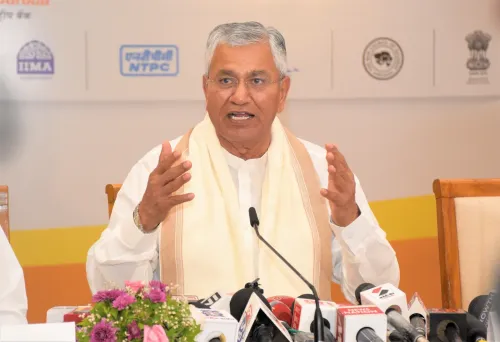
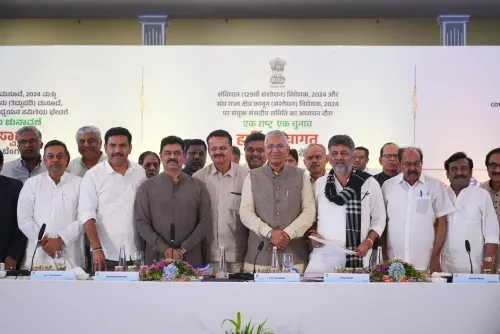
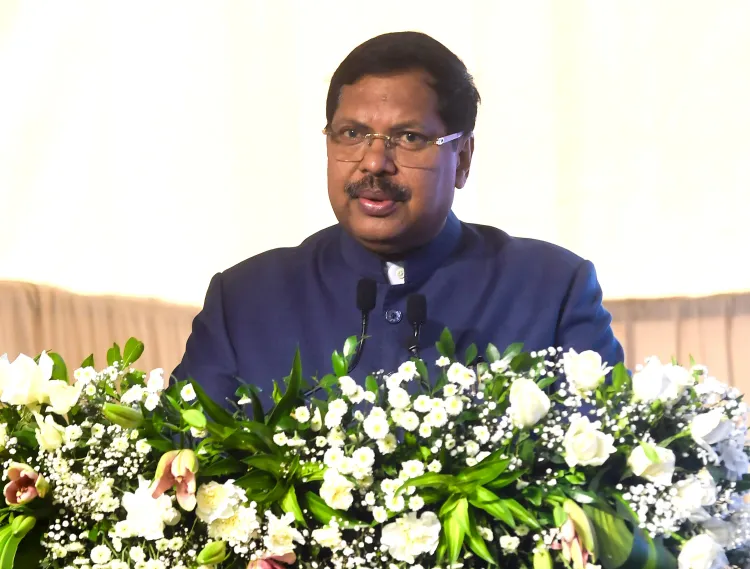
New Delhi, Feb 12 (NationPress) Former Chief Justice of India (CJI) B.R. Gavai addressed the Joint Parliamentary Committee (JPC) on One Nation, One Election (ONOE) on Thursday, led by BJP MP P.P. Chaudhary. He stated that the proposed Constitutional Amendment Bill regarding simultaneous elections does not infringe upon the Basic Structure of the Constitution.
In his thorough presentation to the parliamentary panel, the ex-CJI maintained that the Basic Structure doctrine involves both the federal framework and the democratic governance form, asserting that neither would be affected by this proposed legislation.
He emphasized, "The enactment of this Bill will not alter or impact these fundamental aspects (federalism and democracy). Therefore, the amendment aligns with the Basic Structure," while addressing the JPC.
He added, "The ONOE merely changes the timing of election conduct. The fundamental structure of elections and voter rights will remain intact. As such, the amendment is constitutional."
Regarding Parliament's authority to propose such legislation, the ex-CJI explained that the Constitution grants Parliament the power to amend laws to synchronize elections for both the Lok Sabha and state Assemblies.
In response to concerns about governmental accountability under a framework of simultaneous elections, Justice Gavai argued that mechanisms like the no-confidence motion remain effective. Therefore, accountability for both Union and state governments will remain unaffected.
He also highlighted that India successfully conducted simultaneous elections until 1967, pointing to this historical precedent as a basis for the constitutional viability of ONOE.
Justice Gavai's remarks come amidst ongoing discussions by the JPC, which is reviewing the Constitution (129th Amendment) Bill, 2024, and the Union Territories Laws (Amendment) Bill, 2024.
Since its formation in December 2024, the committee has conducted wide-ranging consultations with constitutional experts, economists, and the Chairman of the 23rd Law Commission, among others.
The two bills, introduced by Union Law Minister Arjun Ram Meghwal in December 2024 and subsequently referred to the parliamentary committee, aim to align Lok Sabha and Assembly elections by shortening the terms of certain state legislatures elected after a specific Lok Sabha, so that their tenures conclude simultaneously. Once synchronized, future Lok Sabha and state Assembly elections will occur concurrently.
The 23rd Law Commission has recently endorsed the idea that the proposed legislation does not contravene the Basic Structure of the Constitution, particularly concerning federalism and voter rights, thereby supporting the government's initiative for electoral reform.
Point of View
I believe this discussion is vital for understanding the balance between electoral efficiency and constitutional integrity. The arguments made by Justice Gavai highlight a significant moment in our democratic process, and it's crucial for citizens to stay informed on such pivotal legislative changes.
NationPress
1 Oct 2026
Frequently Asked Questions
What is the One Nation, One Election initiative?
The One Nation, One Election initiative aims to synchronize elections for the Lok Sabha and state Assemblies to streamline the electoral process in India.
Does the amendment affect federalism?
According to Justice Gavai, the amendment does not affect federalism or democracy, thus aligning with the Basic Structure of the Constitution.
What is the Basic Structure doctrine?
The Basic Structure doctrine is a legal principle that maintains certain fundamental features of the Constitution cannot be altered or destroyed by amendments.
What historical precedent supports ONOE?
India successfully conducted simultaneous elections until 1967, providing a historical basis for the current proposal.