What Challenges Does Pakistan-Occupied Gilgit-Baltistan Face After Decades of Neglect?
Synopsis
Gilgit-Baltistan, a region under Pakistani control, is facing dire civic challenges due to two decades of administrative neglect. This report explores the severe lack of basic services, ongoing protests, and the rising discontent among its residents. Discover the struggles and demands of a population yearning for better governance and support.
Key Takeaways
Gilgit-Baltistan has been without local governance for 20 years.
Healthcare facilities are nearly non-existent.
Protests have erupted over taxation and subsidy issues.
Recent flooding has further strained the region's economy.
Public discontent is escalating due to governance failures.
Islamabad, Dec 27 (NationPress) Gilgit-Baltistan, under Pakistani administration, is grappling with severe civic issues and a stagnating development landscape. This region has been without local governance structures for the past twenty years, as highlighted in a report published on Saturday.
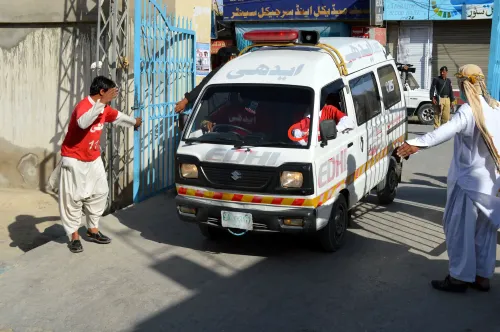
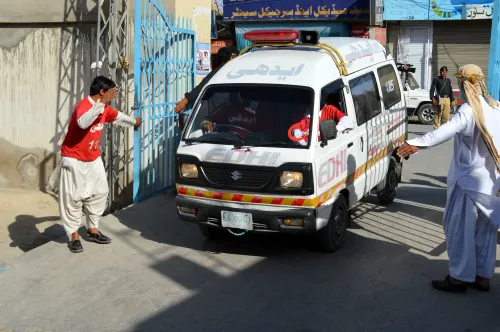
The report indicates that years of disregard have resulted in a deficient public health infrastructure in Gilgit-Baltistan, where essential health services, operational laboratories, critical medical equipment, and sufficient medical personnel are alarmingly absent.
“In many instances, residents are compelled to transport patients to what they refer to as 'down country' for medical care, adding to their financial strain. Basic amenities like electricity, potable water, and sanitation are scarce in numerous locales,” noted Sajjad Ahmad, an Assistant Professor and a fellow at the Centre for Business and Economic Research at Karachi's IBA, in the prominent Pakistani newspaper Dawn.
He emphasized that “despite these overwhelming hurdles, including a constrained budget, the initiative to expand the number of districts in Gilgit-Baltistan appears illogical.”
In certain regions, with populations below 50,000, establishing a new district exacerbates the existing financial pressures. The report further revealed that Gilgit-Baltistan is now allocating more funds towards salaries rather than development, which should ideally be the opposite.
This year, Ahmad reported, areas like Ghizer, Ghanche, and Skardu encountered unprecedented flooding, devastating the livelihoods of many residents.
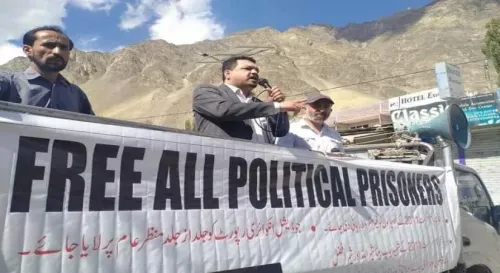
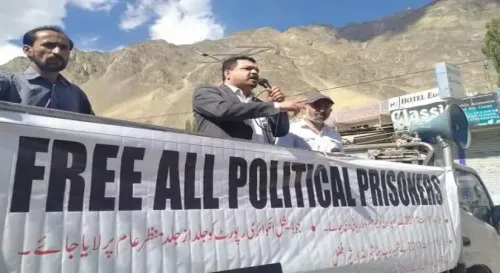
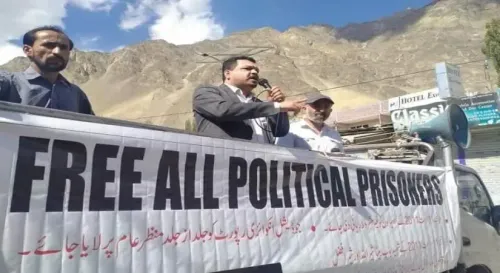
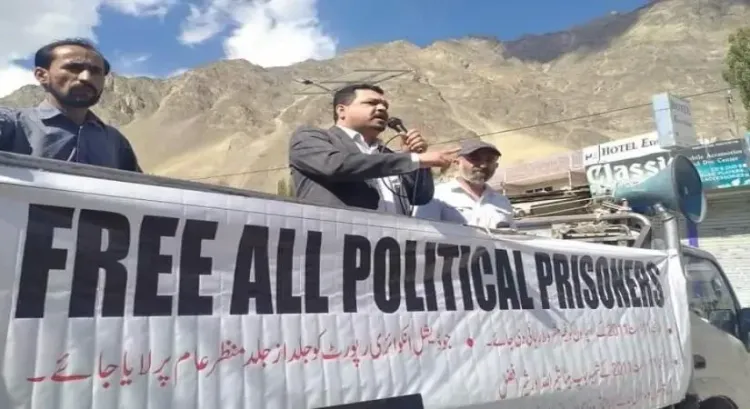
Over the last five years, the report pointed out, this region has been caught up in widespread protests and significant sit-ins addressing governance problems.
These demonstrations largely opposed Pakistan's effort to terminate the wheat subsidy benefiting Gilgit-Baltistan and to impose taxation. Civil society, along with political and religious factions, have strongly denounced the PoGB Land Reforms Act of 2025 and criticized the arrests of Awami Action Committee leaders who have voiced dissent against certain local decisions.
The report indicated that “the protracted sit-in lasting nearly two months at the Sost dry port” by local traders against Pakistan's “attempt to impose sales tax, advance income tax, and federal excise duty through the Federal Board of Revenue” led to the decision to exempt imports valued up to Rs four billion from federal taxes if they are intended for local usage.
In 2025, Gilgit-Baltistan was engulfed in escalating unrest, with even police officers protesting over delayed compensation and benefits, resulting in suspensions and salary freezes, as earlier reports noted.
Instead of resolving disputes through dialogue, actions taken by the regional administration exacerbated tensions between law enforcement and governing bodies.
Unrest erupted in mid-August when hundreds of police personnel, including female constables, conducted an overnight sit-in outside the residence of the regional authority in Gilgit-Baltistan.
Point of View
It is crucial to highlight the plight of marginalized regions like Gilgit-Baltistan. Their struggles reflect a larger governance issue that needs urgent attention. The nation must rally behind these communities to foster development and ensure equitable access to resources.
NationPress
19 Sept 2026
Frequently Asked Questions
What is the current state of healthcare in Gilgit-Baltistan?
The healthcare system in Gilgit-Baltistan is severely under-resourced, lacking adequate medical facilities, equipment, and personnel, forcing residents to seek treatment outside the region.
Why have residents been protesting in Gilgit-Baltistan?
Residents have protested against the withdrawal of wheat subsidies and the imposition of new taxes, highlighting long-standing governance issues and demands for better representation.
What impact have recent floods had on Gilgit-Baltistan?
Recent floods have devastated several districts in Gilgit-Baltistan, destroying livelihoods and worsening the already dire economic conditions for many residents.