How is Goa Liberation Day Honored by President Murmu?
Synopsis
On Goa Liberation Day, President Droupadi Murmu leads the nation in honoring the sacrifices of freedom fighters and the armed forces. This day marks a significant moment in India's history as it celebrates Goa's liberation from Portuguese rule in 1961. Discover the tributes paid and the historical importance of this day.
Key Takeaways
Goa Liberation Day is celebrated on December 19 each year.
President Droupadi Murmu paid tribute to the freedom fighters.
Operation Vijay was pivotal in Goa's liberation.
Portugal ruled Goa for nearly 451 years .
Cunha is recognized as the Father of Goan Nationalism.
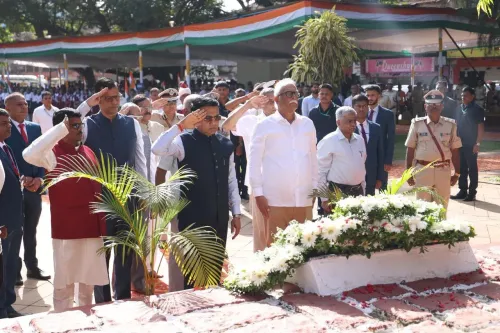
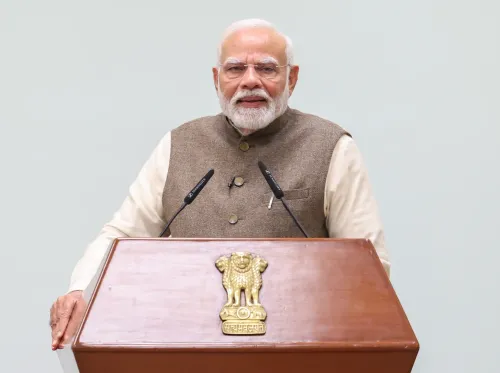
New Delhi, Dec 19 (NationPress) On the occasion of Goa Liberation Day, President Droupadi Murmu took the lead in honoring the courageous individuals who fought tirelessly to free Goa from colonial oppression. She expressed profound respect for the freedom fighters whose sacrifices played a pivotal role in integrating the state with India.
President Murmu shared her sentiments on the social media platform X, stating, “Today, as we observe Goa Liberation Day, we express our heartfelt gratitude towards the brave individuals who fought resolutely against colonial rule. We extend our salutes to our freedom fighters and armed forces for their steadfast commitment. I wish the citizens of Goa a future filled with prosperity and brightness.”
Union Home Minister Amit Shah also conveyed his wishes for the day, mentioning on X, “Warm greetings to the people of Goa on this significant occasion. Many are unaware that until 1961, Indians required permission to visit Goa. Numerous revered figures like Prabhakar Vaidya, Bala Raya Mapari, Nanaji Deshmukh Ji, and Jagannath Rao Joshi Ji resisted this and championed Goa's freedom. Due to the immense sacrifices of our heroes, Goa became an inseparable part of India. I bow in gratitude to these noble souls who endured great suffering for Goa’s liberation.”
The Congress party commemorated the day as well, posting on X, “Goa, Daman & Diu Liberation Day signifies a crucial moment when these regions were liberated from Portuguese dominion. It honors the valor of our freedom fighters and the collective determination of Indians that led to their integration into the Indian Union.”
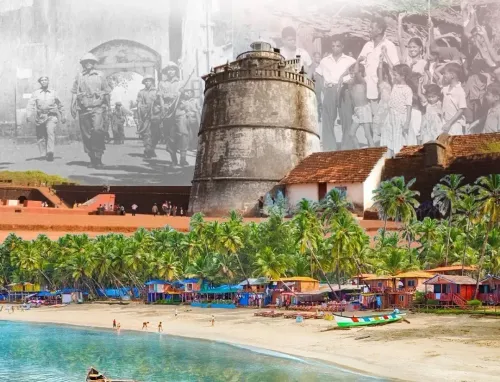
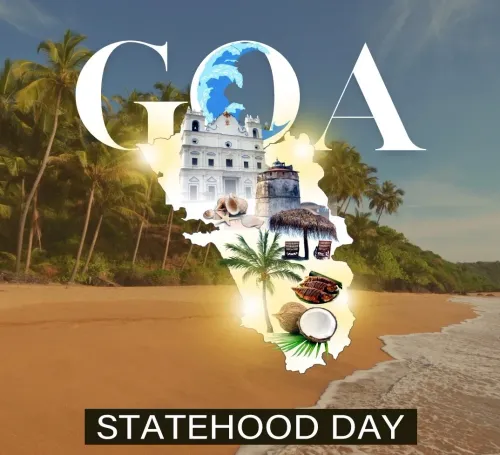
The date December 19 carries great historical importance for Goa, marking the day in 1961 when the region was liberated from Portuguese rule and formally joined India. Notably, Portuguese governance in Goa extended for almost 451 years, making it one of the longest colonial reigns in the nation.
In contrast to other regions of India that achieved independence from British rule in 1947, Portugal resisted granting freedom to Goa or permitting its unification with India. The Portuguese authorities maintained that Goa was culturally and religiously unique and an inherent part of Portugal, rather than merely a colony.
To conclude colonial rule, the Indian government initiated 'Operation Vijay' during the leadership of former Prime Minister Jawaharlal Nehru. This military operation, executed by the Indian Armed Forces, lasted over 36 hours and involved synchronized efforts across land, sea, and air.
Numerous leaders and citizens actively participated in the liberation movement through protests against Portuguese governance. Among them, T.B. Cunha is celebrated as the “Father of Goan Nationalism,” having spearheaded the first organized resistance against colonial rule in Goa. After completing his studies in France, Cunha returned to India during Mahatma Gandhi’s mass movements against imperialism and dedicated himself to the cause of Goa’s independence.
Point of View
Honoring Goa Liberation Day is essential as it reflects the spirit of unity and resilience of our country. This day is a powerful reminder of the sacrifices made for our freedom and the importance of remembering our history in shaping our national identity.
NationPress
7 Oct 2026
Frequently Asked Questions
What is Goa Liberation Day?
Goa Liberation Day is celebrated on December 19 to commemorate the liberation of Goa from Portuguese rule in 1961.
Who led the tributes on Goa Liberation Day?
President Droupadi Murmu led the nation in paying tributes to the freedom fighters on Goa Liberation Day.
What was Operation Vijay?
Operation Vijay was the military operation launched by the Indian government to liberate Goa from Portuguese rule in 1961.
Why is December 19 significant for Goa?
December 19 marks the day Goa was liberated from Portuguese rule and integrated into India in 1961.
Who is considered the Father of Goan Nationalism?
T.B. Cunha is remembered as the Father of Goan Nationalism for initiating the organized movement against colonial rule in Goa.