Will Gold and Silver Continue Their Rally in 2026?
Synopsis
As gold continues its impressive rally into 2026, supported by safe-haven demand and central bank acquisitions, experts predict an ongoing positive trend. However, caution is advised as potential corrections loom amidst fluctuating economic conditions. Will silver face similar pressures or thrive amid its challenges? Discover the detailed outlook on these precious metals.
Key Takeaways
Gold's rally is supported by safe-haven flows.
Central banks are increasing their gold reserves.
Potential corrections in 2026 due to economic factors.
Silver faces risks from overvaluation and industrial demand.
Gold-backed ETFs have reached record assets under management.
New Delhi, Dec 11 (NationPress) The surge of gold in 2025, soaring approximately 60% year-to-date, is poised to carry forward its momentum into 2026, buoyed by safe-haven flows and significant central bank acquisitions, according to a report released on Thursday.
The analysis from Axis Mutual Fund, however, cautions investors to prepare for potential corrections and fluctuations throughout 2026.
Factors such as increased real yields, a robust US dollar, enhanced global growth, diminished inflationary pressures, and a hawkish US policy stance could potentially dampen demand, the report warns.
In terms of silver's prospects for 2026, analysts indicated that overvaluation might trigger ETF outflows, while a decline in copper prices could also exert downward pressure on silver prices.
“Our overall outlook for silver remains optimistic, with several positive factors that could support its rally, even as its valuations appear stretched,” the report noted.
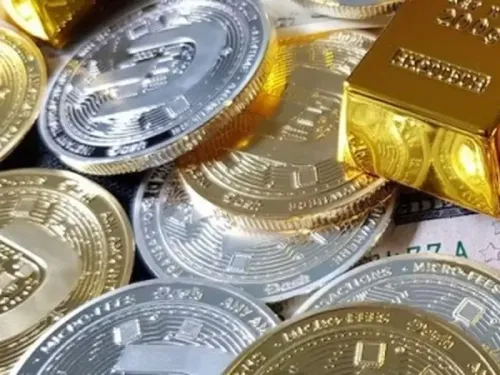
Gold-backed exchange-traded funds (ETFs) have seen robust inflows, with total assets reaching a record near $470 billion by the end of Q3CY25, and demand for physical bars and coins consistently exceeding 300 tonnes for three consecutive quarters.
“In the short term, we maintain a positive outlook on gold, driven by safe-haven flows amidst a backdrop of global uncertainty,” the report remarked.
The gold rally in 2025 was supported by a lower opportunity cost associated with holding non-yielding gold, with its safe-haven allure remaining strong in anticipation of US rate cuts.
“We expect 1-2 more rate cuts in this cycle, as macroeconomic conditions remain uneven and weakness in the labor market continues,” the report predicted.
Concerns over the Federal Reserve's independence, a declining US dollar, and ongoing macroeconomic and geopolitical risks further bolster safe-haven demand. Globally, central banks have been increasing their gold reserves, with gold’s proportion exceeding that of US Treasuries for the first time in nearly 30 years.
However, the preference of central banks for gold over silver may limit the latter's official demand support, and potential industrial usage substitutions also pose risks.
Currently, with silver trading at $58 per troy ounce, valuations appear stretched, according to the report. The supply of silver remains inelastic, as most mined silver is extracted as a by-product of lead, zinc, and copper mining.
Point of View
The ongoing trends in gold and silver signify not just a financial movement but also reflect broader economic sentiments. As central banks increase their gold reserves, it is crucial to monitor how these assets play a role in both individual and global economic stability. Our commitment at NationPress is to provide insightful analysis that keeps our audience informed and prepared for market shifts.
NationPress
3 Oct 2026
Frequently Asked Questions
What factors are driving gold's rally?
Gold's rally is primarily driven by safe-haven flows, central bank acquisitions, and a lower opportunity cost of holding non-yielding assets, especially amidst global uncertainties.
How does the US dollar impact gold and silver prices?
A stronger US dollar can erode demand for gold and silver, as they become more expensive for holders of other currencies, potentially leading to price corrections.
What risks does silver face in 2026?
Silver may face risks from overvaluation leading to ETF outflows and the potential downturn in copper prices affecting its demand.
Are central banks favoring gold over silver?
Yes, central banks have shown a preference for increasing gold reserves, which may limit silver's official demand support.
What is the current price of silver?
As of now, silver is trading at approximately $58 per troy ounce.