Why Is Gold Paste Smuggling Becoming the Preferred Method for Smugglers in India?
Synopsis
The rise in gold prices has led to a surge in smuggling activities in India, with traffickers turning to gold paste as a preferred method due to its difficulty in detection. Despite efforts to combat these tactics, the challenge remains significant.
Key Takeaways
Gold paste smuggling is on the rise due to detection difficulties.
Smugglers utilize innovative tactics to evade authorities.
High domestic demand for gold encourages illegal imports.
Intelligence profiling is key to combating smuggling.
Detection methods need enhancement to address gold paste smuggling.
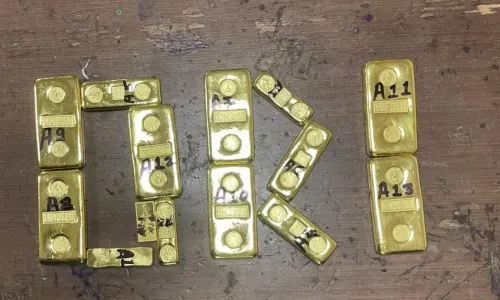
New Delhi, Jan 12 (NationPress) As the price of gold continues to soar, India is facing a notable surge in smuggling activities. Despite efforts by the Customs and the Directorate of Revenue Intelligence (DRI) to combat these illegal actions, smugglers are adapting with innovative strategies.
There has been a marked rise in cases involving gold paste smuggling. This method is particularly challenging to detect, making it more appealing to traffickers. A recent incident saw the Air Intelligence Unit (AIU) of Chennai Customs apprehending an Indian male crew member from Emirates flight EK-544, which had just landed at Anna International Airport in Chennai from Dubai.
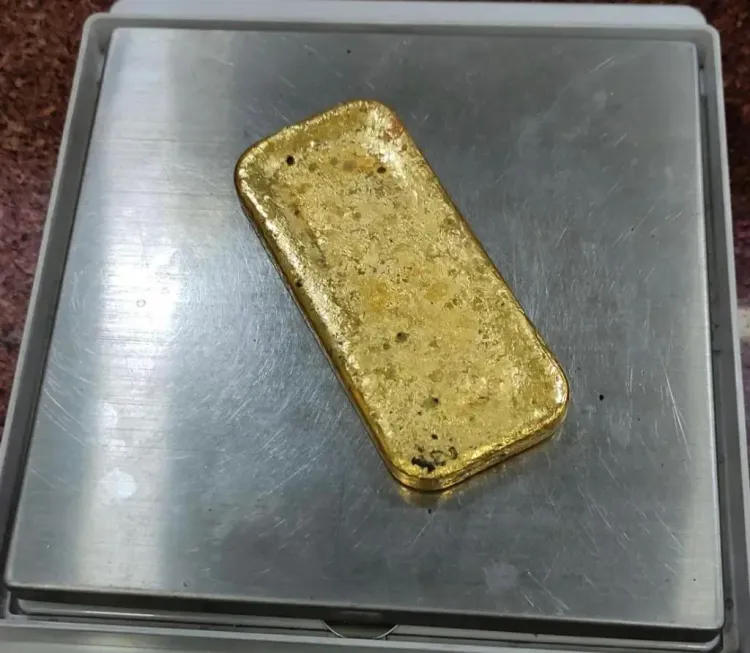
Upon inspection, authorities discovered that the individual was wearing three Velcro bands around his chest and waist, concealing ten packets of gold paste wrapped in white paper. The operation resulted in the confiscation of 9.46 kg of 24-carat gold valued at Rs 11.4 crore.
According to an Intelligence Bureau official, gold paste is particularly difficult to detect without specific intelligence. Even state-of-the-art body scanners often fail to identify the substance, making it a favored option among smugglers. If apprehended, it remains challenging to verify the presence of gold paste unless the smuggler inadvertently reveals crucial information.
Another official highlighted the importance of intelligence in uncovering such cases. Profiling potential smugglers based on their passenger profiles and travel habits has proven effective. Reports indicate that gold is predominantly smuggled into India from Gulf nations and Southeast Asian countries like the UAE and Singapore, with routes through Bangladesh, Myanmar, and Nepal.
Intelligence agencies assert that the combination of high domestic gold demand and rising prices is driving smugglers to increase illegal imports. The profit margins for smuggling gold can be substantial—exceeding Rs 1.5 million for every kilogram bypassed in duties and taxes. This lucrative market has led to an uptick in gold paste smuggling.
To create gold paste, smugglers melt pure gold at extreme temperatures, add impurities, dye the mixture, and form it into a paste. Once smuggled, the paste is converted into powder and treated with chemical solutions for gold extraction, a process that can take up to nine hours.
To combat this growing threat, intelligence agencies have begun profiling numerous individuals who could be potential smugglers. Last July, the CISF vigilance team at Surat airport thwarted a significant smuggling attempt, seizing 28 kg of gold paste from two passengers returning from Dubai. The duo exhibited suspicious behavior during routine surveillance, prompting a check that resulted in the recovery of the contraband.
Officials emphasize that given the near impossibility of detecting gold paste, comprehensive profiling of individuals is essential. Monitoring behavioral patterns upon arrival at airports or ports has emerged as a successful tactic for identifying smugglers in possession of gold paste.
Intelligence agencies caution that the primary obstacle in this gold smuggling method is detection. The paste's ability to evade standard metal detectors and scanners necessitates reliance on human intelligence, passenger profiling, and tip-offs. Utilizing these strategies, the DRI and the Central Industrial Security Force (CISF) have achieved notable seizures at airports in Chennai, Surat, Mumbai, and Bengaluru, but challenges remain ahead.
Point of View
It is crucial to highlight the pressing issue of gold smuggling in India. This growing trend not only threatens the economy but also raises concerns about the effectiveness of our current detection measures. Our nation must prioritize stronger enforcement strategies to combat this illicit trade and safeguard our financial integrity.
NationPress
30 Sept 2026
Frequently Asked Questions
Why is gold paste being smuggled?
Gold paste is favored by smugglers due to its difficulty in detection and high-profit margins, making it an attractive option amidst rising gold prices.
How do smugglers create gold paste?
Smugglers melt pure gold, mix it with impurities, dye it, and form it into paste, which is later converted into powder for extraction.
What efforts are being made to combat gold smuggling?
Authorities are employing intelligence profiling, behavioral monitoring, and routine checks to apprehend potential smugglers and seize contraband.
Where is gold primarily smuggled from into India?
Gold is mainly smuggled into India from Gulf countries, particularly the UAE, as well as Southeast Asian nations like Singapore, often through Bangladesh, Myanmar, and Nepal.
What are the challenges in detecting gold paste?
The paste's ability to evade standard detection methods poses significant challenges for authorities, requiring reliance on human intelligence and profiling.