Why is Kashmir Experiencing Bone-Chilling Cold as Temperatures Plummet? Dense Fog in Jammu

Synopsis
As temperatures plummet to alarming lows in Kashmir, severe fog in Jammu disrupts daily life. With bleak forecasts ahead, the region braces for continued bitter cold during the critical ‘Chillai Kalan’ period. Will the Valley see its first snowfall soon? Read on to discover the implications of this harsh winter.
Key Takeaways
The minimum temperature in Srinagar has reached minus 4.9 degrees Celsius .
Dense fog is disrupting life and traffic in Jammu.
No significant snowfall is expected in the near future.
The ongoing Chillai Kalan period is crucial for water resources.
Residents are advised to take precautions during this severe cold.
Srinagar, Jan 13 (NationPress) The minimum temperature in Jammu and Kashmir has once again dipped due to a clear night sky, with Srinagar reporting a chilling minus 4.9 degrees Celsius as the coldest temperature recorded overnight.
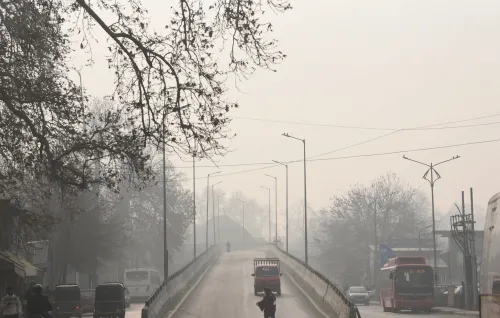
This morning, dense fog severely disrupted life in Jammu city, causing both surface and air traffic to come to a halt due to extremely poor visibility.
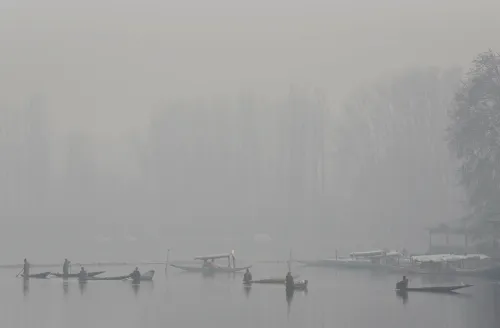
In Srinagar, the harsh, biting winds from the mountains meant that few residents dared to venture outside.
With no significant snowfall expected in the upcoming week, the harsh winter chill is anticipated to persist.
Srinagar recorded a minimum temperature of minus 4.9 degrees Celsius, while Gulmarg and Pahalgam saw temperatures of minus 3.5 degrees and minus 6.2 degrees, respectively.
In the Jammu region, minimum temperatures included 3.8 degrees Celsius in Jammu city, 6.2 degrees in Katra, 4.1 degrees in Batote, 8.9 degrees in Banihal, and minus 0.2 degrees in Bhaderwah.
The Meteorological (MeT) Department has forecasted partly to generally cloudy weather until January 18 and 19.
On January 20, there will be generally cloudy conditions, with light rain or snow expected in isolated areas. “Between January 21 and 23, the weather will remain partly to generally cloudy with light rain or snow in scattered locations,” the MeT Department stated.
Between January 24 and January 25, partly cloudy conditions are anticipated in the union territory.
The MeT Department cautioned that a gradual increase in minimum temperatures at various locations is likely.
“Moderate fog over the plains of the Jammu division with dense fog at isolated spots is expected to continue over the next five days,” the advisory mentioned.
The situation in Jammu and Kashmir, particularly the Valley, is alarming, as the MeT Department predicts predominantly cold, dry weather until January 25.
This prolonged dry spell has raised concerns throughout the union territory, as all water bodies essential for agriculture, horticulture, and drinking water rely heavily on substantial snowfall during the ongoing 40-day period of intense winter cold known as ‘Chillai Kalan’.
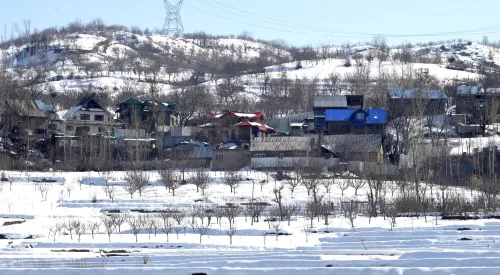
This critical 40-day phase is already more than halfway through, and the Valley's plains have yet to witness this season's first snowfall.
Chillai Kalan concludes on January 30. Snowfall in February and March typically melts quickly and does not significantly aid in replenishing the perennial water reservoirs in the mountains.
Point of View
The current weather situation in Jammu and Kashmir is alarming. The severe cold and lack of snowfall are not just uncomfortable for residents but pose serious risks for agricultural sustainability and water resources in the region. The ongoing dry spell during such a crucial period highlights the need for effective climate adaptation strategies.
NationPress
15 Oct 2026
Frequently Asked Questions
What is the current temperature in Srinagar?
Srinagar is currently experiencing a minimum temperature of minus 4.9 degrees Celsius.
How is the fog affecting traffic in Jammu?
Dense fog in Jammu has caused significant disruptions, halting both surface and air traffic due to poor visibility.
What is the Chillai Kalan?
Chillai Kalan is a 40-day period of harsh winter cold that is crucial for snowfall and water resources in the region.
Will there be any snowfall soon?
Currently, there is little prospect of major snowfall in the coming week.
What precautions should residents take?
Residents should stay indoors during severe cold and fog and be cautious while traveling.