Is the Korean Won Approaching a Multi-Year Low Due to Increased Overseas Investment?
Synopsis
As the South Korean won approaches a multi-year low, what factors are contributing to its decline? Increased demand for US dollars from local investors and importers is pushing the exchange rate higher. Explore the implications for the local market and how South Korean stocks are reacting amidst this currency volatility.
Key Takeaways
The South Korean won is nearing a multi-year low against the US dollar.
Demand for dollars from local importers and investors is driving the exchange rate higher.
Government interventions aimed at stabilizing the currency have had temporary effects.
South Korean stocks have seen fluctuations, particularly in the automotive and tech sectors.
Semiconductor companies are facing declines amidst market volatility.
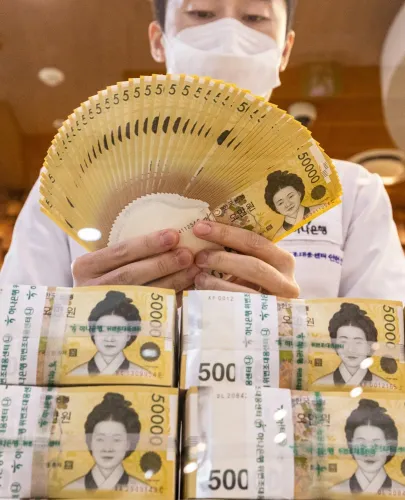
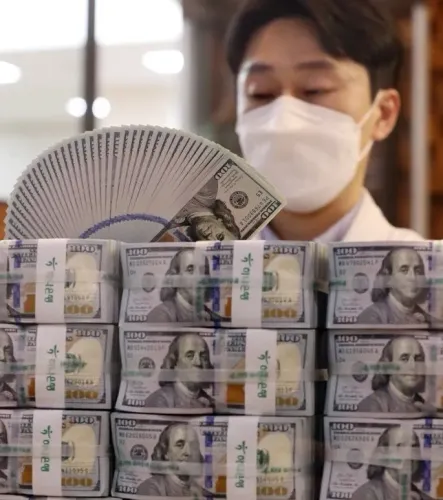
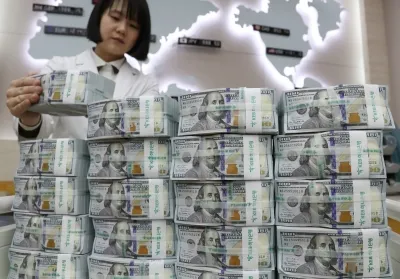
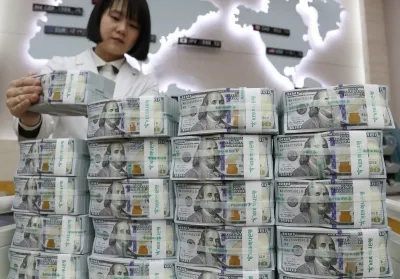
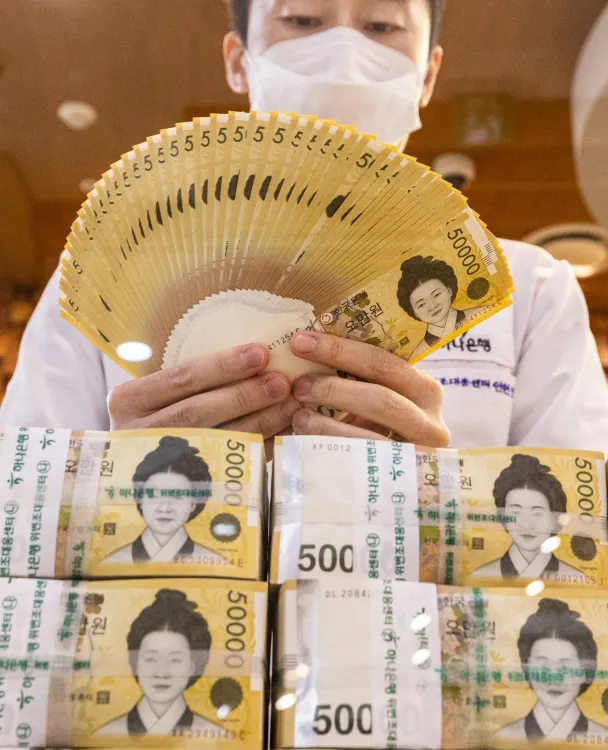
Seoul, Jan 13 (NationPress) The South Korean currency has experienced a further decline on Tuesday, trading below the 1,470 won per US dollar mark shortly after bouncing back from a near 16-year low. The won opened at 1,468.5 per dollar, down 0.1 won from the previous session, before dipping to 1,472.45 won by 9:30 am, according to reports from Yonhap news agency.
Previously, the local currency had plummeted to a 16-year low of around 1,480 won in mid-December. It managed to recover above the 1,450 won threshold on December 24, thanks to a verbal intervention and policy measures from foreign exchange authorities aimed at stabilizing the market.
However, the won has since seen a continuous drop over 10 straight trading sessions, closing at 1,468.4 won per dollar on Monday.
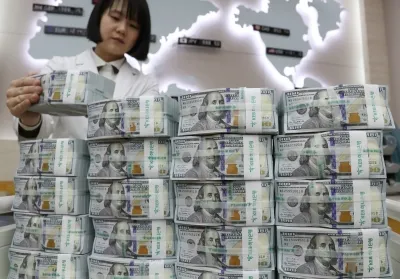
“The demand for dollars from importers and local investors seeking overseas stock investments has pushed the exchange rate higher,” said Min Kyung-won, an analyst at Woori Bank.
The depreciation of the won has also correlated with the weakness of the Japanese yen, he noted.
On the other hand, South Korean stocks showed improvement late Tuesday morning, although early gains were trimmed after reaching a new intraday high, driven primarily by automotive and technology shares.
The benchmark Korea Composite Stock Price Index (KOSPI) added 21.07 points, or 0.46 percent, to 4,645.86 as of 11:20 a.m.
After opening 0.81 percent higher, the index briefly touched an all-time intraday high of 4,672.04.
However, gains later narrowed as major-cap semiconductor shares declined.
Automotive and IT shares led the surge, with top automaker Hyundai Motor jumping 11.58 percent, and its parts affiliate Hyundai Mobis soaring 15.74 percent.
Naver, a leading internet company, increased by 1.17 percent, while its competitor Kakao edged up 0.17 percent.
Gaming stocks were also robust, with NCSOFT rising 6.71 percent and Netmarble climbing 0.92 percent.
However, semiconductor stocks faced challenges as industry leader Samsung Electronics dropped 1.01 percent and SK hynix fell 2.67 percent.
Point of View
It is crucial to acknowledge the ongoing volatility in the South Korean won and its implications for both local investors and the broader economy. The government’s intervention strategies are essential in stabilizing the currency amidst these fluctuations, ensuring market confidence remains intact.
NationPress
30 Sept 2026
Frequently Asked Questions
What factors are influencing the decline of the Korean won?
The primary factors include increased demand for US dollars from local investors seeking overseas investments and importers, which has led to a rise in the exchange rate.
How has the stock market reacted to the won's depreciation?
The South Korean stock market has shown mixed results, with certain sectors like automotive and technology shares performing well, despite challenges faced by semiconductor stocks.