Why Has North Korea Replaced Key Officials Protecting Kim?
Synopsis
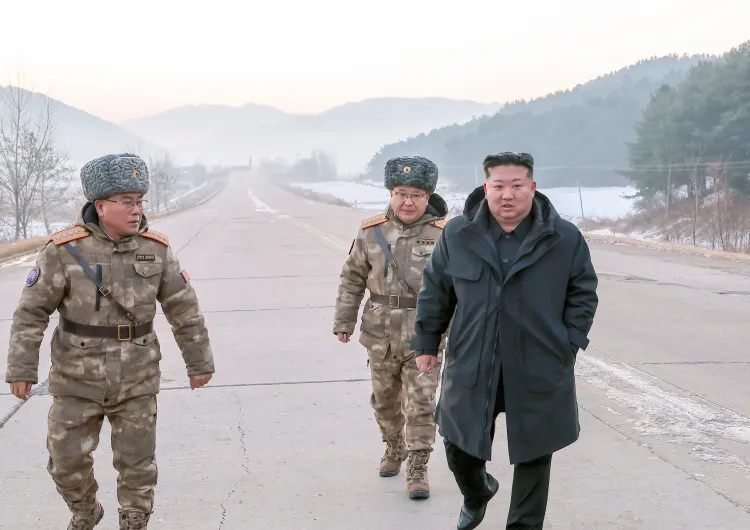
In a surprising move, North Korea has replaced top officials responsible for the security of Kim Jong-un. This significant reshuffle raises questions about the stability and leadership dynamics within the regime. Discover the implications of these changes and their impact on North Korea's political landscape.
Key Takeaways
North Korea has replaced key officials responsible for Kim Jong-un's security.
The reshuffle includes heads of three major security units.
Ri Pyong-chol is presumed to have been demoted.
A memorial for soldiers who died in Russia's war is under construction.
This marks the first museum dedicated to overseas casualties.
Seoul, Jan 13 (NationPress) Recent reports from South Korea indicate that North Korea has made significant changes to its top officials responsible for the protection of leader Kim Jong-un. The unification ministry of Seoul disclosed this information on Tuesday.
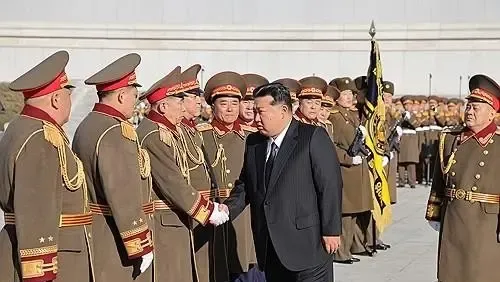
The leadership overhaul includes the heads of three critical North Korean units tasked with ensuring the security of the country's leader: the Guard Office of the ruling party, the Guard Department of the State Affairs Commission, and the Guard Command. This significant reshuffle was detailed in the ministry's analysis of North Korean official appointments in 2025.
While the ministry did not provide specific details regarding the timing or motivations behind these replacements, it noted that changes in leadership were evident during a military parade commemorating the 80th anniversary of the Workers' Party of Korea (WPK) that took place in October 2025, as reported by the Yonhap News Agency.
A ministry official remarked, "It is remarkable that North Korea has replaced officials tasked with guarding the 'supreme leader' within such a short timeframe."
In addition, Ri Pyong-chol, a prominent military figure in North Korea, is believed to have been removed from his position as vice chairman of the WPK's Military Central Commission, according to the ministry.
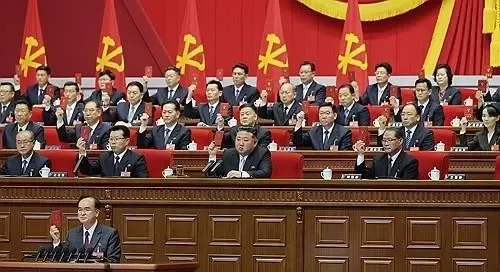
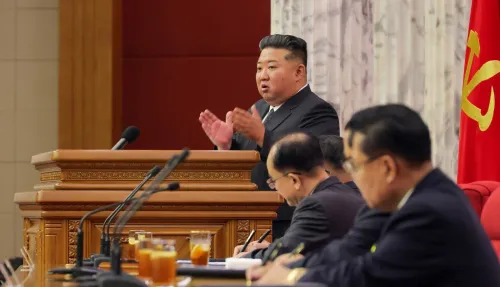
The political bureau's praesidium has reportedly decreased from five members to four due to Ri's presumed demotion to a regular member. The current members include Kim Jong-un; Premier Pak Thae-song; Choe Ryong-hae, chairman of the parliament's standing committee; and Jo Yong-won, a party secretary. Following Ri's departure, Pak Jong-chon now holds the distinction of being the sole vice chairman of the Central Military Commission.
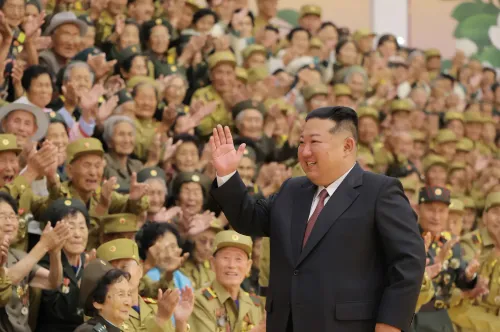
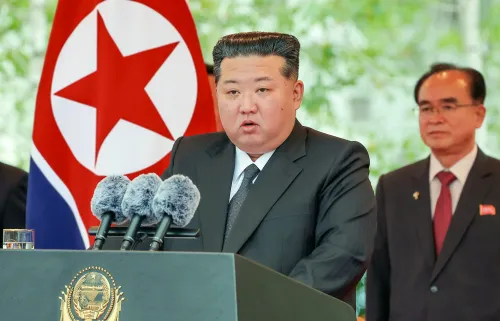
Recently, Kim Jong-un visited the site of a memorial dedicated to North Korean soldiers who lost their lives during Russia's conflict in Ukraine, praising their sacrifice as an "eternal cornerstone" for Pyongyang, according to state media.
Kim was noted to have visited the construction site of the Memorial Museum of Combat Feats at the Overseas Military Operations in Pyongyang, where he participated in the ceremonial tree planting, as reported by the Korean Central News Agency (KCNA).
Images released by state media depicted Kim's wife, Ri Sol-ju, and daughter Ju-ae accompanying him, with Ju-ae seen assisting her father in the tree planting.
Kim emphasized that the sacrifices made by North Korean troops "would serve as the firm foundation and eternal cornerstone supporting the strength of the motherly DPRK," as stated by the KCNA.
The abbreviation DPRK stands for the Democratic People's Republic of Korea, the formal title of the nation.
In a commendation ceremony held last August for soldiers dispatched to assist Russia in the conflict, Kim introduced a plan to establish a dedicated street in Pyongyang to honor their sacrifices, with the museum's construction commencing in October.
This initiative marks the first occasion that North Korea will construct a museum to honor soldiers who perished in foreign engagements.
North Korea has reportedly deployed over 10,000 troops and conventional weaponry to bolster Russia's military efforts, with many believed to have died in the conflict.
Point of View
It is crucial to understand that the recent changes in North Korea's leadership structure could reflect deeper political rifts or shifts in loyalty within the regime. While such moves may appear routine, they often signal significant underlying tensions. Our coverage will continue to monitor these developments to provide insights into their implications for regional security and international relations.
NationPress
9 Oct 2026
Frequently Asked Questions
What prompted the reshuffle of officials in North Korea?
The specific reasons for the reshuffle have not been disclosed, but it was noted during a military parade marking the 80th anniversary of the Workers' Party of Korea.
How many officials were replaced?
North Korea replaced the chiefs of three major units responsible for the security of Kim Jong-un.
What is the significance of the memorial being built in Pyongyang?
The memorial honors North Korean soldiers who died in Russia's war against Ukraine, marking the first such museum dedicated to soldiers killed in action overseas.
Who are the current members of the political bureau's praesidium?
The current members include Kim Jong-un, Premier Pak Thae-song, Choe Ryong-hae, and Jo Yong-won.
What impact might these changes have on North Korea's leadership?
These changes could indicate shifts in power dynamics within the regime, affecting both domestic policies and international relations.