Does the Governor's Action Breach the Constitution?
Synopsis
The Karnataka government has refuted opposition claims of disrespect towards Governor Thawarchand Gehlot, asserting that his refusal to read a prepared speech constitutes a serious constitutional breach. The ongoing political tension raises questions about governance and respect for constitutional duties.
Key Takeaways
The Karnataka government defends its constitutional stance against the Governor's actions.
Political tensions are high as accusations of disrespect surface.
Article 176(1) is central to the ongoing debate.
The situation reflects broader political dynamics in the region.
Public interest in governance and constitutional duties is paramount.
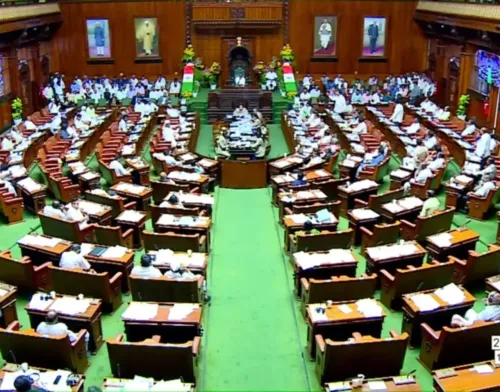
Bengaluru, Jan 23 (NationPress) The Karnataka government on Friday refuted allegations from the opposition that it had disrespected Governor Thawarchand Gehlot by not allowing him to read the speech prepared by the state cabinet during the joint session of the legislature. The government argued that his actions represented a constitutional violation that the assembly could not pardon.
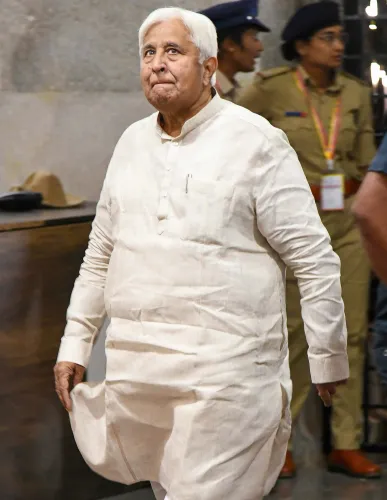
The government further noted that the Governor left hastily after delivering his remarks, without waiting for the National Anthem, which they claimed disrespected this national symbol.
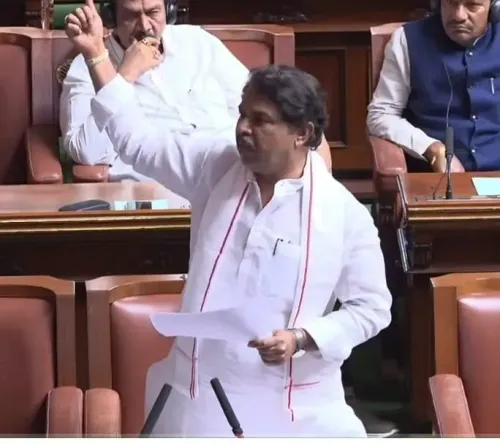
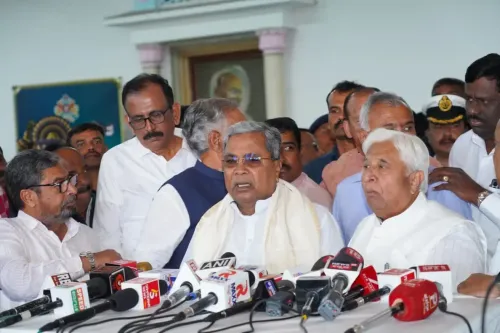
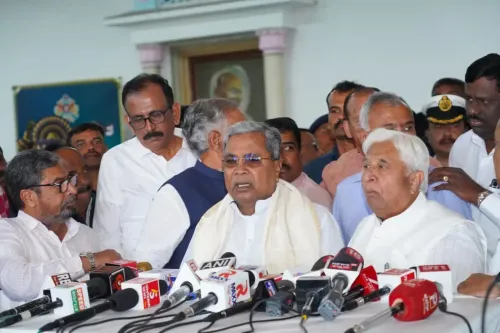
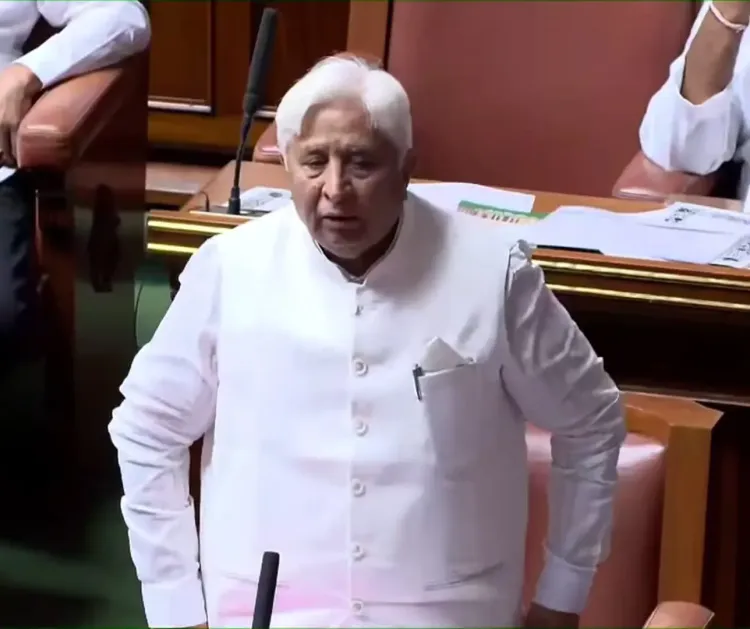
In a statement made in the Assembly, Law and Parliamentary Affairs Minister H.K. Patil dismissed the opposition's call for the suspension of Congress MLAs, MLCs, and himself for allegedly obstructing the Governor during his exit.
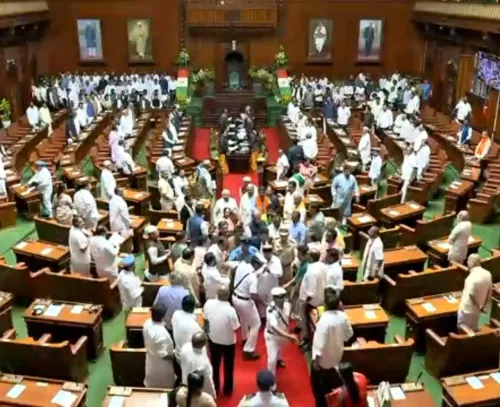
On Thursday, Gehlot chose not to present the customary address crafted by the state government, opting instead to read only a few lines before abruptly concluding, sparking dramatic scenes in the Assembly.
“According to Article 176(1) of the Constitution, the Governor is required to deliver a speech prepared by the government. There are various Supreme Court and High Court rulings on this matter, and the Union Home Minister has made comments in the Lok Sabha referencing this constitutional obligation. All of this must be considered. The Governor's actions constitute a constitutional violation that this house cannot forgive,” Patil stated.
“Disregarding the Constitution as outlined in Article 176(1), supported by judicial verdicts and the Union Home Minister's statements, cannot be overlooked. The Governor cannot evade accountability,” he emphasized.
“The state government communicates its policies to both the state and the nation via the Governor. We also express our grievances with the Centre through the Governor’s address. This process is vital. We are not crafting the Governor’s speech to curry favor; it comprises 122 paragraphs. Each one stands on its own merit. There are no personal attacks,” Patil clarified, highlighting that the Governor had a duty under Article 163 but dismissed it by refusing to read the prepared speech.
“This is our primary concern, and we have articulated it,” he reiterated.
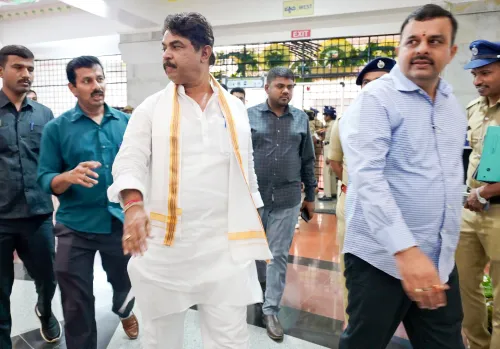
“I mentioned that the Governor hurriedly left after his address. The Opposition Leader R. Ashoka has accused me of obstructing the Governor during his exit. The reason I approached the Governor was that my Chief Minister also moved towards him as he departed and signaled me to follow. The Chief Minister, myself, and a few others approached the Governor’s vehicle, bid farewell with a handshake, and then returned. At no point did the government insult the Governor,” he questioned.
“The Governor has breached the Constitution. Despite this, we requested that he apologize to the state's populace and the assembly. We also stated that the matter could be resolved there. However, the opposition is engaging in political maneuvering. This is not conducive to healthy governance. The opposition is defending the Governor while opposing the Constitution,” Patil asserted.
He stressed the importance of adhering to the law and the Constitution, noting that the Supreme Court has consistently upheld strict adherence to constitutional, legal, and secular principles, especially concerning cultural and national symbols like the National Anthem.
“While the Constitution is interpreted as a living document to ensure substantive rights, courts have frequently ruled on whether symbols such as the National Flag, National Anthem, or religious attire are protected under fundamental freedoms or limited for public order,” he stated.
Patil condemned the act of defending the Governor as if he were a political leader while speaking against the Constitution.
He urged opposition leaders, “who are trying to equate the suspension of 18 BJP MLAs for serious misconduct with yesterday’s incident, to reconsider their stance.”
“BJP members tore documents and threw them at the Speaker. They climbed onto the Speaker’s chair. The opposition is now attempting to highlight the Governor’s situation to divert attention from that incident,” Patil remarked.
“I want to reiterate the Constitution. None in the opposition can deny that the Governor is bound by the Constitution. He is its custodian, but he is not above it. Article 176 specifies that the Governor shall address the joint session, based on a speech prepared by the state Cabinet. We prepared that speech and submitted it to him,” Patil concluded.
When BJP leaders attempted to interrupt, Patil responded that if the opposition labeled his government a “hooligan government,” they should not expect him to remain silent.
As BJP leaders pressed him to focus on the specifics of the Governor's exit, Speaker U.T. Khader interjected, noting that such an occurrence had never transpired in the state before.
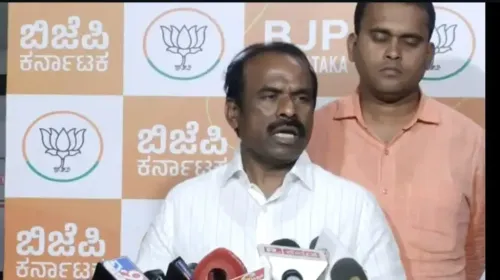
BJP MLA Suresh Gowda stated that the issue pertained to an insult to the Governor, not the Constitution, while fellow party MLA and former Deputy Chief Minister C.N. Ashwath Narayan remarked that the debate could not persist all day.
Patil insisted that the matter being discussed was gaining traction nationwide, especially in South India, with non-BJP governments closely monitoring the situation.
Point of View
The Karnataka government's stance reflects a commitment to constitutional integrity. Upholding the principles outlined in the Constitution is critical for maintaining democratic values. As the situation develops, it will be crucial to watch how both sides navigate this contentious issue.
NationPress
29 Sept 2026
Frequently Asked Questions
What did the Karnataka government claim regarding Governor Gehlot's actions?
The Karnataka government claimed that Governor Gehlot's refusal to read the prepared speech constituted a violation of the Constitution.
Why did the opposition accuse the government?
The opposition accused the government of insulting the Governor by not allowing him to deliver the customary address.
What does Article 176(1) of the Constitution state?
Article 176(1) states that the Governor is required to address a speech prepared by the government during the joint session of the legislature.
What was Minister H.K. Patil's response to the opposition's demand for suspensions?
Minister H.K. Patil rejected the opposition's demand for suspending Congress MLAs and MLCs, asserting that their actions did not insult the Governor.
How did the situation escalate during the assembly session?
The situation escalated when the Governor abruptly left after a brief address, leading to dramatic scenes and accusations from opposition leaders.