Did the Governor Breach the Constitution and Dishonor Legislators? K'taka CM Contemplates Supreme Court Action Over Speech Controversy
Synopsis
Karnataka's Chief Minister Siddaramaiah has fiercely criticized Governor Thawar Chand Gehlot for bypassing the Cabinet's speech during the joint legislative session, implying a constitutional breach. With potential Supreme Court action on the table, this incident has ignited a considerable controversy in the state.
Key Takeaways
Governor's Duty: The Governor must read the Cabinet-prepared speech as per Articles 176 and 163 of the Indian Constitution.
Constitutional Violation: The refusal to read the speech is seen as a breach of constitutional obligations.
Political Protests: The Karnataka government plans to protest against the Governor's actions throughout the state.
Supreme Court Consideration: Chief Minister Siddaramaiah is considering legal action regarding the matter.
Impact on Governance: The incident highlights tensions between the Governor and the state government, affecting legislative processes.
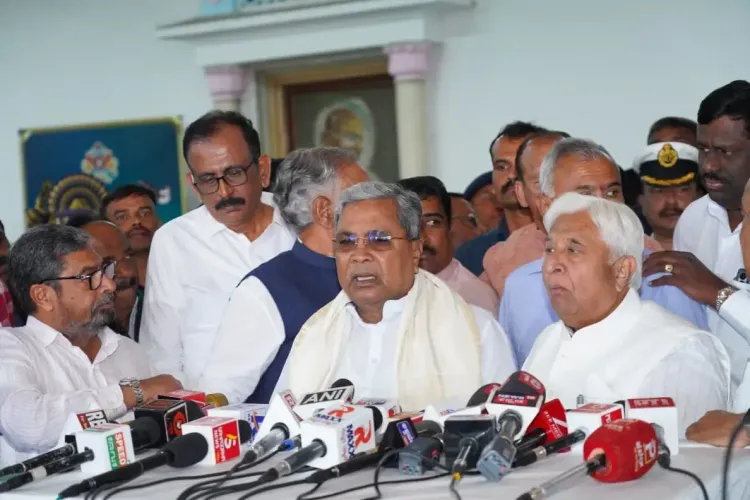
Bengaluru, Jan 22 (NationPress) In a strong critique against Governor Thawar Chand Gehlot for opting not to deliver the speech prepared by the Cabinet during the joint session of the Karnataka Legislature, Chief Minister Siddaramaiah declared that the Governor had transgressed the Constitution and disrespected lawmakers. He indicated that discussions would take place regarding the possibility of appealing to the Supreme Court on this issue.
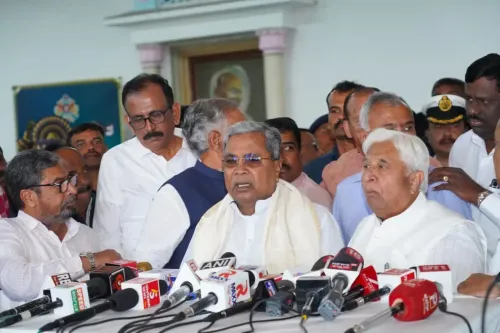
Speaking to the press at Vidhana Soudha following the Governor's departure on Thursday, the Chief Minister remarked, "The Governor has a constitutional duty to address the joint session at the start of the year and when a new government is established. Articles 176 and 163 of the Indian Constitution explicitly state that the Governor should refrain from reading a self-prepared speech. The speech crafted by the Cabinet must be recited by the Governor."
By choosing not to read the Cabinet-prepared speech and instead delivering his own brief address, the Governor acted contrary to the Constitution, Siddaramaiah asserted. "He has indeed breached the Constitution," the Chief Minister emphasized.
"The Constitution unequivocally stipulates in Articles 176 and 163 that the Governor is to read the Cabinet's speech. This constitutes a blatant violation of the Constitution and an affront to the representatives of the public. This has been a longstanding constitutional norm, which has now been disregarded," he stated.
"Our government, along with our party, MLAs, and MLCs, will organize protests throughout the state. The Governor has behaved as a puppet of the central government. In an attempt to conceal its inadequacies, the central administration has orchestrated a different speech for the Governor. This is unconstitutional. The Governor has neglected his duties and responsibilities," the Chief Minister remarked.
He stated that the Cabinet-prepared speech had been distributed to all MLAs and MLCs, and he would address the media again regarding this matter.
"We will decide on approaching the Supreme Court and will update the media. I will also confer with ministers about introducing a condemnation resolution in the House in response to the Governor's actions," he mentioned.
The Chief Minister explained that the joint session was summoned as it marked the first session of the year, in conjunction with a special session. He noted that the special session was called due to the repeal of the MGNREGA and the introduction of the Viksit Bharat–Guarantee for Rozgar and Ajeevika Mission (Gramin) (VB-G RAM G) Act.
"Our government categorically condemns this. Firstly, the name of Mahatma Gandhi has been eliminated from the scheme. Secondly, in 2005, former Prime Minister Manmohan Singh introduced legislation guaranteeing the right to work, food, education, and information, based on the Directive Principles of State Policy. The aim of the Right to Work was to ensure 100 days of employment for impoverished rural laborers," he stated.
He highlighted that the beneficiaries included Dalits, laborers, women, and small farmers, with women constituting 53 percent and Dalits 23 percent. "They no longer possess a guaranteed right to work. Previously, they could work on their own farms, but this privilege has been rescinded. Now, the central government will dictate where work is to be done," he explained.
Earlier, it was the responsibility of the government to provide employment for up to 365 days, with panchayats and gram sabhas formulating action plans. "These provisions are missing in the new VB-GRAM G Act. The BJP is defending it because they lack autonomy and must acquiesce to the central government's decisions. This is their strategy," he claimed.
"Thus, we opposed it and incorporated the issue into the Governor's speech. Our goal is to demand the reinstatement of MGNREGA and the repeal of the new Act. The party and the government have resolved to maintain agitation until the Act is annulled, mirroring the farmers' protests that compelled the center to revoke farm laws. We will persist in our struggle," CM Siddaramaiah concluded.
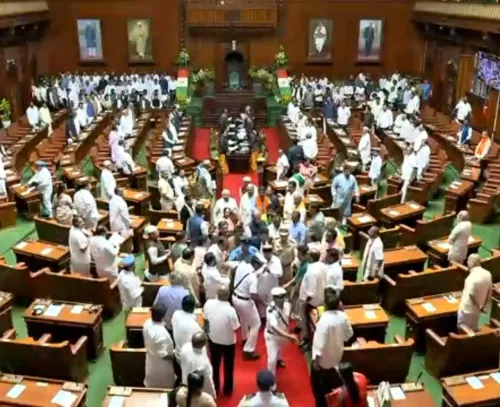
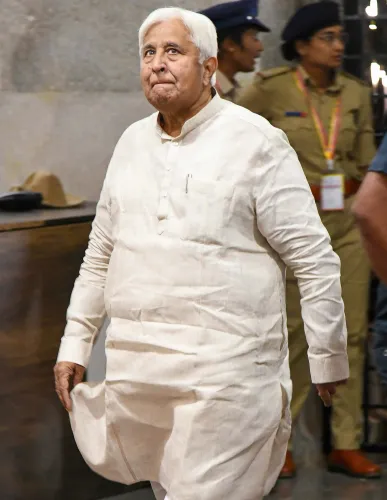
Notably, Governor Gehlot on Thursday declined to deliver the traditional address prepared by the Karnataka government for the joint session of the state legislature. He restricted his address to a few lines, abruptly concluded, and exited, resulting in dramatic scenes in the Assembly.
BJP legislators responded by praising the Governor and chanting slogans of "Bharat Mata ki Jai". Congress MLAs and MLCs attempted to prevent the Governor's departure and urged him to read the government's prepared speech.
This incident has sparked a significant controversy and intensified the conflict between the Governor and the Karnataka government.
Previously, Governor Gehlot had requested the state government to eliminate 11 paragraphs from the speech drafted by the state Cabinet.
Point of View
It is paramount to approach this issue with impartiality. The ongoing conflict between the Karnataka government and the Governor raises critical questions about constitutional adherence and the balance of power. While both parties have valid points, the focus must remain on the principles of democracy and governance, ensuring that the voices of the people are not overshadowed.
NationPress
23 Sept 2026
Frequently Asked Questions
What triggered the controversy between the Karnataka government and Governor Gehlot?
The controversy arose when Governor Thawar Chand Gehlot refused to read the Cabinet-prepared speech during the joint session of the Karnataka Legislature, which Chief Minister Siddaramaiah deemed a violation of the Constitution.
What actions is Chief Minister Siddaramaiah considering in response to the Governor's actions?
Chief Minister Siddaramaiah is contemplating approaching the Supreme Court and discussing the introduction of a condemnation resolution in the House against the Governor's actions.
How has the BJP responded to the incident?
BJP legislators responded by praising the Governor and chanting slogans in his support, highlighting the division between the political parties regarding the issue.
What are the implications of this controversy?
The controversy has intensified the ongoing tussle between the Governor and the government, potentially affecting governance and legislative processes in Karnataka.
What historical context is relevant to this situation?
The situation reflects a long-standing constitutional tradition regarding the Governor's address, which has been challenged in this instance, raising concerns about adherence to democratic norms.