Gujarat ATS Exposes Illegal Etomidate Exports to Southeast Asia; One Arrested

Synopsis
The Gujarat ATS has cracked a case involving the illegal export of etomidate to Southeast Asia, leading to one arrest and ongoing searches for two more suspects. This operation highlights the risks associated with drug trafficking across borders.
Key Takeaways
The Gujarat ATS has uncovered a network exporting etomidate illegally.
One suspect has been arrested while searches for two others are ongoing.
Etomidate is mislabelled and shipped to evade detection.
Authorities emphasize the need for strict enforcement against drug trafficking.
The case highlights the challenges of regulating psychotropic substances.
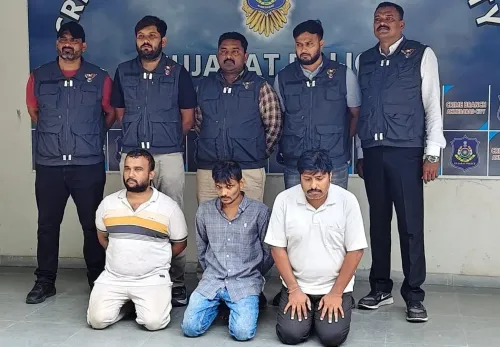
Ahmedabad, March 7 (NationPress) The Gujarat Anti-Terrorism Squad (ATS) has revealed an alleged operation linked to the illegal export of etomidate to countries in Southeast Asia under fraudulent labels, resulting in the arrest of one individual and the initiation of a manhunt for two additional suspects associated with the scheme, officials confirmed on Saturday.
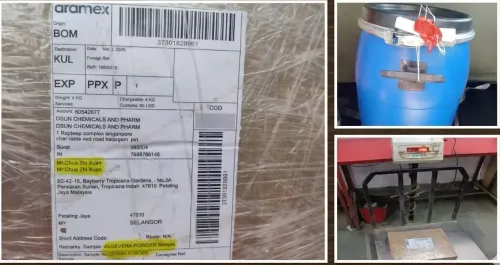
As per the ATS, the suspects were reportedly dispatching shipments of etomidate—an anaesthetic that is classified as a psychotropic substance in numerous nations—to clients in Malaysia and Thailand via air cargo originating from Mumbai airport.
The drug was purportedly mislabelled and forwarded through courier services to evade detection.
The inquiry commenced after ATS Deputy Superintendent of Police Harsh Upadhyay received confidential intelligence regarding the illicit exports of this drug to Southeast Asian nations, where etomidate is largely banned or heavily regulated.
In response to the tip-off, the ATS notified Mumbai customs officials and requested the courier company FedEx to intercept specific parcels suspected of being part of the shipment.
Authorities reported that the packages were analyzed using Raman spectroscopy and were found to contain etomidate powder, deceptively labelled as aloe vera powder and other chemical substances.
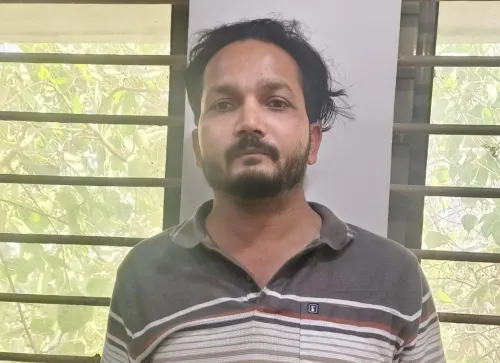
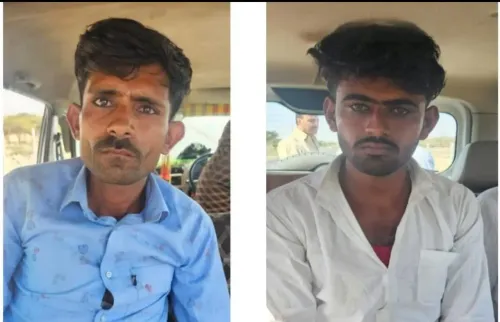
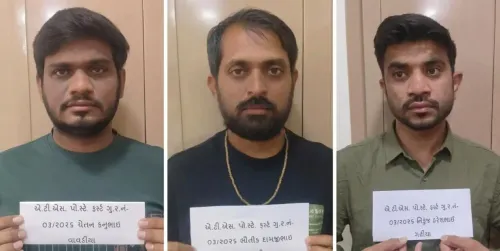
Three individuals have been identified in connection with this operation: Nikunj Gadhiya, 28, from Katargam in Surat; Chetan Vardiya, 28, from Mota Varachha in Surat; and Bhautik Padmani, 32, from Amroli.
Gadhiya has been apprehended, while efforts continue to locate the other two suspects.
Investigators revealed that these individuals operated distinct companies yet employed a similar strategy to procure the drug within India and export it internationally by fabricating invoices, falsifying customs clearance documents, and mislabelling the product before shipment via air cargo from Mumbai.
Officials disclosed that Gadhiya allegedly managed operations through firms such as DWN Bioscience, Neutral Pharma, and Om Herbs, while Vardiya operated Rudra Enterprise, and Padmani ran Jani Pharma.
During the investigation, it became evident that Gadhiya had packed and dispatched approximately 50 kilograms of the drug disguised as aloe vera powder to multiple recipients in Malaysia.
Padmani reportedly exported around 25 kilograms of etomidate powder to Malaysia and Thailand, mislabelled as aloe vera carbomer powder.
In a similar vein, Vardiya is believed to have exported roughly 50 kilograms of etomidate mislabelled as Ginopol-24 powder by air cargo from Mumbai to Malaysia and Thailand.
During initial interrogations, the detained suspect allegedly acknowledged that the parcels contained etomidate destined for buyers in Southeast Asia.
Authorities indicated that the three suspects are linked to a Malaysian drug cartel member known as Chua Zhi Xuan.
According to investigators, the consignments were being marketed abroad for an estimated price of between $4,000 and $5,000 per kilogram.
Some shipments that reached Thailand have also been confiscated by local authorities.
Officials emphasized that while etomidate is not categorized under India’s Narcotic Drugs and Psychotropic Substances Act, it is frequently misused overseas in intoxicating mixtures commonly referred to as “space oil”.
The investigation also uncovered that the drug is classified under various schedules: as a Schedule II substance in Thailand, a Group B drug under the Poisons Act in Malaysia, and a Class C drug under the Misuse of Drugs Act in Singapore.
The ATS has filed a case under the pertinent provisions of the Bharatiya Nyaya Sanhita, 2023.
K. Siddharth, Superintendent of Police with the Gujarat ATS, stated that this marks the first instance where the unit has acted on a case involving etomidate.
“The suspects operated separate enterprises but adhered to the same method to source the drug domestically and export it under false labels,” he noted.
“Etomidate is readily available in India as it is not listed under the NDPS Act here, yet it is banned or regulated in numerous Southeast Asian countries. The accused exploited this loophole to procure it in India for illegal sale abroad,” Siddharth elaborated.
He added that Nikunj Gadhiya has been engaged in these activities for approximately five years. “Further inquiries are ongoing to identify other associates involved in this network. We are also examining the inter-state activities of the suspects,” Siddharth remarked.
The ATS indicated that they would communicate with agencies like the Directorate of Revenue Intelligence and customs authorities as the investigation unfolds.
Point of View
This incident underscores the ongoing challenges of drug trafficking and the exploitation of regulatory gaps. The quick actions of the Gujarat ATS illustrate the importance of inter-agency cooperation in combating such networks.
NationPress
30 Sept 2026
Frequently Asked Questions
Why is etomidate illegal in Southeast Asia?
In Southeast Asia, etomidate is considered a banned or highly restricted substance due to its potential for misuse in intoxicating mixtures.
What actions did the Gujarat ATS take?
The Gujarat ATS conducted investigations based on intelligence received, leading to the interception of parcels and the arrest of one suspect involved in the illegal export network.
What is the significance of this operation?
This operation highlights the ongoing issue of drug trafficking and the need for vigilant enforcement to combat illegal exports and protect public health.
What penalties do the accused face?
The accused could face serious charges under the Bharatiya Nyaya Sanhita, 2023, and additional penalties depending on the investigation's findings.